





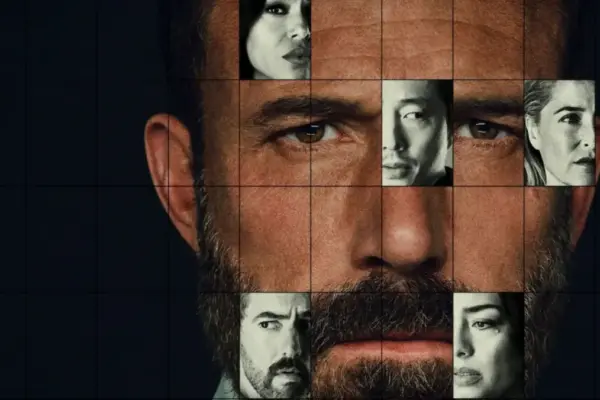

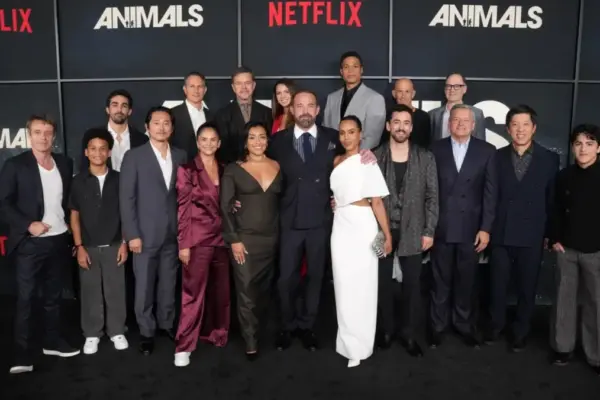
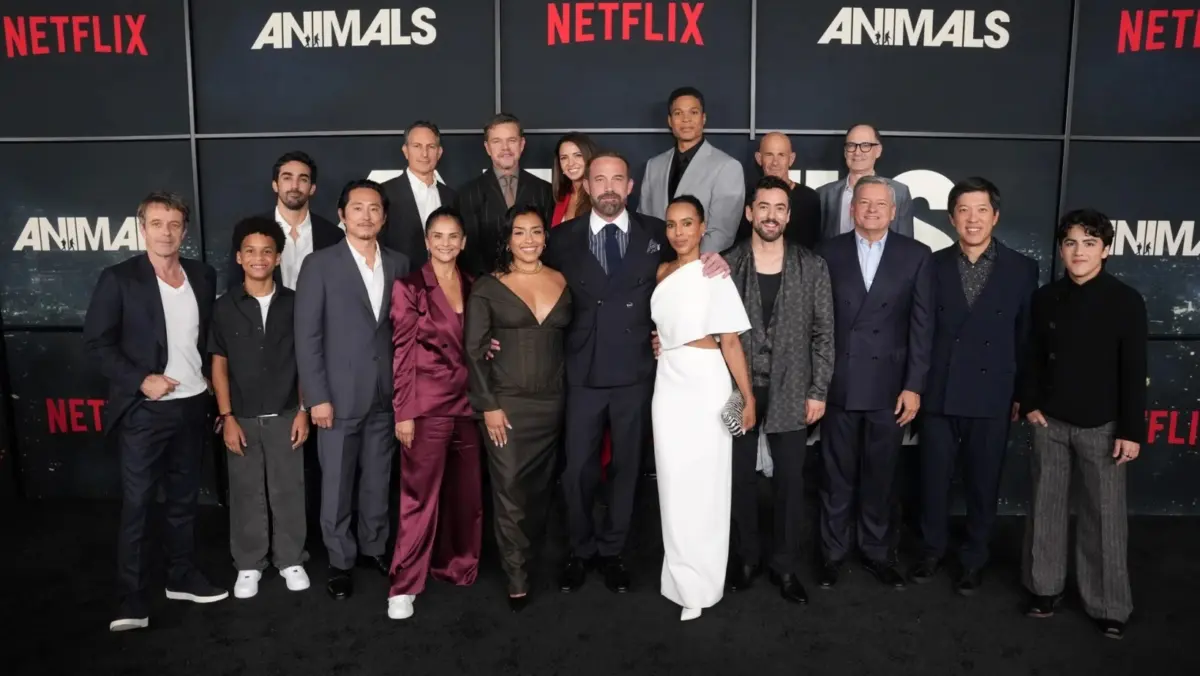
In Hollywood, the traditional power dynamic between a director and supporting actors is rigidly defined. The filmmaker writes the script, the actors memorize the dialogue, and production moves forward. However, when director, co-writer, and star Ben Affleck set out to make the upcoming Netflix thriller Animals, he decided to completely subvert that long-standing industry standard, particularly regarding the portrayal of Mexican characters.
Rather than writing the parts of Cecilia and her undocumented counterpart himself—a choice that would have raised no eyebrows within the studio system—Affleck chose a collaborative approach. He handed the pen directly to Mexican actors Adriana Paz and Luis Gerardo Méndez, tasking them with writing their own lines and shaping their own narrative arcs.
Premiering on Netflix on October 9th, Animals is not just a high-stakes thriller about kidnapping and political ambition; it is also a rare example of intentional, collaborative storytelling in mainstream American cinema. By empowering actors who live closest to the migrant experience to build their characters from the ground up, Affleck sought to avoid the tired clichés and one-dimensional tropes that have historically dominated Hollywood depictions of Latinos.
What It Meant to Paz and Méndez to Be Asked
For Adriana Paz, the invitation to write her own dialogue was an unprecedented professional experience that challenged the conventional boundaries of acting. She recalled that Affleck frequently checked in to ensure the script felt authentic, asking whether their characters were using genuine phrasing and whether anything vital was missing from their interactions.
Rather than feeling burdened by the extra labor, Paz described the process as a profound privilege rarely extended to actors in her position. Collaborating closely with Luis Gerardo Méndez to flesh out their roles reminded her of why she entered the profession in the first place: the creative fulfillment of building a complex, authentic human being alongside a peer, rather than simply executing someone else’s preconceived, often stereotypical notion of who a Mexican woman or worker is supposed to be.
Méndez, widely recognized internationally for his standout work in projects like Club de Cuervos, understood immediately that the assignment carried immense weight. He noted that the project required him and Paz to carry the representation of millions of people—not just within the United States, but globally. This included migrants, refugees, and individuals living in foreign countries where they frequently feel unwelcome or invisible.
According to Méndez, this awareness shaped every creative choice he made regarding his character. While some Hollywood productions are designed purely for entertainment and others serve specific dramatic functions, Animals fell into a rare category that demanded his absolute best, requiring him to bring his complete lived experience and professional dedication to the set.
Why This Matters for How Latino Migrants Are Depicted on Screen
The characters brought to life by Paz and Méndez stand in sharp contrast to the flat, dangerous caricatures that mainstream media so often relies upon. In Animals, Paz portrays Cecilia, a dedicated housekeeper working in the Los Angeles home where Affleck’s character is running a high-profile political campaign. Cecilia occupies a space common to many domestic workers—she is physically present and essential to the smooth operation of the household, yet routinely overlooked and treated as invisible by the powerful people around her.
Méndez plays a man striving to support his family without the benefit of legal documentation, navigating a bureaucratic and social system that demands his labor while offering zero protection, security, or basic recognition for the daily risks he takes. Both actors emphasized that the decision to portray migrants with depth, nuance, and dignity was deliberate, arriving at a critical cultural juncture when public political discourse and Hollywood productions frequently reduce immigrant communities to threatening imagery.
Ben Affleck expanded on this theme during press discussions for the film, arguing that the political rhetoric framing migrants as criminals is an absurd falsehood with a long history. He noted that politicians routinely deploy this narrative whenever society faces pressure and requires a convenient scapegoat.
According to Affleck, narrative fiction holds a unique, disruptive power because it forces an audience to genuinely recognize a person’s humanity before they can be reduced to a generalized political category. Once an audience truly identifies with an individual’s lived reality, Affleck suggested, it becomes much harder to retreat into a dehumanized version of who they are and what they represent.
What the Film Is Actually About
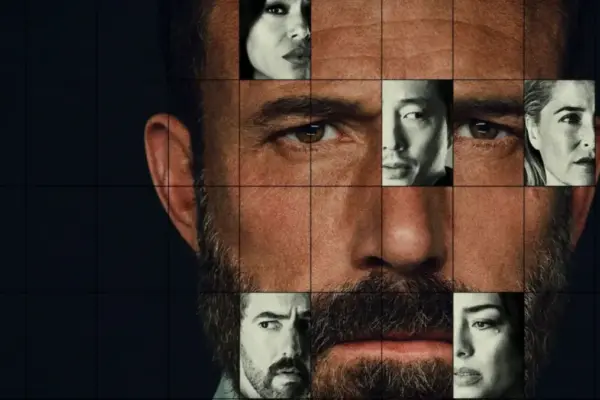
At its narrative core, Animals centers on the harrowing kidnapping of the young son of Mark and Abigail Kimball, characters played by Ben Affleck and Kerry Washington. The film uses this high-tension premise to explore difficult moral dilemmas and gray areas that every character must confront when the institutional systems surrounding them fail to provide easy answers or reliable solutions.
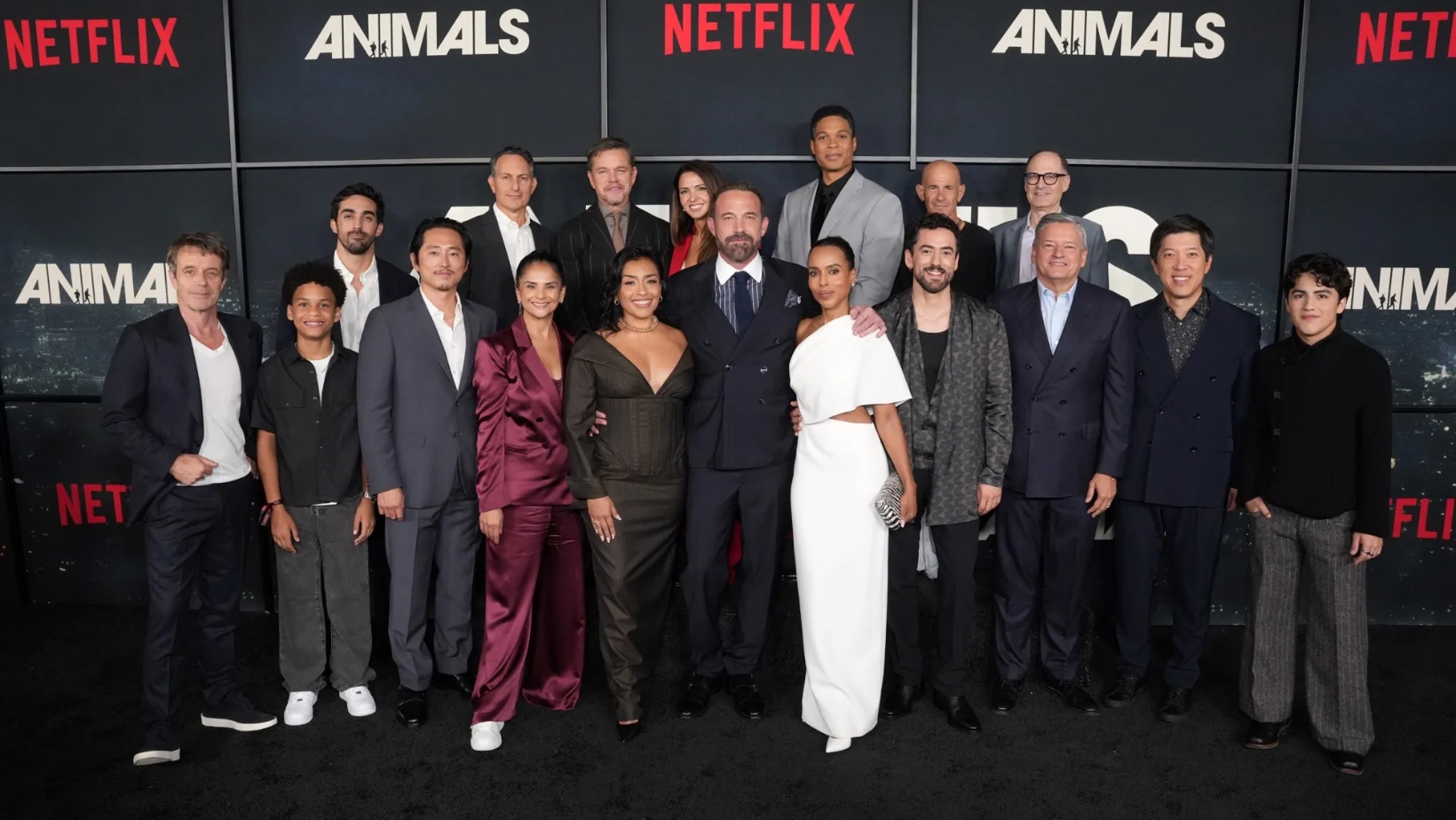
The star-studded ensemble cast also features acclaimed actors such as Gillian Anderson, Steven Yeun, and Ray Fisher, rounding out a complex narrative landscape. The thriller was produced in association with Artists Equity, the prominent production studio that Affleck co-founded alongside longtime collaborator Matt Damon.
Reflecting on the tone and impact of the project, Paz summarized what she hopes viewers take away from the viewing experience. She described Animals as a film that makes audiences deeply uncomfortable in ways that linger long after the final credits roll, while remaining entirely compelling from start to finish. Animals premieres globally on Netflix on October 9th.