











The Argentine government is facing a critical test of its foreign-exchange liquidity on Monday, as it prepares to make an interest payment of approximately US$800 million to the International Monetary Fund (IMF). The obligation comes at a time when Treasury accounts hold limited dollar reserves and a pending disbursement from the multilateral lender has yet to receive final executive authorization.
To successfully meet the looming obligation, the Economy Ministry is carefully weighing its options. Officials are considering whether to draw down the Treasury’s remaining dollar deposits or to purchase foreign currency directly from Argentina’s Central Bank, known by its Spanish acronym, the BCRA.
The high-stakes financial maneuver arrives just days after IMF staff reached a crucial technical agreement with Argentine authorities on the third review of the country’s ongoing economic program. While this milestone marks a positive step forward, it still requires formal endorsement from the IMF’s Executive Board—a decision that is expected to take place in early December, provided that the government fulfills a series of outstanding structural measures agreed upon during the negotiations.
Treasury Weighs Buying Dollars from Central Bank
According to the latest available financial data, the Treasury’s foreign-currency deposits at the Central Bank stood at US$851 million as of Wednesday, October 28. This figure leaves the government with a very narrow margin, sitting only slightly above the exact amount due for this week’s interest payment.
If the administration decides to utilize those specific funds to cover the US$800 million liability, the remaining balance in those Treasury accounts would plummet to approximately US$51 million, leaving government operations critically exposed to external shocks.
Because of this razor-thin cushion, key market players and financial analysts have not ruled out the possibility that the Economy Ministry will ultimately choose to purchase dollars directly from the BCRA. Such a move would allow the government to maintain a safer level of liquidity in its accounts rather than draining its foreign currency holdings down to the bone.
In addition to its foreign-currency reserves, the Treasury holds approximately 8.9 trillion pesos, which translates to roughly US$5.7 billion at current exchange rates. These substantial peso-denominated deposits could theoretically be tapped to acquire the necessary foreign currency from the monetary authority.
Prominent consultancy firm 1816 issued a warning note to clients, pointing out that the government’s available foreign-currency funds are now practically aligned with the total amount needed to service the obligation. Given this parity, the firm noted that a direct dollar purchase from the Central Bank has become a highly probable course of action.
This delicate financial balancing act follows a turbulent week in domestic financial markets. Last week, the Treasury reportedly intervened actively in the foreign-exchange market to moderate the wholesale exchange rate. This intervention was reportedly designed to stabilize rates ahead of the setting of the benchmark rate used to settle upcoming maturities on dollar-linked bills, commonly referred to as Lelinks.
According to private-sector estimates tracking these market movements, the government sold approximately US$100 million on Monday alone, before subsequently buying back US$44 million in later sessions to manage liquidity.
A potential decision by the Treasury to purchase dollars from the BCRA would carry direct implications for the country’s net international reserves. Such a transaction would involve an explicit transfer of foreign currency from the monetary authority’s balance sheet to the Treasury. By contrast, simply drawing down dollars that are already deposited at the Central Bank would produce a different accounting impact on the overall reserve position, though both methods ultimately reduce the availability of hard currency within the monetary system.
Beyond determining the exact origin of the pesos or dollars used for the transaction, the government must also secure Special Drawing Rights (SDRs). These are the international reserve assets utilized by the IMF for its institutional operations and financial settlements. During previous rounds of debt service, Argentina has historically turned to the United States Treasury to purchase the necessary SDRs to complete its payments.
IMF Awaits Further Reforms
The timing of Monday’s payment coincides precisely with a new, complex phase of negotiations between the libertarian administration and the Washington-based lender. Last week, the Fund’s technical staff formally endorsed the third review of the extended-fund facility agreement. However, as financial markets are acutely aware, final authorization for the accompanying financial disbursement remains strictly pending.
The IMF leadership plans to submit the completed review to its Executive Board during the first week of December, contingent upon the fulfillment of all outstanding structural benchmarks and agreed-upon measures. Should the board grant its final approval, Argentina is slated to receive a disbursement of nearly US$900 million, which is equivalent to approximately 600 million SDRs.
Among the prominent commitments that remain outstanding is a comprehensive tax reform proposal. This legislative initiative is aimed at rationalizing and reducing various tax exemptions, thereby creating the necessary fiscal space for the government to move forward with planned reductions on export duties and the controversial tax on bank credits and debits.
Additionally, the IMF expects the Revenue and Customs Control Agency, known as ARCA, to establish a formal and transparent registry of major tax-compliance risks before the month of December arrives. This registry is expected to place particular scrutiny on large taxpayers to ensure robust collection enforcement.
Another critical commitment embedded in the program requires the administration to advance a structural reform of the Fiscal Responsibility Law. This legislative change is intended to permanently enshrine the foundational principle of a zero fiscal deficit into the legal framework of the state.
At the same time, the IMF continues to closely monitor a broad array of other structural and economic initiatives spearheaded by the executive branch. These include the legislative approval of the 2027 budget, a comprehensive reform of the Central Bank charter, and secondary measures designed to deepen domestic capital markets, expand accessible mortgage financing, and facilitate large-scale investments under the framework of the Large Investment Incentive Regime, known as RIGI.
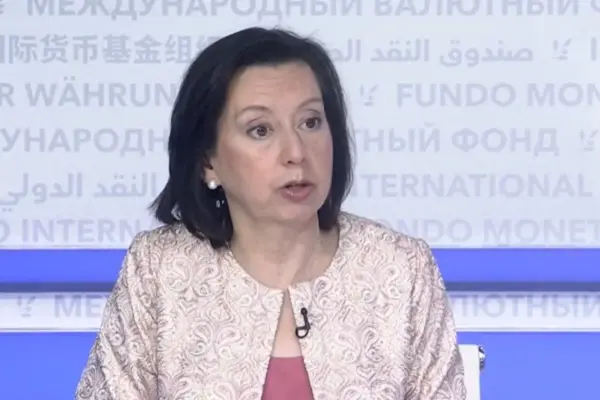
IMF spokesperson Julie Kozack recently highlighted the general continuity and fiscal discipline demonstrated by the government’s economic policies. She noted that maintaining the current policy course would play a vital role in steadily reducing the country risk indicator and improving investor confidence.
Furthermore, the institution has repeatedly stressed the absolute necessity of facilitating the gradual remonetization of the domestic economy while simultaneously promoting a prudent and sustainable expansion of private credit to support broader economic recovery.