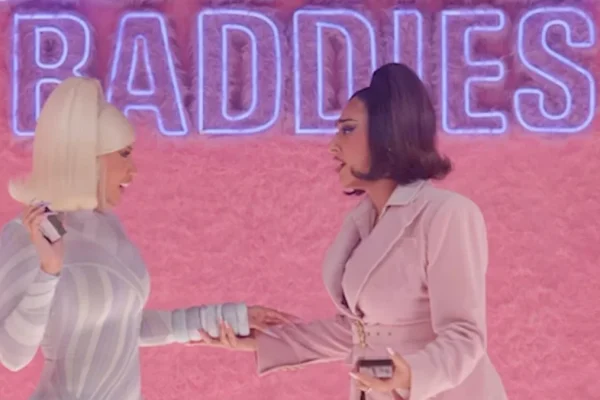









The announcement of the 2026 Latin Grammy nominations on September 16 brought forth a wave of excitement across the Latin music industry, but it also triggered an unexpected and intense controversy. Among the most talked-about nods was Colombian superstar Karol G’s nomination for Best Regional Mexican Song for her track “Ese Hombre Es Malo,” a standout release from her critically acclaimed album Tropicoqueta. While fans celebrated the global reach of the genre, the nomination immediately set off a wave of criticism from various Mexican fans and music enthusiasts online. Critics openly questioned how a Colombian-born artist could occupy a prominent spot in a category explicitly associated with Mexican culture and tradition, igniting a broader conversation about musical borders, cultural identity, and institutional rules.
Within hours of the nominations going live, social media platforms such as X and TikTok were flooded with debates. Users weighed Karol G’s career trajectory against artists who have dedicated their entire lives and professional endeavors exclusively to the regional Mexican genre. Particular comparisons were drawn to prominent Mexican artists, such as Yuridia, who had recently commanded two massive, sold-out concerts at the Estadio GNP in Mexico City yet found herself absent from the nominees list. The omission of homegrown staples fueled the frustration of fans who felt that international crossover artists were encroaching upon spaces historically cultivated by Mexican musicians.
As the digital backlash intensified, Yuridia herself stepped into the public discourse to address the mounting drama. On September 18, the Mexican singer took to Instagram to share her thoughts, writing directly that she does not care for this kind of manufactured nonsense and explicitly asking the public to leave Karol G alone. Despite her attempt to quell the online friction, the debate continued to dominate entertainment headlines, exposing deep-seated sensitivities regarding nationality, representation, and genre ownership within the Latin music landscape.
At the heart of the controversy, however, lies a widespread misunderstanding of how the Latin Grammy nomination process and eligibility guidelines actually function. Contrary to public perception, the Latin Recording Academy’s current official rules do not condition an artist’s eligibility on their nationality or country of origin. Instead, the primary requirement for submission in the Regional Mexican Song category is that the track must contain at least sixty percent of its lyrics in Spanish and strictly conform to the musical structure and stylistic conventions of the regional Mexican genre.
Furthermore, the nomination does not technically belong solely to the primary performing artist, but rather to the songwriters responsible for crafting the track. In the case of “Ese Hombre Es Malo,” the official nomination is shared among songwriters Édgar Barrera, Andrés Jael Correa Ríos, and Carolina Giraldo Navarro, which is Karol G’s legal birth name. With this nomination, the track finds itself competing in a tightly contested category alongside heavyweights of the genre, including Intocable, Grupo Frontera—who secured two nominations—Xavi, and Edén Muñoz alongside Cristian Castro.
What Karol G Actually Said About Her Connection to Mexico
As public scrutiny mounted, attention turned to Karol G’s own words regarding her artistic choices and her deep-seated affinity for Mexican culture. In an exclusive interview with MTV Latinoamérica, conducted ahead of her scheduled visit to Mexico as part of her extensive Tropitour, the singer elaborated on the origins of her connection to the country’s cultural fabric. She explained that her relationship with Mexican culture did not begin in a corporate boardroom or as a strategic marketing ploy, but rather in her childhood living room through the medium of traditional Mexican telenovelas.
Karol G described those early television exposures as her primary entry point into discovering Mexican music. Through the dramatic narratives of telenovelas, she developed a profound appreciation for the themes of heartbreak, romance, and raw emotional intensity that she intimately associated with Mexican identity and storytelling. She noted that popular music and traditional mariachi sounds allow her to express herself with the very same authentic feeling she grew up admiring.

When discussing her 2025 studio album Tropicoqueta, which was released in June of that year, Karol G emphasized that the project was conceived as her heartfelt way of honoring Latin American culture in its complete breadth and diversity. For the artist, attempting to capture the vast landscape of Latin American music without incorporating a genre and a culture that had given her so much—and with which she identified so deeply—would have been an incomplete and dishonest artistic endeavor.
She was notably direct about dispelling the notion that her exploration of Mexican music was a calculated, strategic move designed purely to capture a new demographic of listeners. Instead, she framed it as an organic extension of her personal and professional evolution. The album serves as a sincere tribute to everything she has encountered throughout years of international travel and cultural immersion. The Colombian artist, who initially built her monumental career in the urban and reggaeton music spheres, made a conscious and deliberate choice with Tropicoqueta to step away from predictable sounds and explore avenues closer to her foundational emotional roots, with Mexico serving as an essential and non-negotiable part of that creative conversation.
The Double Standard the Debate Exposed
Beyond the logistics of awards eligibility and personal artistic motivations, the intense debate surrounding Karol G’s nomination brought to light a significant and often overlooked double standard within the broader Latin music community. Cultural gatekeeping and nationalist protectivism are rarely applied evenly across genres, a reality highlighted by historical precedents at the Latin Grammys.
For instance, the legendary Mexican cumbia group Los Ángeles Azules earned consecutive nominations in the Best Cumbia/Vallenato Album category in 2021, 2023, and 2024. Vallenato and cumbia are musical traditions historically and culturally rooted in Colombia and Venezuela. Yet, those nominations for a Mexican ensemble did not generate any comparable waves of public complaint, backlash, or institutional questioning from the Colombian music community or its fan base. The stark contrast between the vocal outrage in the current instance and the quiet acceptance in past scenarios exposes a double standard that industry observers argue warrants honest examination rather than being glossed over in the name of keeping the peace.
The regional Mexican music genre has evolved into a global powerhouse with a worldwide audience and an expansive sphere of influence. The prevailing notion that only artists born within the geographical borders of Mexico can authentically engage with, perform, or contribute to the genre is a form of cultural gatekeeping that is thoroughly unsupported by the historical trajectory of the music itself, which has long thrived on cross-cultural fertilization.
Karol G’s musical journey—growing up watching Mexican telenovelas, listening to mariachi classics, and absorbing a cultural framework that profoundly shaped her sensibility as a performer long before she ever recorded a single note of regional music—underscores a genuine connection to the art form. Her Latin Grammy nomination reflects a substantive body of work evaluated strictly according to established academy rules that have consistently prioritized the musical product over the passport of the individual who created it. While the debate regarding cultural representation in regional genres is entirely legitimate and worth having, industry analysts note that it must be approached with consistency. Such discussions require acknowledging whether institutional rules apply equally to all artists across all categories, or being willing to state otherwise, regardless of which specific community stands to benefit.