




Before stepping into the cancer advocacy and support space, the only thing José Adorno really knew about cancer was that it killed people, and he hated it.
That grim perception traces back to a vacation years ago when he met family friends whose lives had been upended by the disease. They had just welcomed a new baby girl into the world, but tragedy loomed. The baby’s mother was diagnosed with cancer when the infant was not even two years old, passing away just a few months later.
"Her sister had given birth to this little baby… and she had cancer when her baby was not even two years old," Adorno recalled. "She passed away a few months after her diagnosis. The mom couldn’t even carry her baby at times because she was in so much pain, so that’s the picture of cancer that I had in my head… just how ugly it can get."
For a long time, that image defined his understanding of the illness. But Adorno’s perspective shifted dramatically when he was unexpectedly offered a position helping Spanish-speaking cancer patients navigate the complex healthcare system to find the resources they needed to maintain their treatment regimens.
At first, his interaction with patients was distant. "You talk to people, but you don’t really get to understand what they’re going through because you haven’t experienced it firsthand," he said. "You’re just offering the services, and you try to empathize as much as you can."
Little did the Ohio resident know that he would one day find himself with the firsthand cancer experience required to truly understand the battles fought by the patients he had vowed to serve.
An Unexpected Offer Shapes a New Path
Born and raised in Puerto Rico, Adorno developed a passion for baseball at an early age, playing competitively throughout his school years. His athletic talent ultimately earned him a scholarship to an Ohio-based college, where he pursued a degree in criminal justice.
It was during his college years that he met his future wife. Together, the couple would eventually foster three Spanish-speaking children, whom they hope to adopt. Following graduation, Adorno channeled his criminal justice background into a career as a probation officer for the juvenile court system, mentoring and rehabilitating young people to help them steer their lives toward positive changes.
While the work was rewarding and aligned with his education, Adorno felt that something was missing. To help support his growing family and pay down his student loans, he took on a second job working alongside his father-in-law in real estate appraisal.
During the height of the COVID-19 pandemic, Adorno and his father-in-law were working at a job site when they overheard the homeowner struggling with technology. The woman was frequently using Google Translate to convert her email communications from English to Spanish, but the unreliable application kept malfunctioning.
Noticing her distress, Adorno’s father-in-law offered a potential solution. "I don’t know anything about computers, but my son-in-law, he knows Spanish. He might be able to help me with the emails," he said.
However, the communication involved sensitive patient health information that could not be easily run through automated translation software. Recognizing the profound communication barriers faced by Spanish-speaking patients, the homeowner saw an opportunity to bridge a critical gap. Impressed by Adorno’s background, she offered him a part-time job working with her organization.
"I was like, I have two jobs at this point. I don’t really need a third job, but I will be open to hear her out," Adorno recalled. After meeting with her, he quickly realized the immense impact of having someone who could speak a patient’s native language during a health crisis. Flexible scheduling allowed him to come on board as a part-time employee.
Joining Pink Ribbon Good
The organization that brought Adorno into the healthcare space is Pink Ribbon Good, a cancer nonprofit that delivers direct support services across eight major metropolitan areas along the East and West Coasts.
Pink Ribbon Good specializes in providing essential resources to individuals battling breast and gynecological cancers, ensuring that financial and logistical hardships do not derail their treatment plans. Their services include meal delivery, transportation assistance, peer support, educational resources, and cleaning essentials.
In his role, Adorno regularly follows up with patients—particularly Spanish-speaking individuals who have reached out independently or been referred by their medical care teams. Immersed in these stories daily, Adorno listens to patients’ struggles and helps them navigate their treatment journeys.

The bond he shares with the people he serves is unique. "It doesn’t feel like a job. I’m just there for people. I’m just showing up along with my team doing the same thing, and I just don’t feel like I’m working. I feel like I’m doing good deeds… I’m meeting people where they are right now," Adorno explained.
These daily interactions fundamentally shifted his outlook on life. "I don’t even have a reason to be mad anymore. If I mess something up at home or my car breaks down, it’s like, ‘How can I be mad at my car breaking down when I just talked to someone who has two months to live?’" he said.
Receiving an Unexpected Cancer Diagnosis
While Adorno had spent considerable time speaking to cancer patients in their native language and sharing their emotional burdens, he soon found himself relating to their experiences on a deeply personal level.
The turning point came in August 2024. Adorno was spending a quiet evening playing video games with friends when he made a startling discovery. "I don’t know why I touched my neck, but I just felt my neck and there was something there," he recalled.
Although his lymph nodes typically became inflamed when he fell ill, what he felt was entirely different. "It didn’t hurt when I touched it, but it was super hard."
Sensing that something was wrong, Adorno visited a doctor the very next morning, only to have his concerns immediately dismissed. "She said, ‘You’re 25, you are in good shape, you’re good. You don’t have to worry about this. I’ll give you some antibiotics, and just don’t worry about it, it will eventually go away,’" he recounted.
Yet, his intuition told him otherwise. Driven by persistent worry, Adorno sought a second opinion, booking an appointment with a nurse practitioner in his small town.
This time, his experience was vastly different. For the first time, he felt that his concerns were taken seriously. Along with the swollen lymph node, Adorno had been enduring months of unexplained gastrointestinal distress, severe pain, and an unusual body odor. "It’s just something I never experienced before. It was just so weird… it just felt like my body was rotten or something," he explained.

The healthcare provider referred him for a biopsy. Two months later—while sitting at the hospital where his wife was receiving treatment for a rare liver condition—he received the phone call.
"Hey, we just got a call from Mayo Clinic, and this is lymphoma. What they found. Don’t worry about it, though, this is very treatable. You should be all good," a voice on the line told him.
The brief call left him with more questions than answers. "You just say I got cancer, and then you’d be all good? Like, what?"
Overwhelmed and stressed, Adorno called back immediately for clarification. "My head was spinning. I was able to meet with the doctor, and he was able to answer a lot of my questions, and although they assured me that we caught this at a very early stage, I still worried so much. Thankfully I was able to undergo surgery, and they removed the lymph node, and I did not need any further treatment," Adorno shared.
Navigating Survivorship and Language Barriers
Though his treatment required only a surgical removal followed by blood tests every six months, the financial and emotional toll lingered. Even with insurance, he faced $1,400 in out-of-pocket medical costs.
"$1,400 is probably nothing compared to people that have to go through treatment and other testing," Adorno reflected. "It’s insane what people have to be put through just to be alive or just to be healthy."
Years away from his diagnosis, Adorno still wrestles with the psychological aftermath. It is a common struggle for survivors of early-stage cancers where treatments are less intensive. Some individuals minimize their own experiences because their journeys do not mirror the grueling paths of others.
Having listened to countless patients undergoing intensive treatments through his work at Pink Ribbon Good, Adorno initially struggled to reconcile his own title as a survivor. "Coming back to work and all I had is this little cut in my neck from where they took out one of my lymph nodes, it was weird adjusting and accepting what I had gone through because mentally it took a huge toll on me. But it sort of ended with a very easy surgery, and even though I am very gracious to be healthy and not having to go through something as difficult as others have, it was a struggle for me to come to terms with the fact that I am also a survivor."

Moving rapidly from a healthcare worker supporting patients to becoming a patient himself reinforced his dedication to speaking up for those hindered by language barriers.
"I was able to speak up, look for a second opinion, and advocate for my own health because I am bilingual, something that many people in the United States are not able to do—not only Latinos, but anyone that cannot fluently speak English," he noted.
Becoming a Latino Cancer Patient Advocate
Helping cancer patients had already become second nature to Adorno, but his own brush with the disease intensified his desire to serve his community. Witnessing the resilience of patients—from celebrating milestones by ringing bells to building supportive communities—transformed his understanding of the disease.
When a peer recommended that he apply for the Latino Cancer Patient Advocate Training Program, Adorno jumped at the chance, even though he was initially unfamiliar with the formal role of an advocate.
"I feel like this program will not only bring you more knowledge, but also give you a new avenue where you can help others with advocacy," his colleague told him.
As he researched the program, Adorno learned that patient advocates guide survivors and caregivers toward education and support, facilitate communication with medical care teams, and amplify patient voices within healthcare research and outreach programs.
The training program is led by Dr. Barbara Segarra-Vázquez of the University of Puerto Rico and the late Sandi Stanford of the Alamo Breast Cancer Foundation, offering bilingual Latino cancer survivors a comprehensive crash course in patient advocacy.
"You really have to have passion to become a patient advocate," Dr. Segarra-Vázquez said. "It’s that desire to help others, that desire to speak for those who cannot speak, maybe because they’re not sitting at the table, or maybe because they’re not here anymore. It’s our role to continue the legacy and to have fewer people or no people at all die from cancer."

Although Adorno did not initially secure a spot in the 2026 cohort, a last-minute opening arose just before the in-person training session in February 2026. As the first name on the waiting list, he was offered the spot.
Training in San Antonio
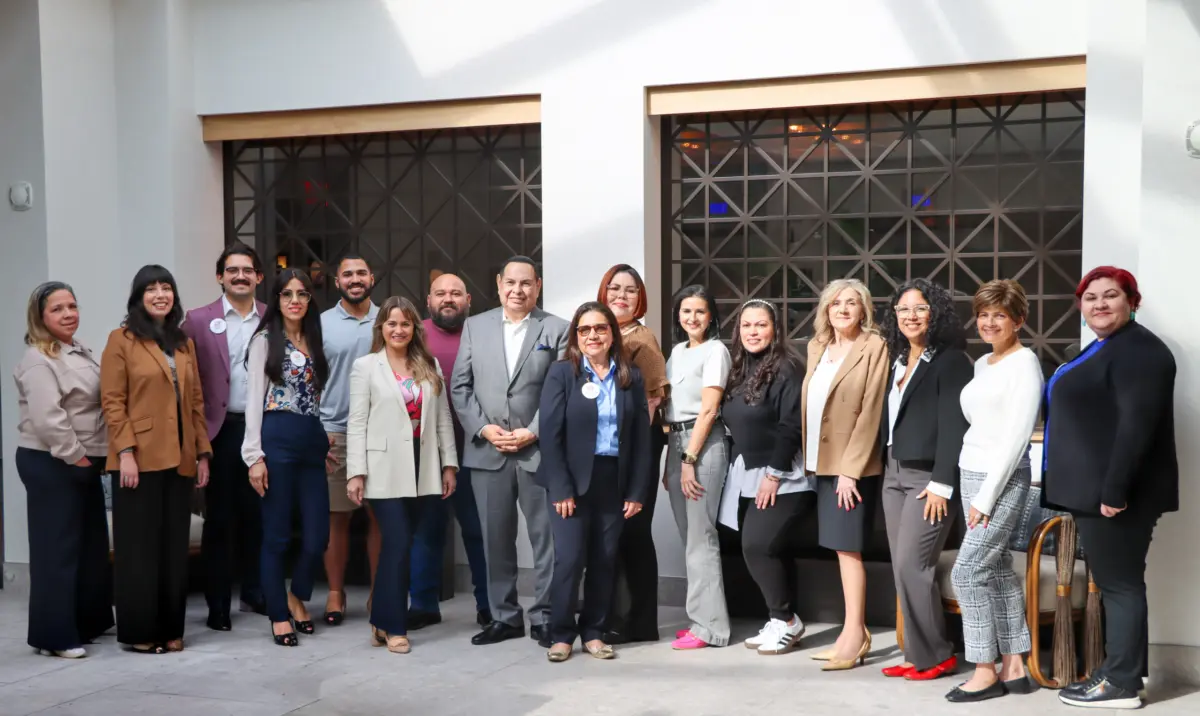
The Latino Cancer Patient Advocate Training Program challenged Adorno’s preconceptions about cancer and expanded his understanding of how to support affected communities. Held biennially ahead of the Advancing Cancer Research for Latinos and All Populations Conference in San Antonio, Texas, the program brings together bilingual survivors and advocates.
With only two weeks to prepare before traveling to San Antonio, Adorno was uncertain of what to expect. "I didn’t know what to expect. I thought I was gonna be like a fly on the wall because I can be an introvert at times, but I had this feeling that kept telling me I need to be out there. I need to talk to people. I need to meet people. I need to get involved because that is the only way that I learn from this opportunity," he explained.
Those apprehensions vanished as soon as he connected with fellow survivors and advocates who shared his cultural background and language. During the training and the subsequent conference, experts instructed participants on the science of cancer, the vital importance of clinical trials, and the intricacies of drug development.
The experience further validated the urgent need for systemic improvements in language accessibility within cancer care.
"I became a patient leader not only to be a voice, but to be there for people who might not be able to say it in their language or to hear things in their language," Adorno said.
Armed with a renewed sense of purpose following the conference, Adorno returned to his work with Pink Ribbon Good, continuing his efforts to expand services to under-served populations across the United States.
While much has changed in his life, one fundamental truth remains: Adorno still hates cancer. But that hatred now serves as the driving force behind his commitment to improving outcomes for Latino patients and others facing the disease.

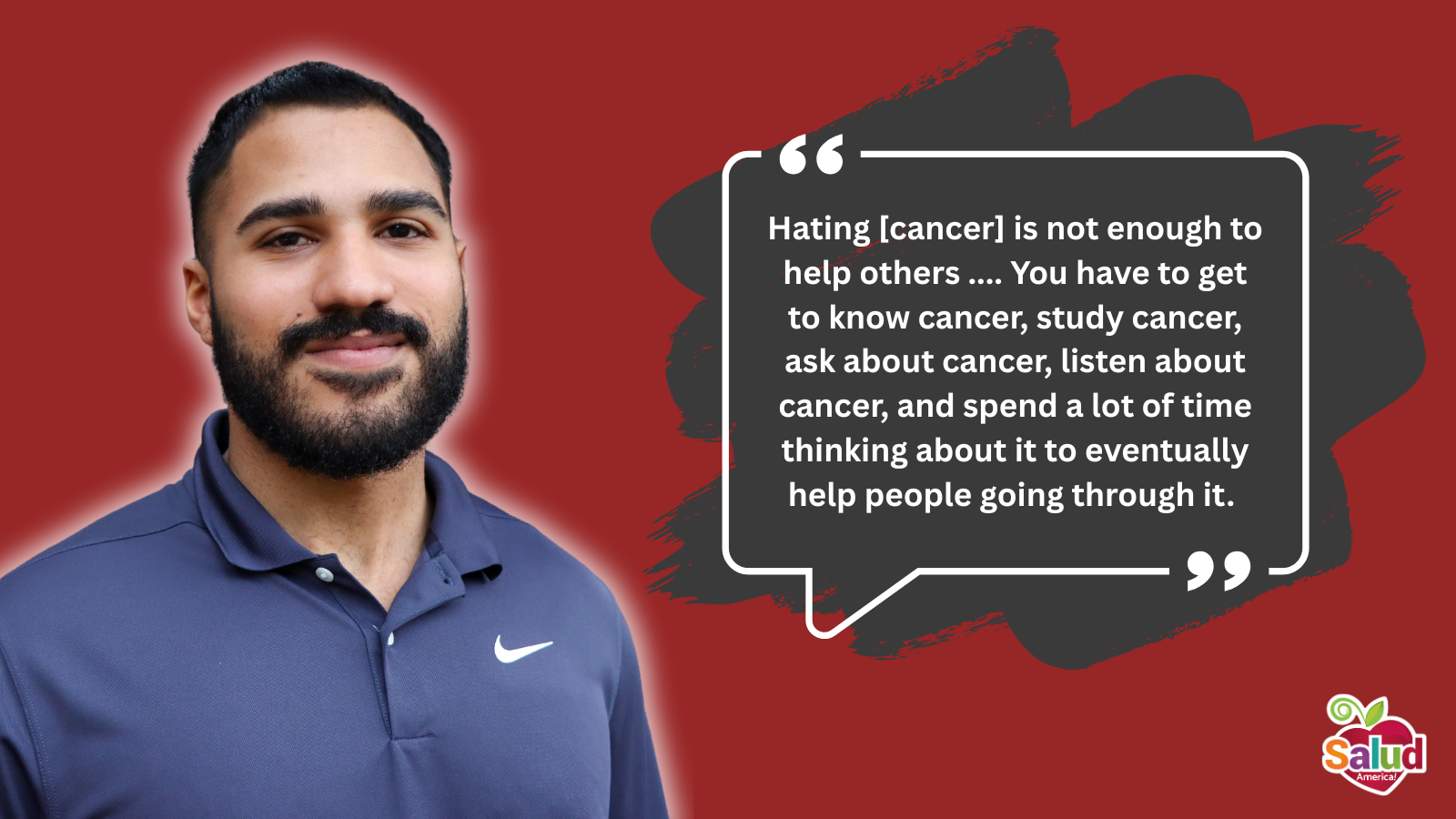
"Hating it is not enough to help others," he said. "You have to get to know cancer, study cancer, ask about cancer, listen about cancer, and spend a lot of time thinking about it to eventually help people going through it."
"When I was younger and I saw what cancer could do to people, it affected me deeply… now it fuels my desire to ensure everyone going through this horrible disease does not have to battle it alone."