









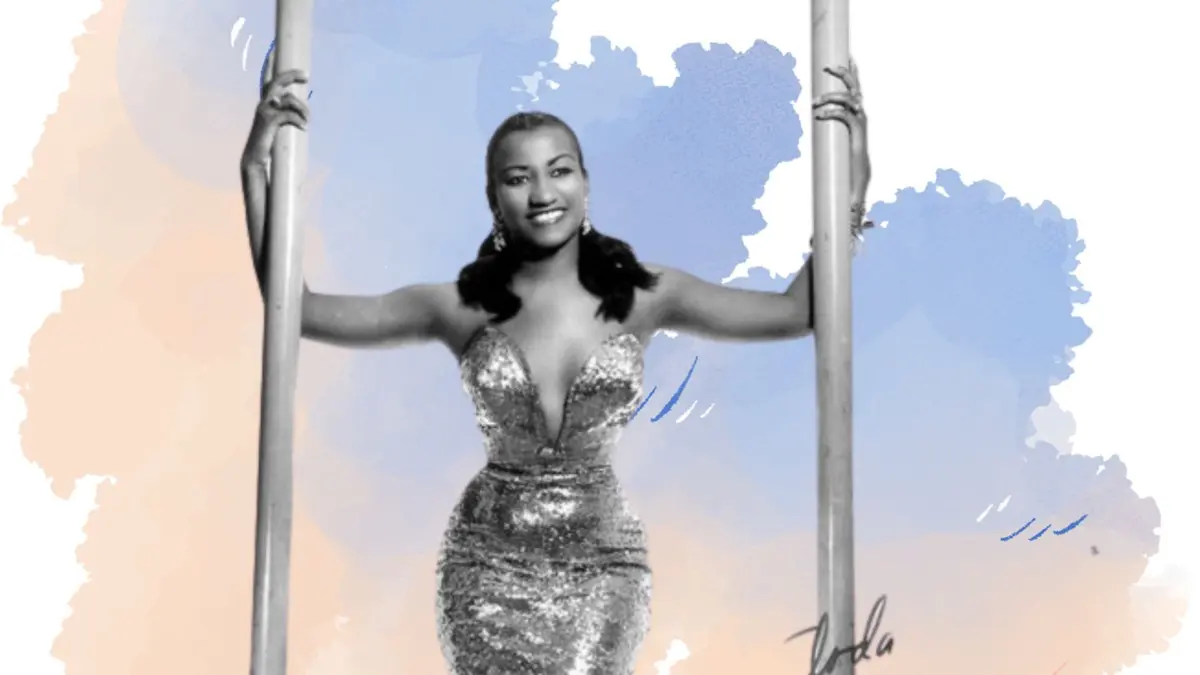
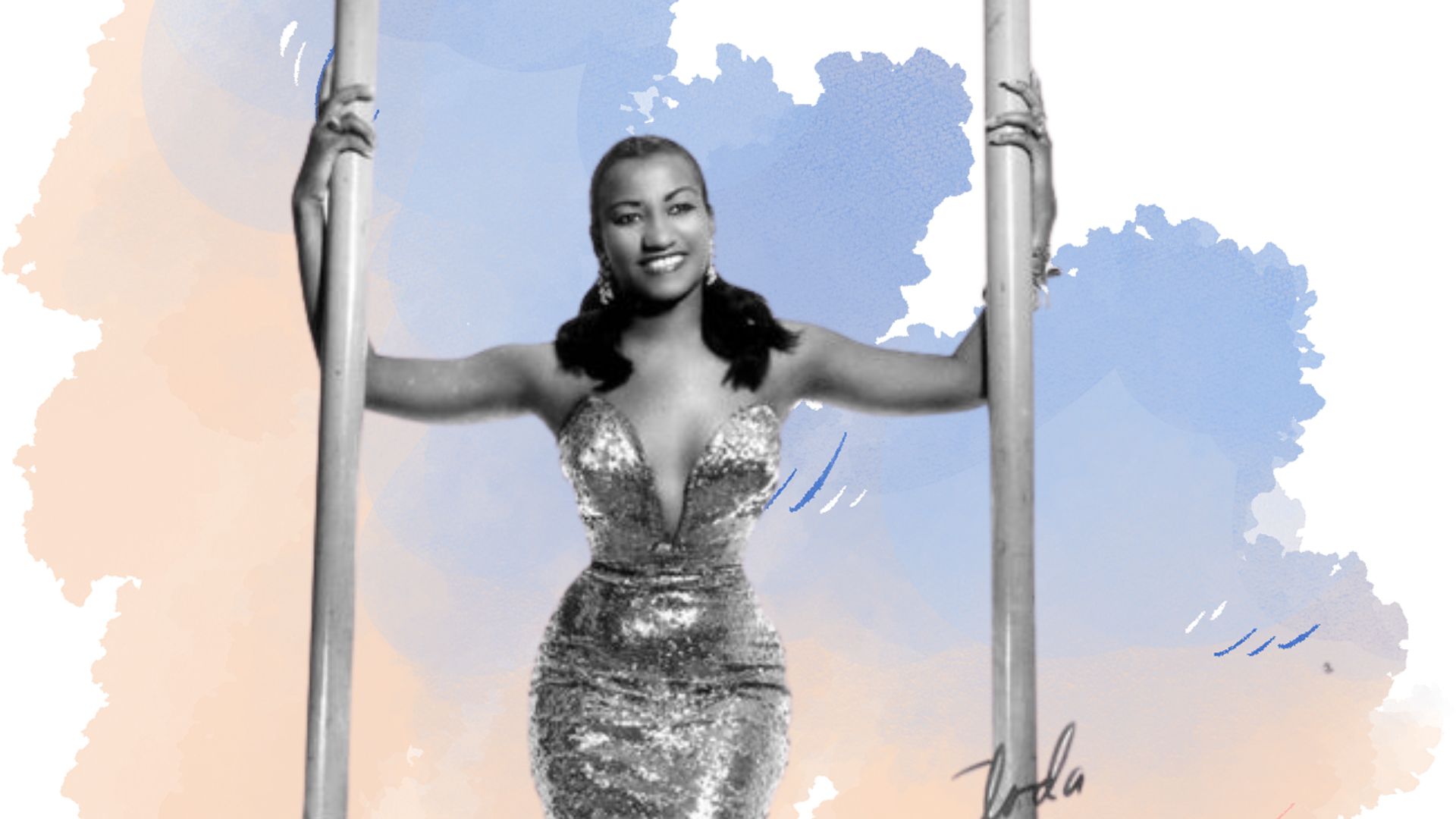
The glittering legacy of Celia Cruz encompasses a pantheon of accolades that few artists in musical history ever achieve: a Grammy Award, a star on the Hollywood Walk of Fame, a Presidential Medal of Arts, an official U.S. quarter featuring her likeness, an iconic Barbie doll, and even a celestial body—an asteroid floating quietly between Mars and Jupiter. In 2023, Rolling Stone cemented her timeless cultural impact by ranking her 18th on its prestigious list of the greatest singers of all time. She stood proudly as the sole Latina artist within the top 20, positioned right between American music legends Elvis Presley and Frank Sinatra in an elite musical category that leaves little room for debate. As the world reflects on what would have been her 101st birthday, the extraordinary life of the undisputed Queen of Salsa continues to offer fascinating chapters, revealing lesser-known stories that shed light on her enduring global resonance.
Whoopi Goldberg Spent Years Preparing to Play Her in a Film That Never Got Made
The cinematic history of Celia Cruz’s life is marked by ambition, dedication, and ultimately, Hollywood roadblocks. In January 2025, acclaimed actress and television host Whoopi Goldberg revealed to the audience on The View that she had spent years preparing to star in a biographical film about the legendary singer. Goldberg shared that she had diligently learned Spanish, secured her production notes, and prepared extensively to step into the role, only for the project to ultimately outlast its momentum.
Historical reports following Cruz’s passing in 2003 indicated that acclaimed actor Samuel L. Jackson had even been considered to portray Pedro Knight, Cruz’s devoted husband and musical director. Yet, despite the star power attached to the concept, the feature film never transitioned into active production. Studio decision-makers reportedly argued that Cruz had lived a life that was too stable and normal to sustain a traditional dramatic biopic—a rationale that Goldberg, one of Cruz’s closest friends and most vocal admirers, fiercely rejected. On air, Goldberg described Cruz as an artist entirely unlike anyone else she had ever known.
Cruz herself had actively championed the concept during her lifetime. In an archived interview with renowned Cuban-American journalist and talk show host Cristina Saralegui, Cruz expressed her enthusiasm for an authorized film based directly on her autobiography. She believed the cinematic medium would introduce her music and story to younger generations who had not yet learned her name. While the biopic never materialized on the silver screen, her voice and vibrant persona traveled seamlessly to every continent on Earth without the aid of a Hollywood film.
The Word “Azúcar” Was Never Supposed to Become an Anthem
Few musical signatures are as instantly recognizable or universally celebrated as Cruz’s roaring exclamation of “Azúcar!” Yet, the narrative behind her signature catchphrase is far more grounded and spontaneous than the grand mythology that eventually surrounded it.
Cruz herself frequently demystified the origin of the word. She explained that she first adopted the term after dining at a Miami restaurant, where a waiter asked if she wanted sugar in her coffee. Reflecting on the mundane exchange, she decided to bring the warmth and spontaneity of the moment directly onto the stage with her. Over the subsequent decades, shouting “Azúcar!” evolved into a powerful theatrical device—a way of celebrating the sheer sweetness of a performance while dynamically affirming her deep Cuban and Afro-Cuban roots.
Cultural institutions have since ascribed profound historical weight to the phrase. The Smithsonian’s National Museum of African American History and Culture framed the exclamation within a much broader cultural context, describing the word as a subtle echo of the enslaved Africans who toiled relentlessly in Cuba’s grueling sugar mills. This historical interpretation transforms what began as a spontaneous, lighthearted response into a powerful vocal tribute with deep ancestral resonance. The Smithsonian even produced a dedicated digital segment through Smithsonian Music to explore why Cruz continuously uttered the phrase, featuring curator Marvette Pérez discussing the full cultural scope of how a single word came to represent a global movement.
She Sang in Japanese at Least Once and the Audience Gave Her a Standing Ovation
Throughout her illustrious commercial career, Celia Cruz made a deliberate and unwavering artistic choice to record and perform exclusively in Spanish. She was remarkably transparent about this philosophy, telling an interviewer in 2002 that while she had recorded a Spanish-language rendition of the Beatles’ “Ob-La-Di, Ob-La-Da,” no promoter or audience member had ever genuinely pressured her to sing in English. Her memorable cameo in the 1992 film The Mambo Kings required English subtitles to translate her dialogue, and her brilliant 2000 release “Yo Viviré”—her driving salsa adaptation of Gloria Gaynor’s disco anthem “I Will Survive”—was performed entirely in her native tongue.
However, a surprising and delightful exception occurred in 1988 during Cruz’s performance at the Newport Jazz Festival held in Madarao, Japan. During this international appearance, Cruz stepped far outside her musical comfort zone to perform a piece written by renowned Cuban pianist Armando Orofiche—not in Spanish, but entirely in Japanese. She took on the daunting linguistic challenge after spotting her own face gracing the cover of a Japanese music magazine, concluding that an audience that welcoming deserved the utmost respect and effort. The crowd’s reaction was immediate and overwhelming, erupting into a prolonged standing ovation that underscored her universal appeal.
Yuri Opened for Her as a Teenager and Celia Told Her to Change Her Sound
The profound mentorship and generosity Cruz extended to younger artists left permanent marks on the Latin music landscape. Mexican pop icon Yuri has frequently recounted a life-changing encounter from her teenage years, when she was hired as an opening act for Cruz’s concert tour.
Recognizing immense raw potential in the young singer, Cruz pulled Yuri aside after a performance and gently suggested that she transition away from standard pop-rock and pivot toward tropical music. Cruz assured her that her vocal range and expressive delivery would achieve far greater heights within the tropical genre. Yuri has repeatedly credited that single conversation with unlocking professional opportunities and guiding her artistic trajectory in ways she never would have found on her own.
The mutual admiration culminated years later in Mexico City in 1997, when the two artists reunited in the recording studio for a special compilation album. They laid down vibrant, energetic versions of Latin classics like “Quimbara” and “Burundanga.” Studio audio captured the genuine emotion of the collaboration, featuring Yuri exclaiming, “Ay, Dios mío, Celia, hasta que se me hizo, mamá” (“Oh, my goodness, Celia, I finally got to do it with you, mama”), to which Cruz immediately responded with characteristic warmth, “Hasta que se te hizo, Yuri” (“You finally got it done, Yuri”). When a curious journalist later asked Cruz whether Yuri was positioned to become her natural successor, Cruz laughed heartily, noting that her own voice was entirely unique and that Yuri would never have to compete with her because the younger star’s style was entirely her own—before playfully asking the press room if they were already attempting to force her into retirement.
There Is an Asteroid Named After Her Orbiting the Sun Right Now
The cosmic reach of Celia Cruz’s legacy extends far beyond earthly charts and concert halls. In 1989, Japanese astronomers Seiji Ueda and Hiroshi Kaneda discovered a celestial body from the Kushiro Observatory in Hokkaido, and the International Astronomical Union eventually registered and named the discovery 5212 Celiacruz.
Cruising through the main asteroid belt situated precisely between Mars and Jupiter, the asteroid measures approximately 12.9 kilometers in diameter and completes one full orbital revolution around the sun roughly every 5.27 years. Cruz, who once famously introduced herself as the high-ranking official of salsa during a memorable television appearance with Cristina Saralegui—accompanied by a knowing laugh that suggested she was entirely aware of the title’s absolute accuracy—now literally has a permanent piece of the solar system bearing her name. This celestial honor rests comfortably alongside her Grammy Awards, her presidential medal, her commemorative postal stamp, and her star on the Hollywood Walk of Fame. Ultimately, the legendary Latina vocalist immortalized by Rolling Stone proves to be an undeniable astronomical fact as well.