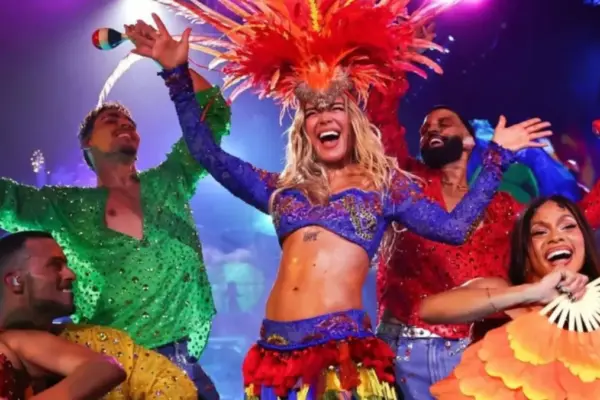









The Karol G Viajando por el Mundo Tropitour concert in Miami almost did not happen. For the writer, who attended through an opportunity with Acoustyle alongside her Colombian friend Angélica Romero—a paisa from Medellín and a costeña from Barranquilla—navigating the aggressively humid Miami streets turned into a night far more profound than anticipated. The heat that greeted them outside was the kind that slaps you across the face and reminds you exactly where you are. Yet, somehow, it felt entirely appropriate, as the pair were already feeling tropical before even walking through the doors. They carried that specific electricity that comes from two Colombian women preparing to watch a fellow Colombian woman utterly own a global stage.
It is worth acknowledging the initial hesitation that many Karol G fans felt going into the Tropicoqueta and Tropitour era. Following Mañana Será Bonito, an album that functioned as collective healing for women in a way that felt less like a traditional concert and more like a therapeutic release, some fans were still craving that specific emotional hug from her music. That previous era spoke directly to the broken parts of Latinas, making them feel profoundly seen in their pain. Tropicoqueta introduces a vastly different energy. At first, that shift felt disorienting—like being handed something bright and colorful when part of you was still holding onto something tender and raw.
However, standing in that vibrant Miami crowd, sweating through a carefully chosen outfit while holding a cold drink dripping down an arm and singing every single word, the transition finally clicked. Latinas are multifaceted individuals who do not exist solely in a permanent healing era. Sometimes, they inhabit a tropical, fully alive era, and Karol G was offering explicit permission to embrace that version of womanhood without guilt or apology.
The Mañana Será Bonito Era and Why It Still Lives in My Body
To fully grasp the cultural and emotional weight of what the Tropitour represented, one has to understand the profound impact of Mañana Será Bonito. That musical era served as an emotional anchor during one of the hardest periods of the writer’s life—a grueling year where daily existence felt so heavy that survival itself was brought into question. Karol G’s voice played on an endless loop, soundtracking private prayers and daydreams about the day when emotional wholeness might finally return.
Because the artist is also from Medellín, Colombia, she felt less like a distant celebrity and more like a trusted sister during those dark moments—someone who understood the human experience without requiring lengthy explanations. That deep sense of emotional proximity carried the writer through more difficult nights than she cared to count.
Driven by that profound connection, she made it a point to attend Karol G’s Mañana Será Bonito show in Miami. Decked out in sparkles and carrying a heavy heart, she walked into Hard Rock Stadium ready to be present for every second of the performance. Music possesses a unique capacity to create intimacy with strangers you will likely never meet, where a single voice and melody are proximity enough to alleviate loneliness.
Yet, during that previous tour, when the emotionally charged track "Amargura" began playing and the collective weight in the room rose to the surface, the overwhelming grief forced her to slip out of her seat and let the moment pass. It was a protective instinct against a sorrow she was not yet ready to process publicly. She carried that unfinished emotional business without realizing it, tucking it away beneath daily life until the right environment emerged to let it finally breathe.
What the Tropitour Gave Me That I Didn’t Know I Was Looking For
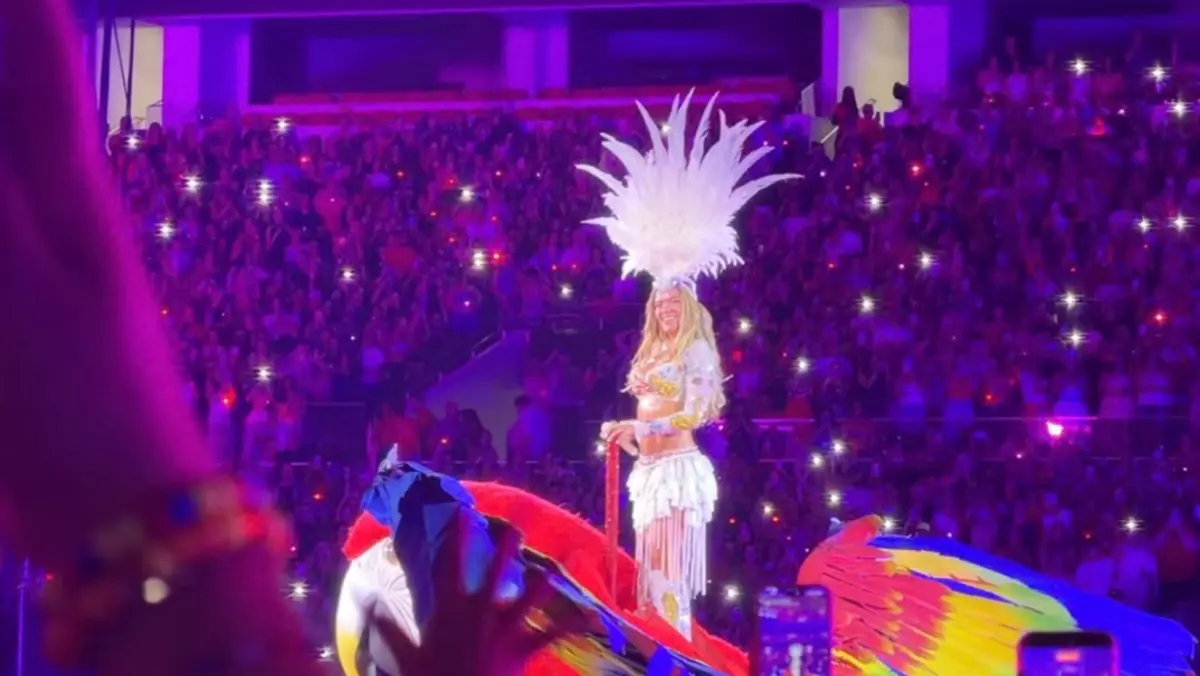
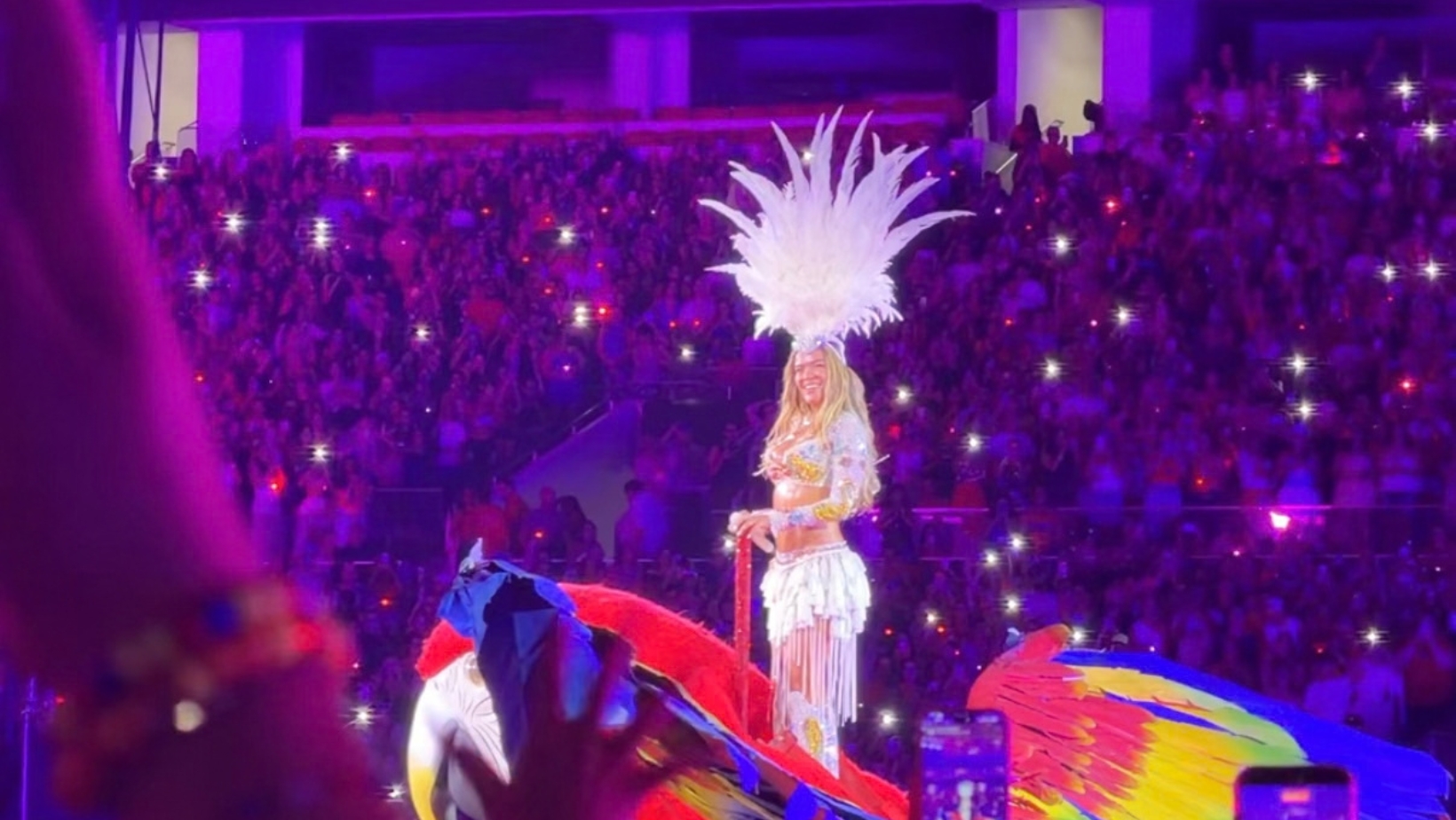
When Karol G took the stage during the Tropitour, her characteristic energy surged through the packed venue before anyone had time to brace for it. Instantly, the writer found herself fully immersed in the experience—dancing, singing, and absorbing every ounce of the tropical atmosphere. The heavy, lingering echoes of the Mañana Será Bonito era felt remarkably distant, and in the best possible sense.
The concert seamlessly blended her signature hits with interactive moments, including inviting fans onto the stage to dance. Among them were two Cuban fans—noted by the artist as some of the first Cubans she had ever brought onto her stage—alongside a Mexican fan and two Colombians. Watching people from diverse backgrounds unite for an energetic perreo to "Bby Wow" captured the purest essence of live music: a room full of individuals from different walks of life discovering the exact same joy at the identical moment.
Further deepening this connection, the production incorporated viral TikTok videos of fans executing the "Bby Wow" dance trend directly into the show’s visual screens. This thoughtful integration underscored how closely Karol G and her creative team monitor and honor their fanbase’s organic influence, rather than taking their audience’s devotion for granted. That attentiveness remains a defining trait that separates artists who merely perform from those who genuinely share the experience with their supporters.
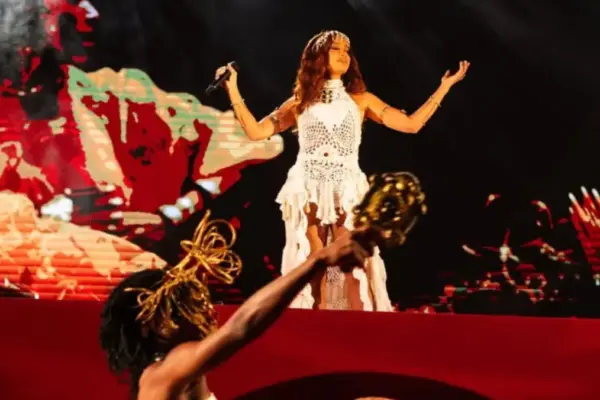
The spirit of collaboration extended further when she brought out mariachi performers, followed by guest appearances from Elena Rose and Greeicy. By deliberately sharing the spotlight with artists still building their platforms—a rare move for someone at the height of international stardom—Karol G modeled the very mentorship and community building she advocates. When she later performed "Bichota" infused with distinct cumbia rhythms, the track felt like it had evolved alongside everyone in the audience, pulling the crowd closer to shared folkloric roots. Underneath the heavy basslines and dance rhythms, the audience had long craved that organic sound, and the Tropitour served as a reminder that listeners are permitted to embrace all facets of their musical identity.
"Amargura" and the Moment I Realized How Much I Have Healed
Midway through the concert, pyrotechnic flames erupted near the stage, adding an intense layer of physical heat to an already sweltering Miami night. As the opening notes of "Amargura" rang out, the writer’s body recognized the song before her conscious mind could process it. All the unresolved emotions carried over from the last time she heard the track live came rushing back in a single wave.
However, unlike the previous tour where the grief necessitated a hasty retreat from the venue, this time was different. She stayed. She sang every word, danced through the melody, and permitted herself to experience genuine joy inside a song that once felt entirely too heavy to inhabit. Somewhere amid the lights, the heat, and the music, she realized that the unfinished emotional chapter left open during the Mañana Será Bonito tour had finally found its completion.
The evening served as a full-circle realization that materialized unexpectedly from a concert she almost skipped. Karol G’s artistic evolution moves rapidly across genres and eras, yet her catalog consistently addresses the complex emotional realities of her listeners—whether they are broken, thriving, or navigating the messy spaces in between. The Tropitour stands as living proof that this empathetic connection remains intact, even as her sonic palette expands.
Women can embody the fierce, resilient energy of a matadora while still carving out space to sing joyful anthems like "Pineapple" and "Mamiii," because human emotion encompasses all of those dimensions simultaneously. Standing in that crowd in Miami, finally singing "Amargura" from beginning to end without having to flee the room, the writer understood a vital truth: the healing process initiated during Mañana Será Bonito was never truly over. It had simply transformed into something new.