








The Viajando por el Mundo Tropitour concert in Miami nearly didn’t happen for me, and that near-miss casts a different light on how this story unfolded. When an opportunity arose through Acoustyle, I decided to take the leap, bringing along my close friend Angélica Romero. We are two Colombian women—a paisa from Medellín and a costeña from Barranquilla—who found ourselves navigating the aggressively humid Miami streets together on a night that ultimately delivered far more than either of us anticipated. The heat that greeted us outside was the type that slaps you across the face, reminding us precisely of where we were. Yet, somehow, it felt entirely appropriate. We were already feeling tropical before stepping through the doors, carrying that specific, crackling electricity that comes from two Colombian women preparing to watch a fellow Colombian woman utterly own a massive stage.
It is worth acknowledging the hesitation many Karol G fans felt as the Tropitour era began, because I shared those doubts. Following Mañana Será Bonito, an album that served as a form of collective healing for women—functioning less like a standard concert and more like group therapy—many of us were still craving that particular embrace from her music. That album spoke directly to the broken, vulnerable parts of Latinas, making us feel profoundly seen in our pain. Tropicoqueta brings a distinctly different energy, and initially, that shift felt disorienting. It was like being handed something bright, vibrant, and high-energy when a part of you was still clinging to something tender and unresolved. But standing shoulder-to-shoulder in that Miami crowd, sweating through a bold outfit while a cold drink dripped down my arm and I sang every single lyric at the top of my lungs, the transition finally clicked. Latinas are multifaceted beings; we do not exist solely in a perpetual healing era. Sometimes, we find ourselves in a tropical, fully alive era, and Karol G was effectively granting us permission to inhabit that vibrant version of ourselves entirely without guilt or apology.
The Mañana Será Bonito Era and Why It Still Lives in My Body
To truly understand what the Tropitour meant to me, one has to comprehend the profound impact Mañana Será Bonito had on me first. That musical era sustained me through some of the darkest and most challenging periods of my life, arriving during a year when the emotional weight of everything made me genuinely question whether I would make it through. Karol G’s voice was a constant presence on my speakers. I spent countless hours praying and daydreaming about a future day when I would feel whole again, playing her tracks like a binding promise to myself that healing would eventually arrive. Because she is Colombian and hails from Medellín—the very same city as me—she felt like a sister during those trying moments. She felt like someone who understood the human experience without requiring lengthy explanations, and that profound sense of emotional closeness carried me through more sleepless nights than I care to recall.
Given how deeply that album resonated with my personal life, I made it an absolute priority to attend her Mañana Será Bonito show in Miami. I dressed up in sparkles, feeling cute yet carrying a heavy heart, and walked into Hard Rock Stadium fully prepared to be present for every single second of the experience. Music possesses a unique capacity to forge deep intimacy with artists you will likely never meet in person, and sometimes a familiar voice and a comforting melody provide enough proximity to alleviate the profound loneliness of personal hardship. That night was supposed to be my catharsis. However, when the song "Amargura" began playing and the collective emotional weight in my chest rose sharply to the surface, I quietly slipped away from my seat and allowed the moment to pass without me. I was simply protecting myself from a wave of grief I was not yet emotionally equipped to process in a public stadium. I carried that unfinished, dangling emotional thread with me for months, tucked quietly beneath the surface, waiting for the right moment to finally let it breathe.
What the Tropitour Gave Me That I Did Not Know I Was Looking For
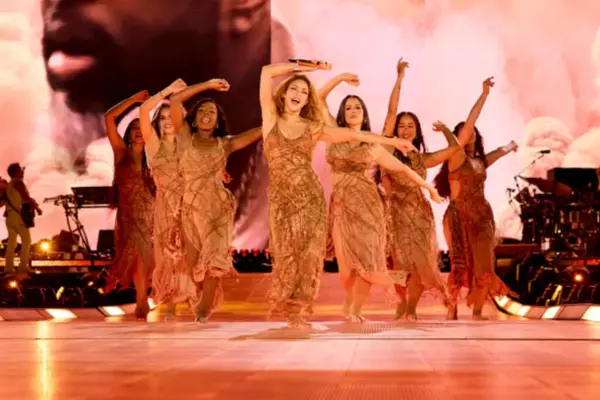
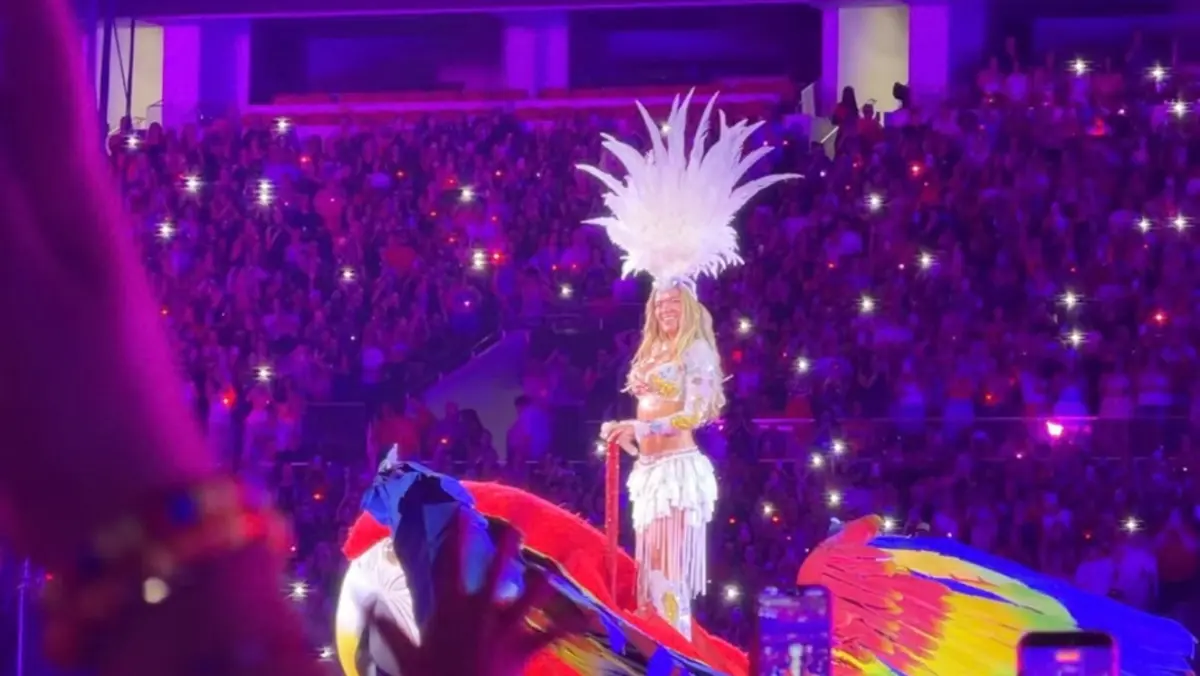
When Karol G stepped onto the stage for the Tropitour, her signature explosive energy swept through the packed arena before I even had a chance to steel myself. Before I knew it, I was fully immersed in the experience—dancing, singing, and absorbing every ounce of the vibrant tropical atmosphere she had meticulously constructed. The version of myself from the Mañana Será Bonito era suddenly felt distant, in the absolute best way possible. She powered through her catalog of original music before inviting fans up onto the stage to dance alongside her. That inclusive group featured two Cuban fans—whom she noted were among the very first Cubans she had ever welcomed onto her stage—alongside a Mexican fan and two fellow Colombians. Watching people from such diverse backgrounds converge in that exact space for a joyful perreo to "Bby Wow" felt like a genuine celebration of what live music is truly meant to achieve: a room full of strangers finding unified joy at the exact same time.
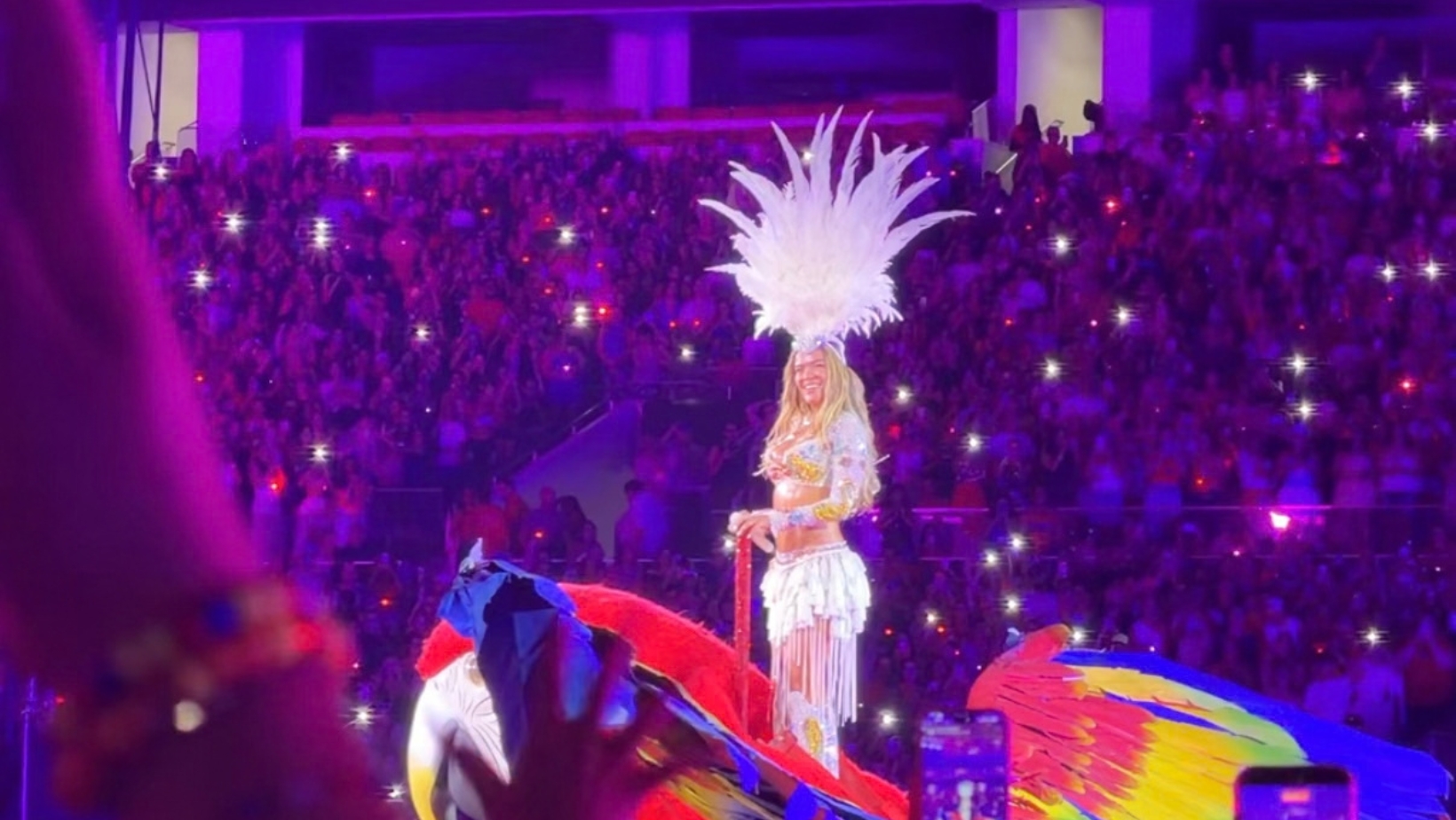
What made the gesture even more remarkable was her decision to incorporate TikTok videos of fans executing the "Bby Wow" dance trend directly into the arena’s visual production. This creative choice spoke volumes about how Karol G and her management team operate. They are actively paying attention to the grassroots digital culture surrounding her influence, choosing to honor and uplift her supporters rather than take their dedication for granted. That high level of attentiveness is precisely what separates elite artists who merely perform for an audience from those who actively create with their audience.
That same collaborative spirit was palpable when she introduced mariachi musicians to the stage, followed by guest appearances from Elena Rose and Greeicy. By deliberately sharing the spotlight with artists who are still actively building their professional momentum—something major headliners at her level rarely prioritize—Karol G demonstrated a profound generosity. Watching her carve out space for others after fighting so hard to secure her own space in the industry felt like a powerful lesson in community. By the time she launched into a cumbia-infused rendition of "Bichota," the track felt as though it had matured alongside everyone in the audience. It felt as though we were collectively stepping closer to our shared folkloric roots, proving that underneath all the heavy perreo, our community has always craved those traditional sounds. The Tropitour served as Karol G’s emphatic way of telling us that we are fully permitted to want it all.
"Amargura" and the Moment I Realized How Much I Have Healed
Right in the middle of the concert, towering bursts of stage flames erupted beside us, adding an extra layer of ambient heat to an evening that was already sweltering. Then, the opening notes of "Amargura" began to echo through the venue. My body recognized the melody long before my conscious brain could process it, and everything I had instinctively suppressed since the last time I heard that song live rushed back in an instant. The previous time, the emotional weight had forced me to flee the room because I simply was not ready to confront what the music would draw out of me. This time, however, I stayed put. I sang every single word, danced freely to the rhythm, and allowed myself to experience genuine joy inside a song that had once felt entirely too heavy to inhabit. Somewhere in the middle of that swirling energy, I realized that the unfinished emotional business I had been carrying since the Mañana Será Bonito tour had finally reached its completion.
It served as the textbook definition of a full-circle moment—one I certainly was not consciously seeking when I nearly opted out of attending this concert altogether. Karol G continuously evolves through distinct artistic eras, yet her musical catalog consistently meets listeners wherever they happen to be emotionally. Whether a fan is broken, thriving, or navigating the complicated, messy space somewhere in between, her music walks right beside them. The Tropitour stands as definitive proof that she has never abandoned that empathetic connection, even as her musical palette and aesthetic continue to shift. We can effortlessly channel our inner emotional bichotas with fierce matadora energy while still making ample time to sing along to tracks like "Pineapple" and "Mamiii," because human beings contain multitudes. Karol G has consistently delivered that message without a hint of apology across every genre she touches. Standing firmly in that crowded Miami venue, finally singing "Amargura" from start to finish without needing to escape to the concourse, I finally understood a profound truth: the healing she initiated within me during the Mañana Será Bonito run was never truly over. It was simply transforming into something entirely new.