





The first time I watched the horror film Obsession this year, I left the theater feeling a complex mix of being thoroughly unsettled yet deeply entertained. Following its unexpected global box-office success over the summer, it is safe to say that plenty of other moviegoers enjoyed the chilling ride as well. As someone who always looks forward to planning elaborate Halloween costumes every year, I initially saw the movie as a fun, timely excuse to dress up as Inde Navarrete’s hit character, “Nikki Freeman.” After all, Nikki quickly emerged as the third most-searched Halloween costume of 2026, according to Google’s Frightgeist rankings, an annual analysis tracking trending television and film costume searches.
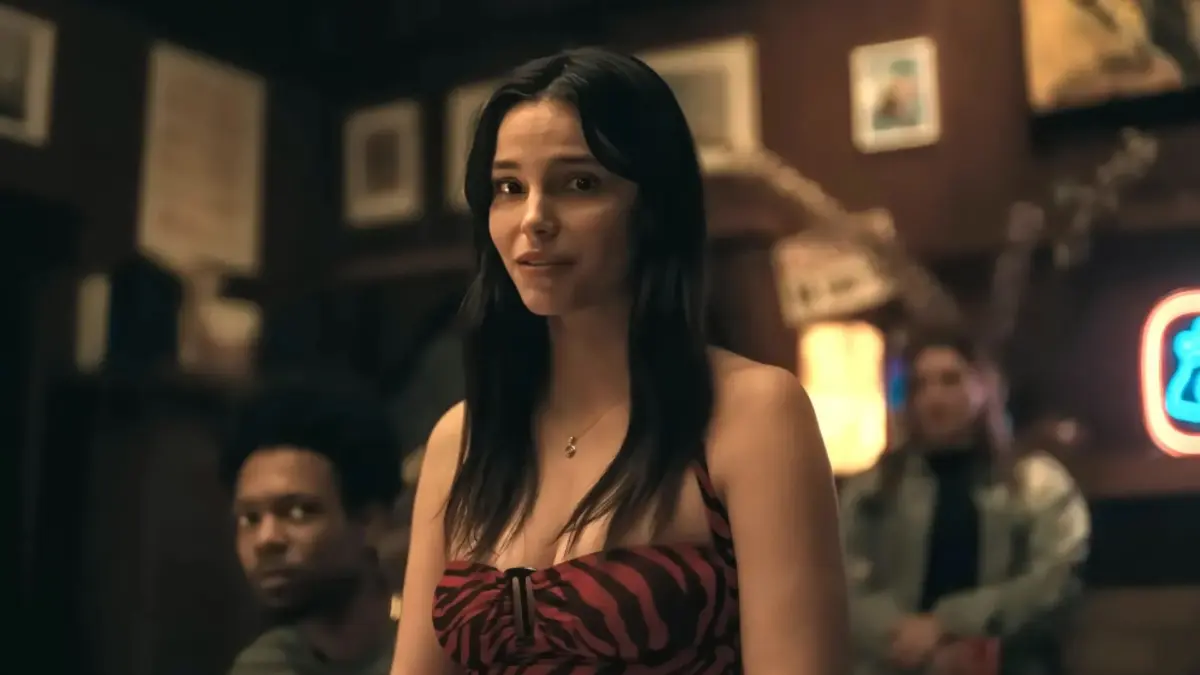
One of Navarrete’s most popular and recognizable looks from the movie features long black hair, a red zebra-print halter top, short leather shorts, and edgy black boots. Searches for Nikki’s signature top reached an all-time high right after the movie premiered in May. Fast-fashion websites such as Dolls Kill and Princess Polly quickly capitalized on the trend by offering fast replicas. With my brunette hair and half of the outfit already hanging in my closet, I figured I could easily pull off the look. Plus, paying homage to one of the year’s most breakout Latina actresses sounded like a cool and culturally relevant choice.
However, as I continued planning my outfit for Halloween, I ultimately decided that dressing up as Nikki simply wasn’t worth the risk of perpetuating the pervasive and harmful “toxic Latina girlfriend” trope. I realized I did not want to dismiss valid concerns about how the character’s controlling, manipulative, and jealous behavior played directly into this old cinematic stereotype—thereby completely overshadowing her actual experience as a victim of supernatural forces.
By now, film critics and internet commentators largely agree that, despite being the movie’s primary source of visceral horror, Nikki was never truly the villain of the story. Instead, she was stripped of her free will and left to suffer immensely. Bear, the film’s actual antagonist and the only person who knows what Nikki is genuinely going through, is persistently portrayed as a casualty of her behavior. That specific framing mirrors the real-world experiences of countless Latina women who are routinely written off dismissively as tóxicas.
The plot of the movie follows Bear, a young man harboring an obsessive crush on his coworker, Nikki. When he completely loses his nerve while trying to honestly express his feelings to her, he resorts to using a mysterious novelty toy called a “One Wish Willow” and desperately wishes that Nikki would love him more than anyone else in the entire world. Unbeknownst to Bear, his seemingly harmless supernatural wish unleashes a dark curse, causing Nikki to become possessed by an otherworldly, and at times deadly, obsession with him.
Nikki wears her frequently searched red-and-black outfit during some of her most memorable and terrifying scenes: her infamous eerie pout, her uncanny backward walk away from Bear, and the chilling moment she refers to herself as “Freaky Nikki,” a deeply derogatory nickname that her actual conscious self absolutely hated. She is thoroughly possessed during most of these frightening scenes. Yet, in fleeting moments of genuine terror, her true conscious self desperately breaks through the supernatural control, only for the malevolent wish to forcefully take over again.
The longer I considered putting the costume together, the more uneasy I felt about the implications. Nikki was fundamentally the victim of a man who was obsessed with the idea of possessing her. To be entirely clear, the movie itself never explicitly identifies Nikki’s cultural background. The single scene that might subtly allude to her heritage occurs when a possessed Nikki meticulously creates an altar on the kitchen floor, arranging a red cloth, a traditional prayer candle, and cempasúchil flowers and petals around Bear’s recently deceased cat. The arrangement closely resembles a traditional Mexican ofrenda, which is typically created to honor deceased loved ones for Día de los Muertos. Even if this was intended as a fleeting or throwaway scene, utilizing a traditional Mexican custom within a horror plot feels entirely intentional. Nikki’s character drives much of the film’s core horror—featuring blood, gore, supernatural activity, and murder—yet the complex motives behind her possessed actions complicate her connection to the tired toxic Latina girlfriend trope.
Across television, movies, music, and social media platforms, Latinas have historically been stereotyped as overly jealous, controlling, hot-tempered, obsessive, and manipulative in their romantic relationships. Interestingly, men within the Latino community also frequently perpetuate this very same stereotype. In an interview with Navarrete conducted just a few weeks after the movie’s May 2026 theatrical debut, video producer Alex Canales casually referred to Nikki as a “total tóxica,” prompting Navarrete to nod and respond with a quiet “uh huh.” Doubling down on the characterization, Canales added that there are “so many girls” he personally knows “in real life that don’t need a magic wish to be like [Nikki].”
This persistent stereotype remains rampant across the Latin music industry as well. Consider superstar artists Romeo Santos and Prince Royce’s hit 2025 bachata song “Lokita por mi,” whose lyrics explicitly romanticize a love interest described as “stubborn, paranoid, sarcastic, high-strung, feisty, possessive, and jealous,” while attempting to turn the phrase “my crazy bitch” into a term of endearment. Similarly, one can look at the numerous popular songs titled “La Tóxica” released by various major artists such as Farruko, Mariah Angeliq, and Anitta—different artists and different tracks, yet all ultimately reducing Latina women to the exact same one-dimensional caricature.
Even when a Latina character’s specific cultural identity is not central to her narrative role, the broader entertainment industry has managed to make these negative traits seem inherently Latina-coded. That implicit, pervasive connection is exceptionally difficult to unsee once you notice it, especially with a character like Nikki. Navarrete herself addressed this exact discourse during an interview with “De Los,” the Los Angeles Times’ dedicated Latinidad vertical. She candidly noted that people had readily used the “tóxica” label to reduce Nikki to a flat stereotype based heavily on her own real-world identity as a Mexican American woman—and she admitted that it genuinely hurt her.
“Whenever I first saw that, I kind of cried because it made me really sad that people took my pride in being Mexican and saw it as, ‘Let’s degrade this person’s experience,’” Navarrete told De Los. “There’s this idea that Latina women are just so intense and so crazy. But let’s look a lot deeper than that. It did hurt my feelings. But I can understand where they’re coming from. It’s a surface-level thing to say, and sometimes jokes are just that.”
And that remains the fundamental problem with cultural stereotypes: they continually persist and spread, regardless of the original intentions of creators or performers. Many individuals feel boxed into these narrow identities just to survive in a challenging world until something better eventually comes along. Obsession was originally a small-budget independent production that unexpectedly transformed into an overnight box-office success, providing Navarrete with her major feature-film breakout role. In many ways, she functioned as Obsession’s traditional “final girl”—a classic horror trope in which one resilient female character manages to survive the carnage. In doing so, she mirrored the deep resilience and survival mechanisms that many real-world women labeled as tóxicas must rely on to endure the daily pressures of patriarchal power structures.