







BUENOS AIRES — Shockwaves reverberated across Argentina this week following the emergence of disturbing video footage depicting a group of men aggressively chasing, insulting, and physically assaulting trans women in the upscale Buenos Aires neighborhood of Palermo. The violent incident, which was recorded during the early hours of Monday morning, quickly went viral across Argentine social media platforms, sparking a wave of national outrage, sharp political condemnation, and renewed warnings from human rights organizations regarding a dangerous escalation of hate crimes targeting the LGBTQIA+ community.
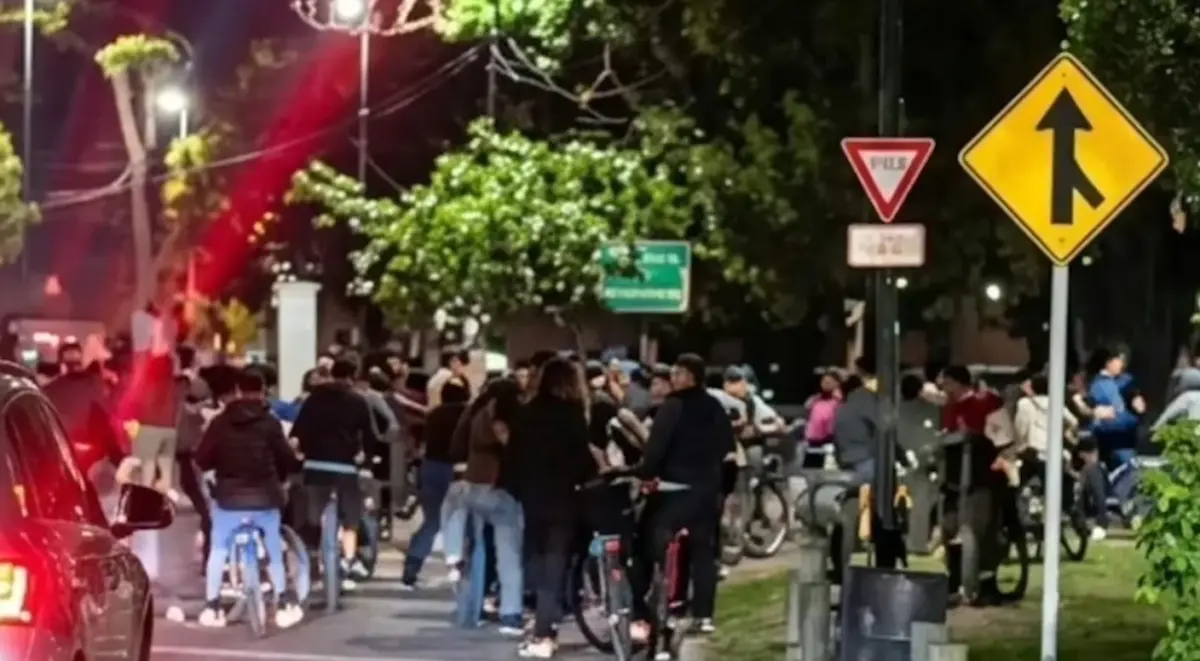
The graphic footage captures a coordinated group of individuals moving on foot and bicycles through the darkened streets of the Bosques de Palermo, a sprawling public park and recreational area. The attackers can be seen hurling vicious verbal abuse at the victims while actively striking them with a variety of improvised weapons, including wooden sticks, glass bottles, and heavy orange traffic cones typically used for road and street management. Rather than concealing their actions, the perpetrators brazenly uploaded the assault to various social media platforms themselves, circulating the video alongside taunts and mockery directed at the victims.
According to witness accounts and testimonies gathered by local media outlets, the confrontation began earlier in the evening when a small group of men riding bicycles through the area started shouting insults and provocative remarks at the women. After the women defended themselves and talked back to the harassers, the situation escalated dramatically. The initial group reportedly returned shortly afterward, this time heavily reinforced by a larger contingent of individuals equipped with weapons, launching a coordinated physical assault upon the victims.
Multiple bystanders and witnesses dialed emergency services to notify the local police of the ongoing violence. However, by the time law enforcement officers arrived at the scene, both the assailants and the victims had already fled or dispersed to ensure their safety. According to reports published by the prominent Argentine daily newspaper La Nación, several of the affected women formally filed a police complaint with the Buenos Aires City government. Preliminary reports indicate that at least six women sustained physical injuries during the targeted assault.
The incident has drawn swift and severe condemnation from civil rights advocates, who argue that the attack was premeditated. María Rachid, president of the Argentine LGBT Federation (FALGBT), did not hesitate to categorize the assault as a "hunt." In an interview with Radio Rivadavia, Rachid emphasized that the attack bore all the hallmarks of a planned operation rather than a spontaneous street altercation.
"It was organized because they were carrying sticks, bottles, and other elements to throw at them. This wasn’t just random people on bikes who all of a sudden decided to do this," Rachid stated during the radio interview. She further noted that the identification of the perpetrators should prove straightforward, given that many of the attackers openly filmed and bragged about their actions on social media.
Buenos Aires City Mayor Jorge Macri addressed the incident late on Tuesday through a public statement shared on social media, describing the violence as a "very serious" matter that the municipal administration "will not allow to go unpunished." He assured the public that the local government is treating the case with the utmost urgency.
"The security and justice ministries are already working on an investigation to identify the guilty parties," Mayor Macri wrote in a post on X, formerly Twitter, adding a stern warning to the perpetrators: "We are going to come down on them with the full weight of the law."
The timing of the violent attack has added an extra layer of tension and urgency to the national conversation, coming directly on the heels of preparations for the annual Pride March, widely considered the most significant LGBTQIA+ public demonstration of the year in Argentina, which is scheduled to take place on Saturday, November 7.
Widespread Outrage and Condemnation
The assault unleashed a torrent of condemnation from a broad coalition of human rights organizations, political figures, and prominent cultural icons across the country, many of whom pointed directly to political rhetoric as a contributing factor to the rising tide of hostility.
The Argentine Homosexual Community (CHA) issued a strong rejection of the violence, utilizing their official social media channels to argue that hostile rhetoric from leadership has fostered a dangerous environment on the ground. The organization asserted that "hate speech is no longer limited to online insults by government officials," directing harsh criticism toward the highest levels of national leadership. In a direct message posted online, the organization wrote, "Mr. President: You are the most responsible for the growth of violence in Argentina. Comply with the law, do your job."
Similarly, the Buenos Aires chapter of H.I.J.O.S., a prominent human rights organization composed of the children of individuals who were disappeared during Argentina’s military dictatorship, voiced their energetic rejection of the hate-based attack in Palermo. Highlighting the proximity of the upcoming Pride March, the group raised alarms over both the violent incident itself and the broader societal impact of inflammatory language used by elected public officials. "A Hating State has consequences," the organization posted on social media.
Elected officials also weighed in on the unfolding crisis. Left-wing national deputy Myriam Bregman took to social media to condemn the Palermo assault while directly naming President Javier Milei, Buenos Aires City Mayor Jorge Macri, and Deputy Mayor Clara Muzzio. Bregman argued that official rhetoric serves to embolden violent actors.
"Because of this, on Saturday we march. No more hate-based attacks!" Bregman wrote, encouraging citizens to turn out in large numbers for the weekend demonstration.
The attack also galvanized prominent Argentine cultural figures, who used their massive platforms to demand accountability and express grief over persistent violence. Pop star Lali Espósito publicly condemned the assault, expressing frustration with public and media priorities. She criticized media outlets for focusing on trivial entertainment news rather than paying attention to "a group of 50 guys who go hunting for trans people who are working on the street."
Fellow music superstar Tini Stoessel shared a poignant message via an Instagram story, similarly characterizing the incident as a coordinated hunt against trans women. "Until when? How many more times will we have to condemn the same thing? How much longer will we have to continue explaining that no one deserves to be chased or live in fear?" she wrote, echoing the sentiments of thousands of social media users.
Lu Viera, a prominent trans activist and university professor who was instrumental in bringing widespread public attention to the attack by circulating the initial footage, underscored the psychological toll that such continuous hostility takes on the community. Viera explained that the harrowing images merely capture the reality of how the trans community lives under a constant, looming threat of violence.
"Do you know how exhausting that is? To live with that every single day," Viera lamented, while making an impassioned plea for solidarity and public mobilization ahead of the weekend’s Pride March. "In the face of hate, we answer with pride, memory, and organization. Because our lives matter, and we will not take a step back."