








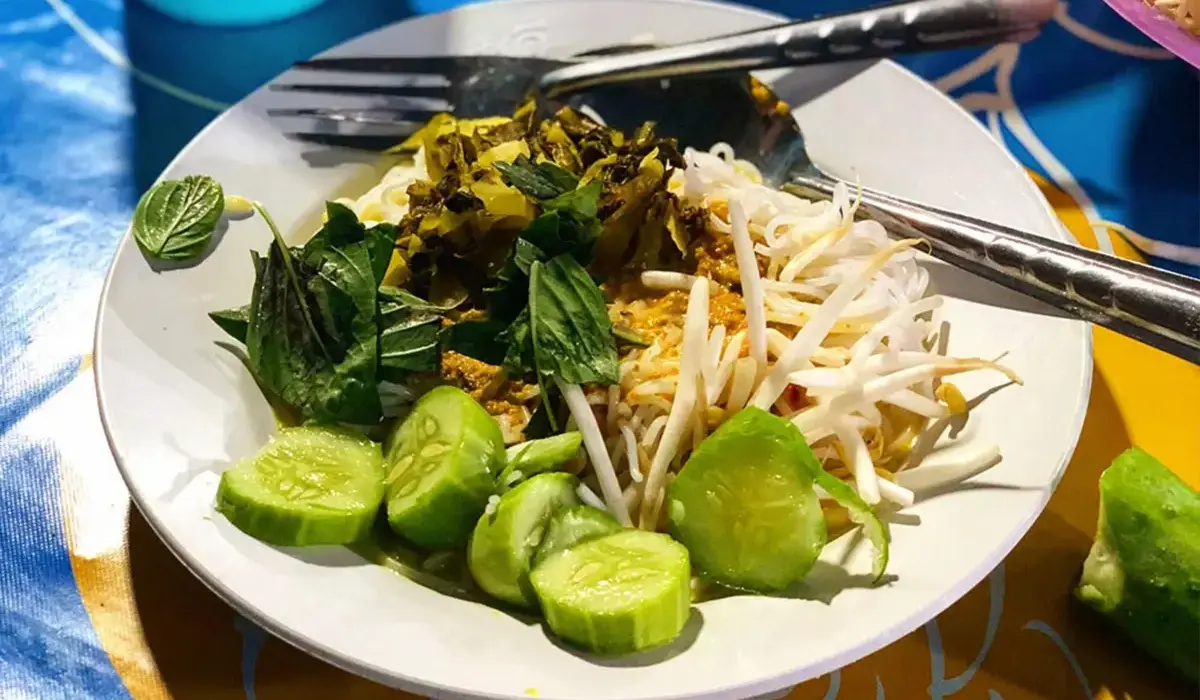
When chefs Justin Ahn and Alex McCoy first launched Alfie’s as a pop-up restaurant back in 2016, they could scarcely have imagined that the road to securing a permanent brick-and-mortar home would span nearly a decade. What began as a temporary destination in the nation’s capital, where the culinary duo served vibrant northern Thai cuisine to a tight-knit service industry community and local regulars, lasted for just a fleeting few months. Following the conclusion of that initial run, Ahn and McCoy transformed the venture into a roving concept, taking their distinctive dishes and dynamic energy to cities around the world. Now, nearly ten years after their initial splash, the proprietors are finally planting permanent roots in Washington, D.C., with a cozy venue tucked away in Georgetown.
The newly established permanent location is an intimate 25-seat space hidden inside an alleyway just off the bustling thoroughfare of M Street. Diners entering the venue are treated to northern Thai dishes crafted thoughtfully with Mid-Atlantic ingredients, paired with natural wines produced just a short drive across the river in Virginia. Despite graduating to a permanent address, the restaurant proudly retains the core elements that defined its early days as a pop-up. The run-and-gun service style remains intact, alongside a shifting chalkboard menu that adapts dynamically based on whatever seasonal produce and proteins local purveyors have available on any given day.
To understand how the team successfully navigated the long journey from a temporary experiment to a permanent fixture while preserving its distinct operational philosophy, Eater caught up with co-owner Alex McCoy for a candid discussion about the challenges, reflections, and mindset behind one of the country’s most closely watched new openings.
Launching Alfie’s in a Pop-Up Format
Reflecting on the genesis of the brand, McCoy explains that the initial pop-up format was born out of a practical real estate overlap rather than a calculated long-term marketing strategy. At the time, the team already had a permanent space in the Petworth neighborhood that was actively undergoing construction and build-out. Simultaneously, another restaurant location further down the street was slated for future demolition.
After approaching the landlords, McCoy and Ahn secured temporary access to the space, with the agreement that they could operate it until their own permanent location was ready or the demolition project commenced. Initially viewed as a low-stakes opportunity to train kitchen and front-of-house staff, test recipes, and refine menus while their main restaurant was tied up in construction, the temporary spot quickly evolved into something much larger.
Located in a relatively quiet part of town, the pop-up was intended to be a fun, experimental side project, but it rapidly transformed into a bona fide cult sensation. For months in advance, the tiny dining room was completely packed, drawing high-profile attention from major publications. Vogue featured the concept, and Bon Appétit subsequently named it one of the top new restaurants in America. Yet, looking back, McCoy notes that the entire run of the original location lasted for only about six months in total—a remarkably brief window for a project that left such an enduring impression on the local culinary landscape.
Following the closure of the pop-up in 2017, the original plans for the Petworth space ultimately fell through, forcing the team back to the drawing board to search for an alternative venue. During the intervening years, Ahn and McCoy kept the concept alive through a series of roving pop-up engagements spanning New York, Washington, D.C., and London. A significant portion of this period was spent overseas, particularly in London, where they collaborated with fellow chefs at Carousel. McCoy credits this extensive time on the international road as the true crucible that evolved the brand into its current identity.
Shaping the Concept on the Road
The global restaurant industry underwent profound structural shifts in the wake of the COVID-19 pandemic, as operators everywhere struggled to find viable economic models amid skyrocketing operational costs and rising labor expenses. Many businesses attempted to adapt by implementing streamlined service styles, reducing front-of-house staff, cutting back on traditional table service, and introducing digital ordering systems like QR codes. For McCoy, however, the financial math of these corporate models simply did not add up to a sustainable or satisfying dining experience.
Instead, McCoy looked abroad for inspiration, drawing parallels to the intimate, neighborhood hole-in-the-wall establishments tucked away in the backstreets of Paris and London. In those European culinary hubs, chefs typically avoid the trappings of empire-building—such as operating six or seven disparate restaurants simultaneously—and instead choose to anchor themselves inside a single, intimate space alongside a tight team of one or two trusted colleagues. This philosophy not only aligned with the original heart and soul of Alfie’s, but it also crystallized for McCoy as the most authentic and viable way forward for the brand’s future.
After concluding their final international pop-up series in London, the duo stumbled upon the distinct alleyway location in Georgetown. To McCoy, Georgetown offered the most European aesthetic and neighborhood feel of any district in Washington, D.C. The venue itself is an incredible 25-seat space situated directly behind the heavy pedestrian and vehicular traffic of M Street. Featuring a slightly gritty, character-filled atmosphere where visitors step down into an alley and navigate passing cars, the location immediately resonated with the founders as the ideal vessel to encapsulate the vibe, ambiance, and raw energy they sought to cultivate.

Maintaining the Pop-Up Mindset in a Permanent Space
Transitioning from a temporary concept to a permanent brick-and-mortar storefront has not diluted the scrappy operational ethos that defined Alfie’s from its inception. In fact, the day-to-day operations remain remarkably lean, with McCoy, co-founder Justin Ahn, and sous chef Ian comprising approximately 90 percent of the total staff at the restaurant.
From a culinary perspective, a 25-seat capacity represents the ideal operational sweet spot. It provides the kitchen team with the rare luxury of pouring meticulous attention into small, handcrafted batches of food. For instance, when preparing a daily curry, the kitchen yields only about 30 orders. This limited scale grants the chefs the freedom to evaluate the menu on a daily basis and make immediate adjustments driven strictly by incoming seasonal ingredients. If a local fishmonger arrives with a handful of pristine sea breams, the kitchen can instantly incorporate them into the evening’s offerings without the cumbersome burden of retraining a large service brigade or overhauling a sprawling operational manual.
This agile approach directly mirrors the vibrant market culture found throughout Thailand, which serves as the foundational philosophy of the brand. The team continually challenges themselves to conceptualize and execute dishes using whatever high-quality ingredients are readily available in the local Mid-Atlantic ecosystem, ranging from native rockfish and soft-shell crab to foraged asparagus from the Eastern Shore and wild morel mushrooms.
Localizing the Beverage Program
The commitment to hyper-local sourcing extends well beyond the kitchen and directly into the beverage program. When travelers visit classic European wine-producing regions in France or Italy, they naturally frequent local establishments where they can consume wines crafted right in the surrounding town or countryside. However, McCoy observed a distinct lack of this localized approach within the Washington, D.C., dining scene, despite world-class wineries operating in neighboring Virginia just a 15- to 20-minute drive away.
To bridge this gap, the majority of Alfie’s wines available by the glass originate directly from Virginia producers, supplemented by a curated selection of over 2,000 local bottles available for purchase. Furthermore, pricing strategy plays a vital role in removing the intimidation factor often associated with fine dining and wine selection. Most bottles at the restaurant are priced accessibly between $35 and $75, with only a select few exceeding that range.
McCoy notes that many modern diners head out for an evening meal carrying a lingering sense of dread regarding the final check. By keeping price points reasonable, the team aims to encourage guests to immerse themselves fully in the dining experience, allowing them to take culinary risks on unfamiliar menu items without worrying about prohibitive costs.
Fostering Community Through the Wine Club
To deepen its connection with the neighborhood, Alfie’s has historically attracted a loyal contingent of regular guests. The physical space is intentionally designed to function as an extension of the diner’s own living room—a welcoming environment where wine enthusiasts can linger and spend extended periods of time.
To cater specifically to this dedicated clientele, the restaurant established an exclusive wine club featuring a strictly limited capacity of 19 spots. For a monthly membership fee of $150, participants secure a dedicated wine rack directly inside the establishment. Members are free to bring in bottles from their personal collections at home or collaborate with the staff to curate a customized wine locker tailored to their specific flavor profiles. Additionally, club members gain access to specialty selections at steep discounts—often paying roughly 50 percent below standard restaurant retail pricing for rare bottles that fall outside the standard menu offerings.
A Powerful Reception in the Capital
When the team finally released the initial batch of reservation slots for the new Georgetown venue, the response was immediate and overwhelming, resulting in approximately 700 bookings in a matter of days. While McCoy maintains that he did not actively expect any specific outcome, a strong sense of anticipation and optimism pervaded the team’s preparations as they monitored the intense online engagement leading up to the opening.
Reflecting on the public’s enthusiastic reception, McCoy suggests that Alfie’s has successfully addressed a distinct void that has lingered within the Washington, D.C., restaurant scene since 2020. As diners increasingly experience fatigue from seeing independent neighborhood businesses supplanted by massive corporate restaurant groups, Alfie’s positions itself as the literal antithesis of mass-market dining. Upon walking through the door, guests are greeted directly by Ahn and McCoy working actively in the open kitchen, chatting with patrons, and personally running dishes out to the tables—cultivating an authentic energy and intimate atmosphere that the local dining community has missed for years.