









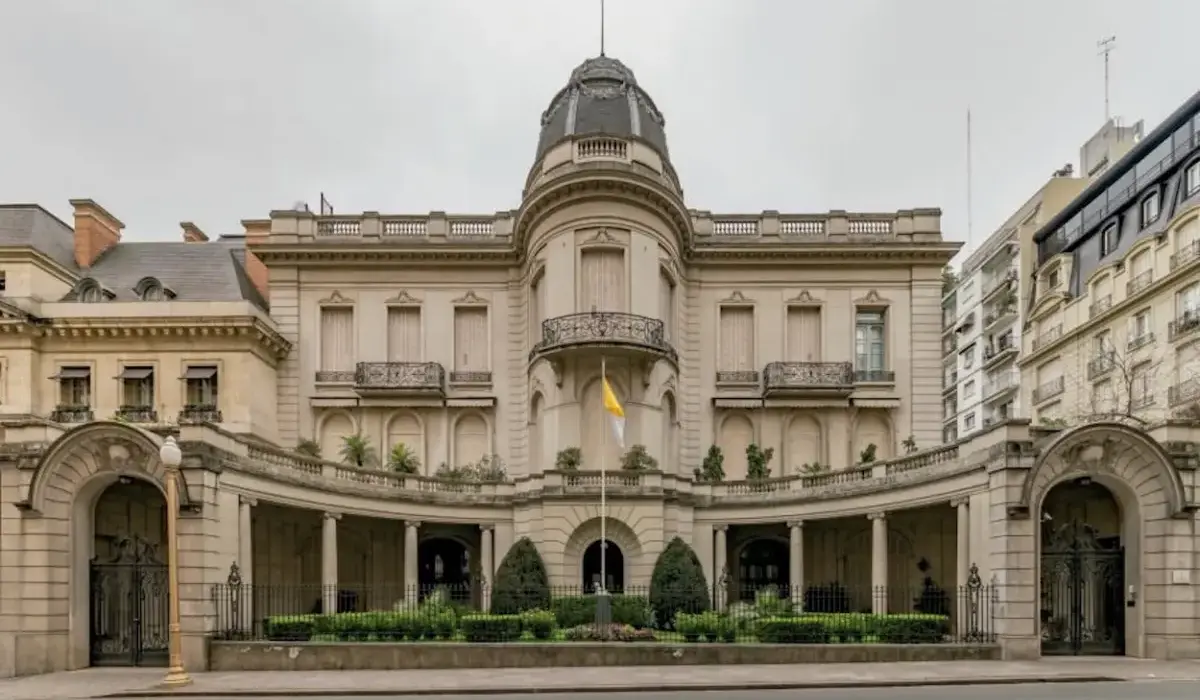
Despite a demanding and fast-paced itinerary spanning multiple cities and public engagements across Argentina, Pope Leo XIV will return to the exact same address for all four nights of his historic visit. The pontiff will reside at the Apostolic Nunciature, the diplomatic mission of the Holy See in Argentina, located inside an architectural landmark nestled in one of the capital city’s most distinguished neighborhoods.
The building housing the papal headquarters is the historic Fernández Anchorena Palace, a refined early 20th-century palazzo situated at 1637 Avenida Alvear in the upscale Buenos Aires neighborhood of Recoleta. Beyond serving as the sleeping quarters for the head of the Catholic Church throughout his four-day tour, the nunciature will function as a discreet operational hub. It is within these historic walls that the pontiff will conduct confidential meetings and private audiences that have intentionally been kept off the official public agenda.
The magnificent structure of the Fernández Anchorena Palace carries a rich history that mirrors the shifting tides of Argentina’s high society and architectural evolution. The grand residence was originally commissioned in 1907 by Juan Antonio Fernández and his wife, Rosa de Anchorena. To bring their vision to life, the couple turned to renowned French-Argentine architect Édouard Le Monnier, a leading figure of his time known for introducing sophisticated European aesthetics to South America.
The small palace was successfully completed in 1909, strictly adhering to the architectural tenets of the Second Empire style. This eclectic and opulent design approach was widely favored by the Argentine elite during the early 20th century, characterized by mansard roofs, rich ornamentation, and grand proportions. The resulting layout features a prominent ground floor accompanied by two upper stories, all centered around a grand central vestibule. The interior boasts an array of expansive saloons, a formal main dining room, a dedicated dancing hall, an indoor winter garden, and a private chapel reserved for quiet prayer and reflection.
Despite commissioning the masterpiece, the Fernández-Anchorenas never actually moved into the residence. Instead, they chose to live in Paris while actively managing the property by leasing it out to various public and private figures. Over the subsequent decades, the palace hosted notable tenants and served high-profile functions. At one point, the grand estate served as the official presidential residence for Marcelo Torcuato de Alvear, who governed Argentina from 1922 to 1928, alongside his wife, the celebrated international opera singer Regina Pacini de Alvear.
The property remained in private hands until the 1940s, when it was acquired by Adelia María Harilaos de Olmos. A distinguished philanthropist and deeply devout Catholic, she had already been renting the building and residing there for several years. Following her passing in 1949, her final will included a significant and enduring bequest: she donated the entire property to the Catholic Church under one strict condition, stipulating that it must permanently serve as the home of the Apostolic Nunciature in Argentina.
By 1952, the transition was finalized, and the mansion officially opened its doors as the permanent headquarters of the Vatican’s diplomatic mission in the country.

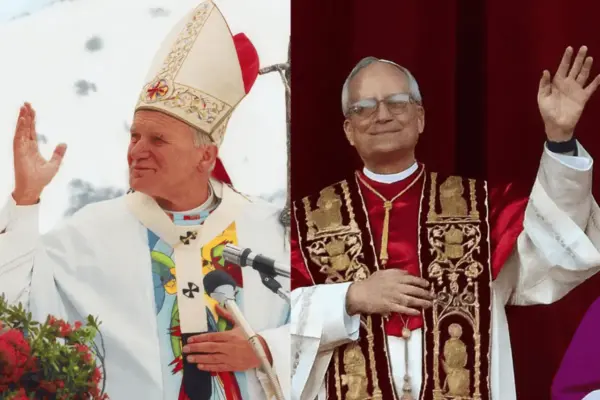
The storied residence is no stranger to hosting supreme pontiffs. Pope Leo XIV will be following in the footsteps of his predecessors, specifically John Paul II. The late Polish pontiff, who remains the only pope to have ever visited Argentina prior to this trip, stayed at the exact same Recoleta palace during both of his historic pastoral visits to the South American nation in 1982 and 1987.
A Place for Meetings Off the Official Agenda
While international media outlets, television cameras, and massive crowds are set to follow Pope Leo XIV across every public engagement in Buenos Aires and other scheduled stops, the nunciature will provide a secluded sanctuary and strategic command center throughout his four-day stay.
The publicly announced schedule for the papal trip features high-profile events, including formal meetings with national government officials, discussions with President Javier Milei, and large-scale religious ceremonies and civic activities alongside representatives of civil society. Behind the closed doors of the Avenida Alvear palace, however, a different tier of diplomacy will unfold through private, closed-door conversations.
Utilizing a nunciature as a discreet venue for sensitive political and social encounters is a well-established practice that Pope Leo XIV has frequently employed during previous international travels. Because it operates as an official diplomatic mission of the Holy See, the Apostolic Nunciature enjoys the full legal protections and immunities set forth by the Vienna Convention on Diplomatic Relations.
This diplomatic status guarantees that Argentine security and law enforcement authorities cannot enter the premises without explicit consent from the Vatican’s diplomatic representatives. Furthermore, it creates a secure and confidential environment that allows high-level conversations to take place entirely outside the rigid protocol and ceremonial frameworks established by the host country’s government.
A similar strategy was implemented by the pontiff during his apostolic journey to Spain earlier this year in June. While staying at the Spanish Nunciature, the Pope utilized the residence to conduct a series of strategic meetings, balancing figures included in the official public program with high-profile individuals whose presence was deliberately omitted from the published agenda.
Among those invited under the radar during the Madrid trip was the president of the Community of Madrid, Isabel Ayuso. That particular meeting was coordinated and executed under conditions of the utmost discretion, a specific protocol requested directly by the Vatican to ensure privacy for the participants.
In Buenos Aires, the logistical planning and coordination of these off-agenda meetings will fall under the purview of Apostolic Nuncio Michael Wallace Banach. Appointed to the post by Pope Leo XIV on May 14, Banach will manage the delicate influx of audience requests and scheduling proposals, though the ultimate authority on who crosses the threshold of the nunciature will rest solely with the pontiff and his trusted inner circle.