











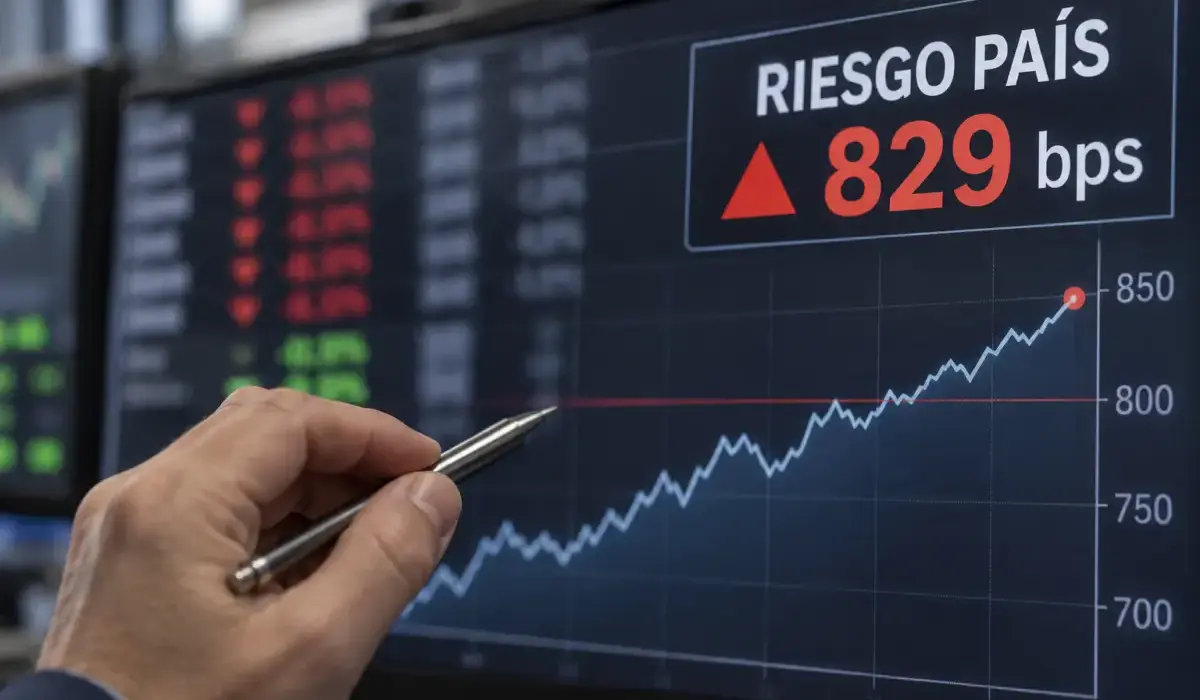
The electoral climate weighed heavily on Argentina’s financial markets at the start of November, casting a shadow over sovereign bonds, local equities, and the shares of Argentine companies traded on Wall Street. While global macroeconomics frequently dictate the rhythm of emerging market trading floors, financial analysts emphasize that the recent sell-off was not primarily driven by external jitters or the shifting winds of U.S. politics. Instead, the pressure stems from growing, premature anxiety over Argentina’s upcoming presidential election.
With the vote that will decide whether President Javier Milei secures a second term still almost a year away, Argentine assets are confronting the prospect of an extended period of high-stakes political suspense. This prolonged horizon leaves local financial instruments vulnerable to deep uncertainty and potentially significant volatility, even as domestic economic indicators flash encouraging signs of recovery.
A Rocky Start to November on Global and Local Trading Desks
Argentine sovereign bonds traded in New York closed out the trading session with further, painful losses, pushing the nation’s closely watched country risk premium firmly back above the critical threshold of 800 basis points. The country risk index climbed to 829 points on Tuesday, marking its highest level since late October. That previous relative stability had followed the Milei administration’s sweeping victory in the legislative midterms, a milestone that had temporarily succeeded in soothing nervous international investors.
This latest spike in borrowing costs effectively places the administration’s ambitions of returning to international debt markets in the short term on hold. Securing foreign capital at single-digit interest rates remains a cornerstone of long-term fiscal planning, but elevated country risk scores slam the door on immediate issuances.
Meanwhile, shares of Argentine companies listed on United States stock exchanges retreated across the board, defying a broader positive momentum across Wall Street’s major equity indexes. Technology multinational Globant bore the brunt of the day’s losses among ADRs, dropping 5.4%. It was followed closely by real estate and construction company IRSA, which fell 3.3%, and electricity provider Edenor, which retreated 3%.
Domestically, the story was slightly mixed on the surface. The Merval, Argentina’s benchmark stock index, stood out as the only major local market indicator to trade in positive territory during the session, posting a modest gain of 1.7%. Yet, this daily reprieve failed to offset broader losses, leaving the index down 1.7% overall for the unfolding week.
Navigating the Shadow of U.S. Politics and Congressional Balance
While domestic politics ultimately anchor the bearish sentiment, international developments continue to provide a complex backdrop for emerging market debt. In its latest comprehensive report delivered to clients, local brokerage firm Portfolio Personal Inversiones (PPI) noted that global market attention is intensely focused on the United States midterm elections. These legislative contests will ultimately determine President Donald Trump’s room for maneuver in pursuing his broader governing agenda over the next two crucial years.
Financial analysts at PPI explained that a potential Democratic victory in both chambers of Congress would severely limit the executive branch’s ability to push forward fresh legislative initiatives. Such a split or opposition-controlled legislature could also profoundly complicate upcoming fiscal negotiations in Washington, introducing systemic risks that ripple outward to developing economies.
The first major legislative hurdle on the horizon is slated for December 11, when current federal government funding is scheduled to expire. This expiration date immediately resurrects the persistent threat of a government shutdown—a partial or complete halt in federal operations that occurs when Congress fails to approve a timely budget or continuing funding resolution. Looking further ahead, the contentious political debate over raising or suspending the U.S. debt ceiling will also return to center stage in 2027.
Nevertheless, the PPI report highlighted that global investors may have already partially priced in various electoral outcomes. Consequently, market participants are paying acute attention to the final composition of the Senate and House, particularly analyzing how far the actual election results deviate from prevailing Wall Street expectations.
The brokerage cautioned that officially determining the ultimate control of both chambers could take several days as rigorous vote counting and verification processes continue. An unexpected electoral surprise, they warned, could inject sudden volatility into U.S. Treasuries, which in turn transmits immediate shockwaves to emerging-market debt instruments, including Argentina’s restructured sovereign bonds.
A Market Driven by Politics Rather Than Economic Fundamentals
Shifting focus back to the domestic landscape, analysts at Max Capital offered a distinct perspective, arguing that Argentine bonds have been overly and unfairly punished in recent trading sessions. Their assessment suggests the presence of an idiosyncratic, locally driven factor that has little to do with the actual health of the underlying economy.
They pointed out that recent domestic developments have not carried negative fundamental news. On the contrary, opinion polls tracking the political landscape have remained stable without significant deterioration, while hard economic activity indicators point toward a tangible economic rebound beginning as early as September.
Given these stabilizing economic data points, Max Capital concluded that while it is entirely reasonable to acknowledge that electoral risks are gradually becoming more tangible, the fact remains that the elections are still nearly a full year away. Therefore, they argued, the recent aggressive sell-off appears to be excessive, impacting both U.S. dollar-denominated sovereign bonds and domestic equities alike.
Echoing this sentiment, market economist Gustavo Ber observed that session after session, it is becoming increasingly evident that electoral uncertainty is weighing far too heavily on domestic asset valuations. In this environment, pure political calculations have decisively become paramount, while external global conditions and domestic macroeconomic data have temporarily taken a back seat.
The persistent lack of localized market catalysts continues to leave asset valuations entirely at the mercy of shifting capital flows, which are currently dominated by heavy sellers. As a result, positive macroeconomic data releases—even when they demonstrate genuine economic recovery and fiscal progress—fall largely on deaf ears, failing to generate any sustainable enthusiasm or buying momentum among investors who remain transfixed on the political calendar.