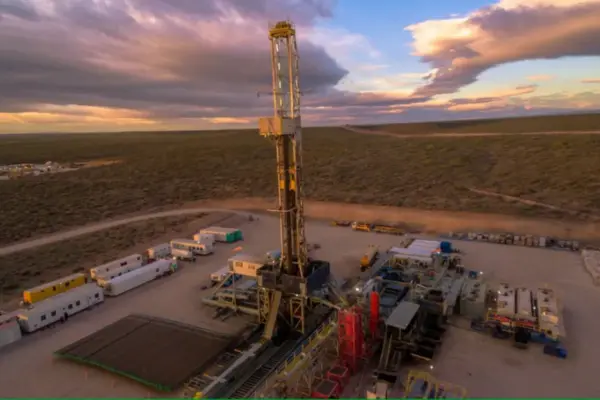











Hydrocarbon production in Argentina began in 1922 with the creation of Yacimientos Petrolíferos Fiscales (YPF), marking the establishment of the world’s first state-owned oil company. More than a century later, the South American nation’s energy sector is experiencing a profound transformation, with industry experts pointing to the current era as the most promising in the country’s modern history.
For decades, Argentina struggled with cyclical energy shortages, volatile macroeconomic conditions, and a heavy reliance on imported fuels to meet domestic demand. Today, however, the narrative has shifted dramatically. Driven by the prolific unconventional reserves of the Vaca Muerta formation in the Neuquén Basin, the country is rapidly evolving into a prominent net exporter of oil and natural gas, fundamentally altering its macroeconomic standing and regional positioning.
“Fifteen years ago, Argentina was a country with oil, and there was not even a possibility that Argentina would be an oil-producing country,” Daniel Dreizzen, head of the energy consulting firm Aleph Energy, told the Herald. Vaca Muerta, he added, fundamentally unlocked that potential. “Argentina is on its way to becoming an oil-producing country because it is going to export more oil and gas than it consumes itself.”
While energy consultants and market analysts foresee exceptionally optimistic scenarios for the coming years, they also emphasize a structural ceiling. While the Neuquén Basin and associated shale developments can certainly establish Argentina as a major regional actor in the international energy landscape, they remain insufficient to propel the nation into the upper echelon of global heavyweights such as the United States, Russia, or the major Middle Eastern producers.
How Did Argentina Get Here?
The turnaround in Argentina’s energy matrix is starkly illustrated by its trade balance. The country’s energy trade balance went from a stark US$4.3 billion deficit in 2022 to a robust US$5.6 billion surplus in 2024, marking the nation’s first annual energy surplus since 2011.
The momentum has only accelerated. Argentina has continuously registered record-breaking energy exports. Between January and August 2026, the sector accumulated a US$7.8 billion surplus—surpassing the total energy surplus recorded during the entirety of 2025, according to official figures from the national statistics bureau, INDEC.
“This is the best moment in Argentina’s oil and gas 100-plus-year history,” stated prominent energy consultant Daniel Gerold, capturing the sentiment shared across the domestic industry.
Nicolás Arceo, head of the Economía & Energía consulting firm, highlighted that Argentina currently boasts the highest hydrocarbon production level in its entire history. “It broke the production records of the late 90s and early 2000s in oil and natural gas. And it has a resource development outlook that it has practically never had in Argentine history,” Arceo added.
This historic recovery has been propelled by a combination of recovering domestic macroeconomic stability, targeted regulatory incentives, and aggressive capital deployment by both domestic operators and international energy giants eager to tap into one of the world’s premier shale plays.
Production Output Projected to Grow Exponentially
Looking ahead, the operational outlook for the Argentine energy sector is even more promising, backed by a massive influx of private capital and state-backed initiatives.
If one aggregates the oil and gas projects already approved under the Large Investment Incentive Regime (RIGI, by its Spanish acronym), infrastructure works currently underway, and newly announced developments, the total universe of committed and prospective investments approaches a staggering US$90 billion.
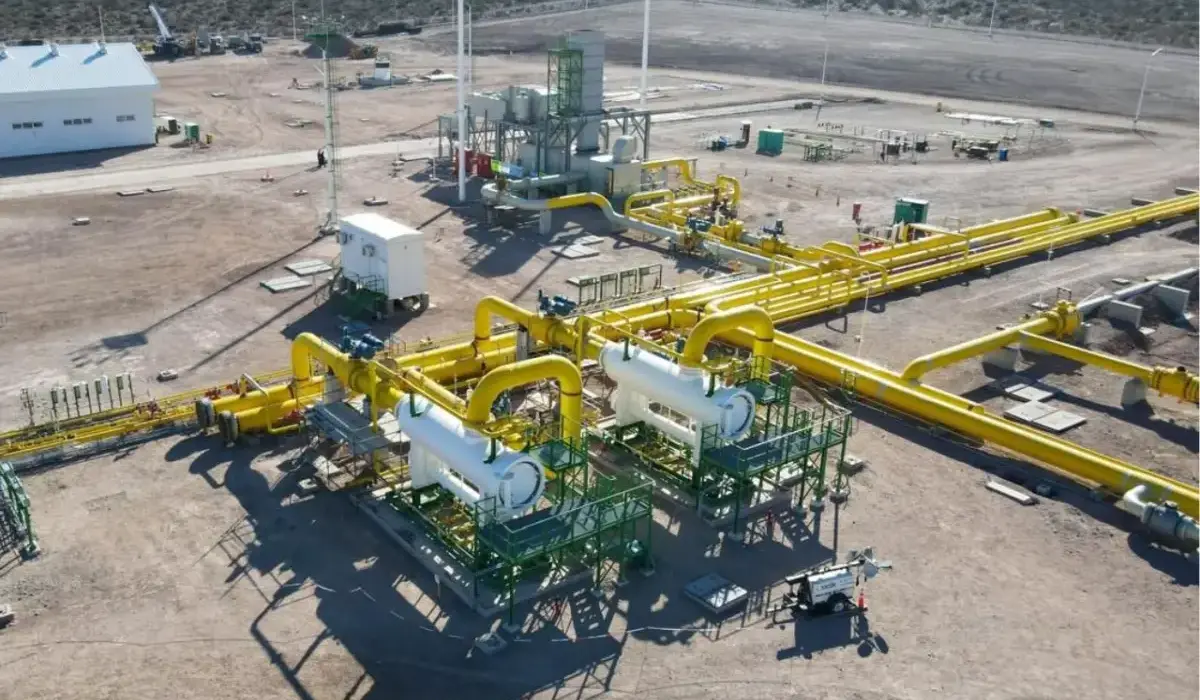
The core of these capital-intensive projects remains concentrated in the Vaca Muerta oil and gas field located in Neuquén province, alongside ambitious multi-billion-dollar initiatives designed to establish a domestic liquefied natural gas (LNG) export industry from scratch.
Daniel Dreizzen explained that Argentina currently produces approximately 900,000 barrels of oil per day, with roughly 700,000 barrels originating directly from Vaca Muerta. “If everything goes well, within 5 years it will reach 2 million barrels per day; that is more than doubling current production,” he estimated.
Juan José Carbajales, director of the energy consultancy Paspartú, echoed these projections, noting that by 2032 Argentina could realistically export up to one million barrels of oil per day.
“It is not insignificant because it is the same amount that Venezuela has today,” Carbajales noted, adding that very few countries globally possess the geological capacity to ramp up exportable production to that magnitude within a compressed timeline.
The trajectory for natural gas and LNG development follows a slightly different strategic equation. Arceo estimated that if all pipeline, conditioning, and liquefaction projects linked to this sector come to fruition, Argentina will achieve a liquefaction capacity of around 18 million tonnes per annum (MTPA). Carbajales projected an even higher ceiling, raising the estimate to 24 MTPA by 2032.
While Argentina has historically lacked large-scale gas liquefaction infrastructure, two major mega-projects are actively underway to bridge that gap.
The first is the Argentina LNG initiative, which represents an estimated total investment of US$51 billion. This project centers on installing floating liquefied natural gas (FLNG) production units off the Atlantic coast of Río Negro province. During Argentina Week in Paris, YPF CEO Horacio Marín announced that the final investment decision (FID) for the project is scheduled to be signed on November 26, in partnership with Italy’s Eni and the Emirati firm XRG.
The second major initiative is spearheaded by Southern Energy and the SASE consortium—comprising Pan American Energy (PAE), YPF, Pampa Energía, Harbour Energy, and Golar LNG. Construction has already commenced on the San Matías Pipeline, a dedicated 500-kilometer export pipeline designed to feed natural gas directly to offshore liquefaction facilities, with the explicit goal of receiving the first liquefaction vessel in the second half of 2027.
Successfully executing these projects will allow local LNG production to directly access lucrative European and Asian energy markets.
“All international analysts see Southeast Asia as the growth sector for hydrocarbon demand over the next two or three decades,” Arceo highlighted, emphasizing the long-term structural demand that these export facilities are designed to capture.
Despite the exceptionally bright outlook for production growth, the four energy specialists consulted by the Herald uniformly agreed that projected hydrocarbon output remains insufficient to transform Argentina into a global sector heavyweight on par with the United States, Russia, or major Middle Eastern producers.
“Global oil prices are not going to collapse because Argentina increases its exports like they would if Saudi Arabia were to do so,” Gerold pointed out.
Carbajales noted that while Argentina is well-positioned to become a respectable player within the international oil sector, its output will “not move the needle” on a macro-global scale.
Arceo explained that the country could successfully consolidate its position among the top 15 oil producers globally, capturing roughly 1.5% to 2% of total global supply. However, this level of production keeps Argentina far behind the United States, Saudi Arabia, and other traditional OPEC heavyweights.
In fact, current output trajectories are not even sufficient to make Argentina the largest producer in South America. Brazil currently produces approximately 4 million barrels of oil per day, while Guyana—whose production capacity was recently comparable to Argentina’s—aims to scale its output to 1.7 million barrels per day by 2030.
In the LNG sector, however, Argentina’s strategic positioning is viewed as somewhat more favorable. Gerold estimated that Argentina could account for just over 2% of global LNG production within the decade.
“By 2032, Argentina will export 18 MTPA of LNG in a market that might be 700 MTPA by then,” he said.
Carbajales offered a slightly more optimistic perspective on the country’s geopolitical relevance, arguing that Argentina could indeed act as a significant actor simply due to the scarcity of new large-scale LNG exporters globally.
He added that Argentina’s market relevance stems less from sheer volume and more from the fact that its exports will provide a critical new supply window for energy-hungry economies in Europe and Asia, allowing those regions to effectively diversify their geopolitical risks.
“That grants Argentina a prominent place at negotiating tables, with a relevant asset that it is already using for its sovereignty claim over the Malvinas Islands,” Carbajales noted.
Looking further ahead, Dreizzen did not rule out the possibility of an even greater structural expansion in hydrocarbon production over the coming decades, provided that exploratory drilling successfully proves additional domestic deposits.
Among the prospective developments that could further bolster national reserves, Dreizzen pointed to the Palermo Aike formation located south of Santa Cruz province and extending into Tierra del Fuego, the D-129 Formation situated between Chubut and Santa Cruz, as well as highly anticipated potential offshore deposits within the Argentine Sea.