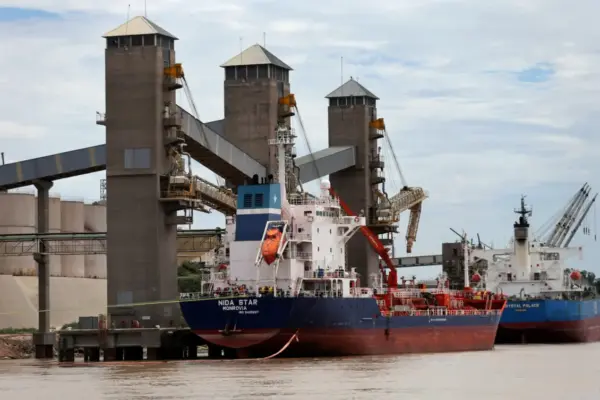











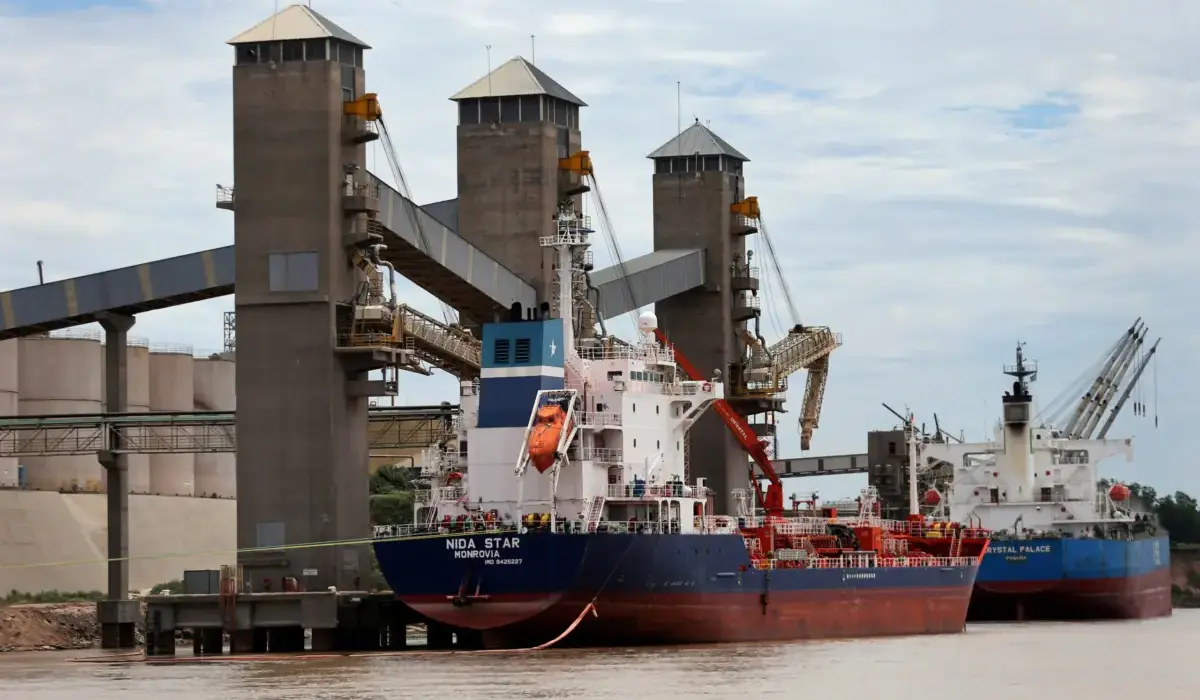
Raw material exports have firmly established themselves as the primary engine of Argentina’s economy under the administration of President Javier Milei. While the country’s oil, gas, and mining sectors have gained considerable ground and attracted substantial foreign investment in recent years, the agricultural sector continues to occupy a foundational and central role in the national financial landscape.
According to data compiled and published by the official national statistics agency, INDEC, primary products and agricultural manufactures together accounted for well over half of Argentina’s total exports. Between January and September 2026, these sectors generated a staggering US$38 billion, cementing the country’s status as a global agricultural powerhouse even as the broader macroeconomic framework undergoes radical structural reforms.
It was directly against this dynamic economic backdrop that Argentina’s agricultural exports generated a total of US$2.8 billion during the previous month. According to figures released by the Chamber of the Oil Industry and the Grain Exporters Center, commonly known as Ciara-CEC, this performance made it the strongest October the country has experienced in the past 25 years.
The milestone comes with notable internal statistical contrasts. Although the US$2.8 billion figure represented a 10% month-on-month decline when compared directly with the preceding month of September, it simultaneously marked a massive 157% year-on-year increase over the same period from the previous year.
Market analysts point out that the primary explanation for this dramatic statistical fluctuation lies in the Milei administration’s temporary removal of export taxes in September 2025. That specific fiscal policy move triggered an unprecedented, massive influx of foreign currency that particular month. Consequently, once that localized tax-driven incentive concluded, both exports and foreign currency inflows experienced a sharp correction and normalization in October.
A More Stable Flow of Foreign Currency
Examining the broader trends of the current economic cycle, agricultural analyst Javier Preciado explained in an interview with the Herald that the year 2026 has been characterized by a notable "normalization" of agricultural exports. Unlike the previous year and the administration of former President Alberto Fernández, the current government has refrained from introducing short-term incentive programs designed to coerce or artificially encourage exporters to liquidate and sell off their foreign currency earnings ahead of schedule.
You do not have those aggressive economic policy measures actively putting pressure on producers to sell their yields before they might otherwise choose to, Preciado noted, describing a more organic market environment.
Preciado further observed that another crucial factor contributing to this newfound stabilization is that domestic agricultural producers have largely refrained from hoarding or stockpiling grain. In past years, inflationary pressures and currency volatility frequently drove farmers to hold onto their harvests in anticipation of a sharp devaluation. However, current producer behavior indicates that they do not expect a dramatic spike in the dollar exchange rate over the coming months.
Producers also do not see a scenario in which they think that everything is going to fall apart next month and the dollar is going through the roof, so they had better hold off on selling, Preciado said. Since neither of those catastrophic expectations forms part of the current domestic market outlook, the daily flow of trade and sales has remained entirely normal.
Nevertheless, Preciado acknowledged that the exceptionally high level of export volume recorded throughout this year is also heavily tied to complex geopolitical factors unfolding far beyond Argentina’s borders.
The ongoing war in Ukraine has caused wheat and corn exports from the Black Sea region to behave in ways that are highly unusual for this time of year, he explained.
He pointed out that a persistent series of targeted Russian military attacks directed against agro-industrial and logistics infrastructure inside Ukraine has severely disrupted the international grain trade originating from the Black Sea basin. This prolonged disruption has generated an intense, unexpected surge in global demand for alternative suppliers, leading directly to strong international demand for Argentine wheat.
Underscoring how global trade routes have shifted to accommodate these geopolitical shocks, Preciado added that Argentina recently recorded a higher volume of agricultural exports destined for Indonesia than to neighboring Brazil, describing the commercial shift as highly unusual.
This sudden and sharp surge in international export volumes proved vital for the domestic economy. It successfully helped offset a concurrent decline in international market prices for major commodities such as corn and soybeans, which recently slumped to two-month lows according to comprehensive trade data issued by the Rosario Board of Trade, known locally as the BCR.
The Outlook Ahead
Looking toward the immediate future, Preciado emphasized that while a seasonal decline in export volumes is anticipated during the upcoming months of January and February, this downward adjustment should not be viewed as a crisis. Instead, it is merely the predictable result of the natural agricultural cycle and the typical seasonality associated with these specific crops.
We are operating completely within a normal pattern, he added, downplaying fears of an unexpected economic slump stemming from the farm sector.
Despite unpredictable weather-related disruptions and climate shifts historically associated with the El Niño phenomenon, initial agricultural projections for the upcoming cycle estimate that the 2026/2027 harvest could achieve a brand-new production record. If realized, this bumper crop has the potential to significantly boost the continuous inflow of foreign currency into a domestic economy that still badly needs foreign reserves to stabilize its financial foundations.
The timing of these economic dynamics carries profound political weight. The upcoming year is scheduled to be a major election year in Argentina. President Javier Milei, who is actively seeking reelection to a second term, will be forced to navigate a challenging fiscal landscape. The administration must contend with nearly US$25 billion in international debt maturities falling due, all while operating amid continued financial uncertainty over precisely how the government intends to structure and finance these substantial external payments.