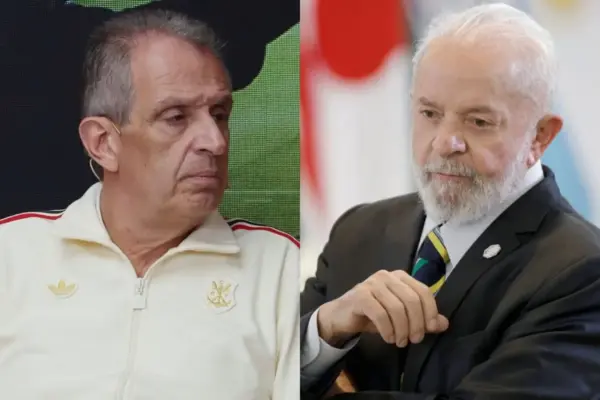








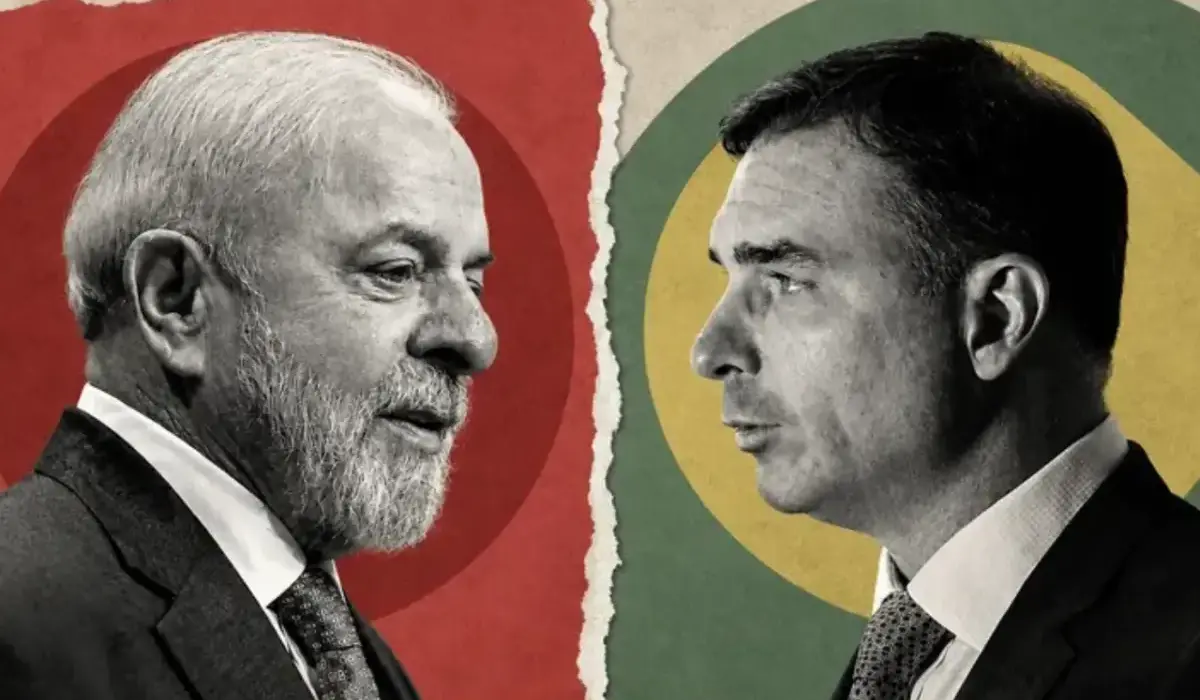
Brazil is bracing for a high-stakes presidential election on October 4, setting the stage for a deeply polarized political showdown that polls indicate will ultimately hinge on a fundamental choice. Voters will decide whether to endorse the continuation of center-left President Luiz Inácio “Lula” da Silva’s governance model or pivot back to the far-right under Senator Flávio Bolsonaro, the son of imprisoned former president Jair Bolsonaro.
At 80 years old, Lula has been governing South America’s largest nation since January 2023, when he assumed office following his victory over the elder Bolsonaro. A veteran figure of the progressive, labor-oriented Workers’ Party, Lula previously led the country across two terms between 2003 and 2010. He is now seeking a fourth mandate at the helm of the federal government.
Meanwhile, 45-year-old Senator Flávio Bolsonaro stands as the current leader of the conservative Liberal Party. That same political vehicle propelled his father to the presidency in an administration that spanned from 2018 through 2022. The senior Bolsonaro is currently serving a 27-year prison sentence handed down by the judiciary following his conviction for masterminding a conspiracy to subvert the 2022 election results and orchestrate an assassination plot against Lula.
What’s at Stake
Nearly 159 million citizens are eligible to cast ballots in the upcoming election utilizing Brazil’s nationwide electronic voting system. Beyond choosing a president and vice president to guide the nation, the electorate will also overhaul the entirety of the lower house of Congress and renew two-thirds of the Senate. Furthermore, voters will select new governors across the country’s 26 states, alongside leadership for the federal district of Brasília.
The victors of the executive race are scheduled to take the oath of office on January 1, 2027, serving a four-year term that extends through December 2030.
However, public opinion surveys suggest that an outright victory on October 4 remains unlikely. Under Brazilian electoral law, any candidate running for an executive post must secure an absolute majority of at least 50% of the valid votes to claim victory in the initial round. Should no candidate clear this threshold, a runoff election is constitutionally mandated to take place on October 25.
Oliver Stuenkel, a professor of international relations at the Fundação Getulio Vargas (FGV) in São Paulo, noted that the electoral contest is unfolding against a complex macroeconomic and social landscape characterized by sluggish economic momentum and heightened public anxiety.
“The market projects growth of around 1.9%, inflation near 5%, and a Selic rate of 13.75%, meaning activity is being dampened by the cost of money, even though unemployment remains quite low,” Stuenkel explained to reporters. He added that public security has supplanted economic concerns as the primary issue on the minds of voters, while a series of corruption scandals has eroded institutional trust across the political spectrum without providing a clear advantage to any single faction.
Politically, the country must navigate a national legislature that leans considerably further to the right than the executive branch, alongside a Supreme Court that—one year after delivering the historic ruling against the elder Bolsonaro—faces its own distinct institutional crisis of legitimacy.
What Polls Say
Comprehensive surveys conducted by multiple polling agencies across Brazil position Lula da Silva and Flávio Bolsonaro as the frontrunners in a crowded field.
The majority of recent tracking data indicates that Lula maintains a narrow lead in voter intention, capturing between 36% and 40% of the projected electorate. Flávio Bolsonaro trails closely behind as the primary challenger, drawing between 30% and 37% of voter support.

Meanwhile, the remaining 11 candidates registered on the ballot lag significantly behind the two dominant figures. Psychiatrist Augusto Cury, representing the centrist Avante party, occupies the third-place position in current surveys with approximately 6% of voter backing.
Stuenkel observes that Flávio Bolsonaro’s relative newcomer status in high-stakes national executive politics may actually serve to insulate him from the traditional liabilities of governance.
Conversely, Lula’s extensive tenure as head of state presents a double-edged sword. Three terms in office inevitably generate political wear and tear, leaving the incumbent with a disapproval rating hovering between 48% and 50%, contrasted against an approval rating ranging from 43% to 48%.
Furthermore, Stuenkel emphasizes that the younger Bolsonaro is not merely campaigning as an independent political actor, but rather as the direct beneficiary of an established voting bloc transferred seamlessly from his father. Inexperience at the executive level carries minimal electoral penalty when a candidate functions as a political surrogate, particularly when the dominant campaign narrative centers on public safety—traditionally an area of vulnerability for the incumbent administration.
The Candidates: Lula da Silva
Lula’s remarkable political trajectory began on the factory floor, where he worked as a metalworker and rose to prominence as a militant trade union leader during Brazil’s military dictatorship. As a co-founder of the Workers’ Party, he shattered historical precedents by becoming the first individual elected three times to the nation’s highest office.
During his foundational first two terms from 2003 to 2010, Lula presided over a period of profound social and economic transformation. Fueled in large part by an international commodity supercycle, Brazil’s Gross Domestic Product tripled, elevating the country to the status of the world’s sixth-largest economy.
Income redistribution initiatives, such as direct cash transfer programs, cut national poverty rates in half, pulling some 30 million Brazilians out of destitution and sharply reducing rates of childhood malnutrition.
Upon returning to power for his third term, Lula reinstated several of these hallmark programs while prioritizing institutional reconstruction, macroeconomic stability, and aggressive engagement with the global climate agenda. These efforts successfully decelerated inflationary pressures and pushed unemployment down to multi-year lows.
In his bid for a fourth term, Lula has pledged to defend these social achievements while directing renewed federal resources toward the eradication of organized crime.
His path to power has been marked by extraordinary legal turbulence. Lula was barred from running in the 2018 presidential contest—which ultimately brought Jair Bolsonaro to power—following corruption and money laundering convictions tied to Operation Car Wash, Brazil’s sprawling anti-corruption inquiry. He spent nine months imprisoned in 2019 before the Federal Supreme Court annulled his convictions in 2021, clearing the way for his electoral comeback against the elder Bolsonaro in 2022.
“Lula upholds the model of public investment, social programs, and active diplomacy in the Global South and in multilateral forums,” Stuenkel noted, summarizing the core tenets of the incumbent platform.

The Candidates: Flávio Bolsonaro
Occupying the opposite ideological pole, Flávio Bolsonaro is running on an aggressive conservative and market-driven platform. According to Stuenkel, the candidate’s proposals include the elimination of ten federal ministries, the resumption of aggressive privatization programs, tax reductions on energy and fuel, and the legal classification of criminal factions as narco-terrorist organizations.
Additionally, his platform calls for lowering the age of criminal responsibility to 14 years and expanding domestic oil and gas exploration through streamlined environmental licensing.
Flávio Bolsonaro assumed leadership of the Liberal Party after judicial rulings prevented his father from pursuing public office. Although he possesses legislative experience as a senator and previously mounted a mayoral campaign in Rio de Janeiro in 2016, he remains a relatively fresh face on the national executive stage.
Mirroring his father’s hard-line rhetoric, Flávio Bolsonaro champions uncompromising stances on law enforcement and social order. He has pledged to construct an array of new correctional facilities and overhaul existing infrastructure to accommodate an additional 500,000 inmates, explicitly modeling his penal strategy after the maximum-security detention policies implemented in El Salvador by President Nayib Bukele.
Brazil and Argentina
The geopolitical implications of the election extend well beyond Brazil’s borders, notably influencing relations with neighboring Argentina. Flávio Bolsonaro maintains a warm rapport with Argentina’s libertarian President Javier Milei, sharing deep ideological alignment with his administration’s economic philosophies.
Members of Bolsonaro’s economic advisory team have openly pointed to Milei’s radical market reforms in Argentina as a blueprint for the policies they intend to introduce in Brasília.
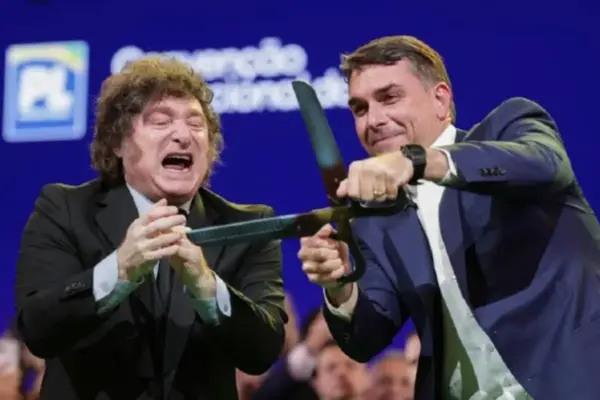
The ideological affinity was underscored when Milei traveled to São Paulo in July to attend the Liberal Party event where Flávio Bolsonaro’s presidential candidacy was officially unveiled.
The visit triggered a severe diplomatic dispute with the Brazilian federal government after Milei launched verbal attacks against Lula, indirectly characterizing the Brazilian leader as a "thief," a "former convict," and a "totalitarian" figure. While the Argentine libertarian had previously leveled similar insults from abroad, deploying such language on Brazilian soil marked an unprecedented escalation.
In retaliation, Brasília recalled its ambassador to Buenos Aires and downgraded diplomatic ties, prompting the departure of the Argentine ambassador from the Brazilian capital.
Despite persistent political friction between their respective administrations, Brazil remains Argentina’s premier trading partner. Analysts note that the future trajectory of bilateral relations will hinge entirely on the outcome of the October vote.
“If Lula triumphs, a cool, strictly technical approach is most likely: trade continues, but without political coordination,” Stuenkel predicted. “If Flávio wins, there will be an ideological honeymoon, yet bilateral challenges will persist—as has always been the case during periods of ideological alignment, whether on the left or the right.”