









Despite a global economic landscape overshadowed by persistent geopolitical uncertainty, ongoing conflict in the Middle East, and a protracted trade war between the United States and China, international trade has demonstrated remarkable resilience. Recent economic data reveals that global commerce has not only sustained its momentum but has expanded at a pace that has comfortably outstripped earlier forecasts from major international financial institutions.
According to a comprehensive new report released by the Economic Commission for Latin America and the Caribbean (ECLAC)—the United Nations regional development body—global trade volumes expanded by more than 5 percent during the first half of 2026. This performance is particularly striking when measured against earlier expectations. The newly reported figures show a rate of expansion that is more than double the 1.9 percent growth rate that had been projected by the World Trade Organization (WTO) for the entire course of the year.
Analysts point to specific technological catalysts for this unexpected surge. The robust expansion was heavily propelled by surging international demand for electronic components, a phenomenon directly tied to the ongoing artificial intelligence investment boom. Geographically, this wave of manufacturing and export activity was primarily led by China and other rapidly developing economies across Asia, which continue to serve as the main manufacturing hubs for the hardware powering the global digital transition.
Latin America Joins the Global Trade Upswing
While Asia served as the primary engine for technological component manufacturing, Latin America and the Caribbean emerged as one of the major geographic beneficiaries of this broader global trade expansion. Capitalizing on shifting international supply chains and soaring worldwide demand for raw materials, the region experienced a robust economic upswing during the first two quarters of the year.
Data compiled by ECLAC indicates that merchandise exports from Latin America and the Caribbean surged by an impressive 20 percent year-over-year during the first half of 2026. Concurrently, imports into the region also registered solid growth, rising by 14 percent compared to the same period in the previous year.
International trade economists emphasize that this exceptional export performance cannot be viewed in isolation from broader commodity markets. The dramatic valuation jump in Latin American shipments is largely attributable to a sharp, sustained increase in international commodity prices. Between January and August of 2026, the region’s aggregate export price index climbed by 23.5 percent compared to the corresponding months in 2025. Current macroeconomic models project that export prices will sustain an average increase of 20.4 percent for the year as a whole.
The primary drivers behind this price surge are minerals and metals, a traditional sector of strength for many South and Central American economies. Sector-specific projections indicate that prices for minerals and metals will average a 31.6 percent increase over the course of the year, led by substantial upward price movements in foundational industrial metals such as copper, alongside precious and semi-precious metals including gold, silver, and tin.
Looking ahead toward the remainder of the calendar year, the outlook for the region remains notably positive. Total merchandise exports from Latin America and the Caribbean are widely expected to grow by 20 percent in total value terms over the course of the year. This anticipated expansion is modeled on an expected 11 percent increase in export prices combined with a 9 percent rise in physical export volumes. If these projections hold true, it will mark a significant milestone for the region: a sixth consecutive year of continuous growth in export volumes.
Shifting Geographies and Trade Partners
As the volume and value of Latin American exports continue to climb, the geographical destination of these shipments is undergoing a noticeable transformation. According to ECLAC’s findings, the distribution of the region’s trade partners is shifting significantly, with an increasing orientation toward Asian markets beyond China’s borders.
When broken down by destination, exports from Latin America and the Caribbean to Asian economies excluding China are projected to post the strongest growth rates in 2026, expanding by an estimated 32 percent in value terms. Shipments directed toward the United States are also expected to perform strongly, with projected growth of 24 percent. Meanwhile, traditional ties with the European Union are expected to yield a 20 percent increase in export values, and shipments to China are projected to grow by 19 percent.
In sharp contrast to the dynamism seen in extra-regional trade, commerce within Latin America itself is lagging. Intraregional exports are anticipated to grow by a modest 8 percent, highlighting the extent to which the region’s current economic momentum is tethered to external demand from industrialized and industrializing nations outside the hemisphere.
Navigating a New Era: A Commodity Boom or Something Different?
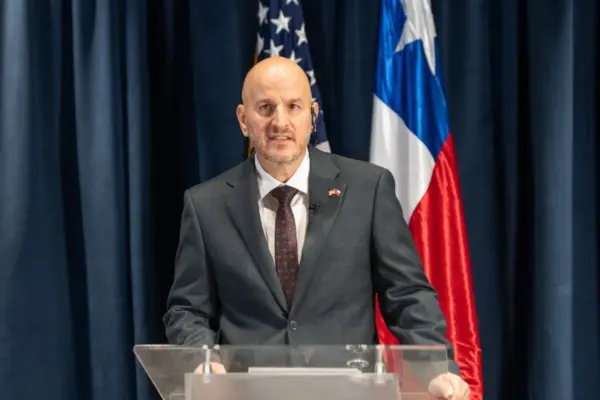
Against this backdrop of robust trade figures and favorable market conditions, the Herald sat down with ECLAC Executive Secretary José Manuel Salazar to discuss the broader implications of these trends. During the interview, Salazar was asked whether the region could realistically be on the verge of a new commodity boom, one that might mirror the historic economic supercycle experienced between 2003 and 2014.
While Salazar readily acknowledged that current global economic conditions create a highly favorable window of opportunity for Latin American exporters—thanks to a combination of rising international demand and elevated price points—he was quick to emphasize that the underlying circumstances are fundamentally different from those that fueled the early-century commodity boom.
The previous commodity boom brought transformative changes to Latin America, resulting in improved terms of trade, a massive influx of foreign-currency revenues, and a sustained cycle of domestic economic expansion. However, that historical period also carried structural vulnerabilities, most notably by deepening the region’s long-standing economic dependence on the export of unprocessed natural resources.
Salazar pointed out that the primary engine of that earlier boom was the sheer scale of China’s massive industrialization drive. During that decade-long window, the Chinese economy expanded at a staggering annual rate of 9 to 10 percent, creating an insatiable appetite for raw materials across the globe that lifted economies from the Andes to the Southern Cone.
The current global landscape, by contrast, operates under a different set of dynamics. While China remains an important and influential source of global demand, the contemporary market trend is being propelled by a convergence of forces: the ongoing global technological revolution, the urgent implementation of national energy security strategies, and the worldwide transition toward green energy economies.
Technology, Rare Earths, and the Challenge of Adding Value
This new set of drivers introduces a distinct element of technological uncertainty into Latin America’s economic calculus. Salazar illustrated this vulnerability by pointing to lithium, a metal critical to modern battery production and electric vehicles. While international demand for lithium has soared, future demand could easily fluctuate or even decline if ongoing research and development efforts in major industrial nations yield alternative battery chemistries that do not rely on the mineral.
The sheer scale of global research underscores this risk. As Salazar noted, research and development spending across developed economies and in China is immense, meaning that the technological shelf-life of specific raw materials can shift rapidly in response to laboratory breakthroughs.
At the same time, the ECLAC chief highlighted a parallel surge in global demand for rare earth elements—specialized minerals required for advanced electronics, wind turbines, and defense systems. While several countries across Latin America possess geological deposits of these critical elements, translating subterranean wealth into national prosperity presents severe practical hurdles.
The extraction and refining of rare earth elements are vastly more complex, technically demanding, and environmentally sensitive processes than the traditional extraction of copper or other foundational minerals, Salazar emphasized.
Ultimately, the executive secretary argued that Latin American nations face a strategic challenge that extends far beyond the traditional role of supplying raw materials to feed industrial complexes abroad. The core task, he suggested, requires a deeper level of economic sophistication regarding how the region utilizes its human capital and intellectual talent.
As international markets enter a new technological supercycle, the central question for policymakers and industry leaders across Latin America is how local talent can be harnessed to add tangible value within these advanced global supply chains, ensuring that the region moves beyond mere extraction to secure a more resilient economic future.