









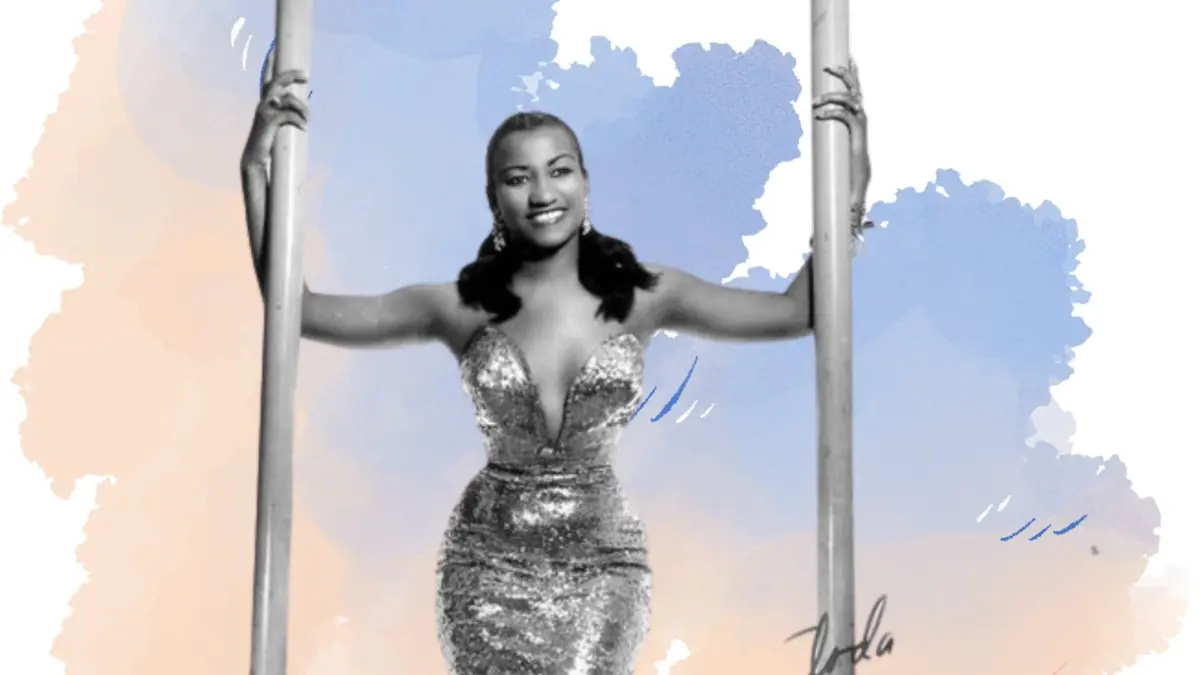
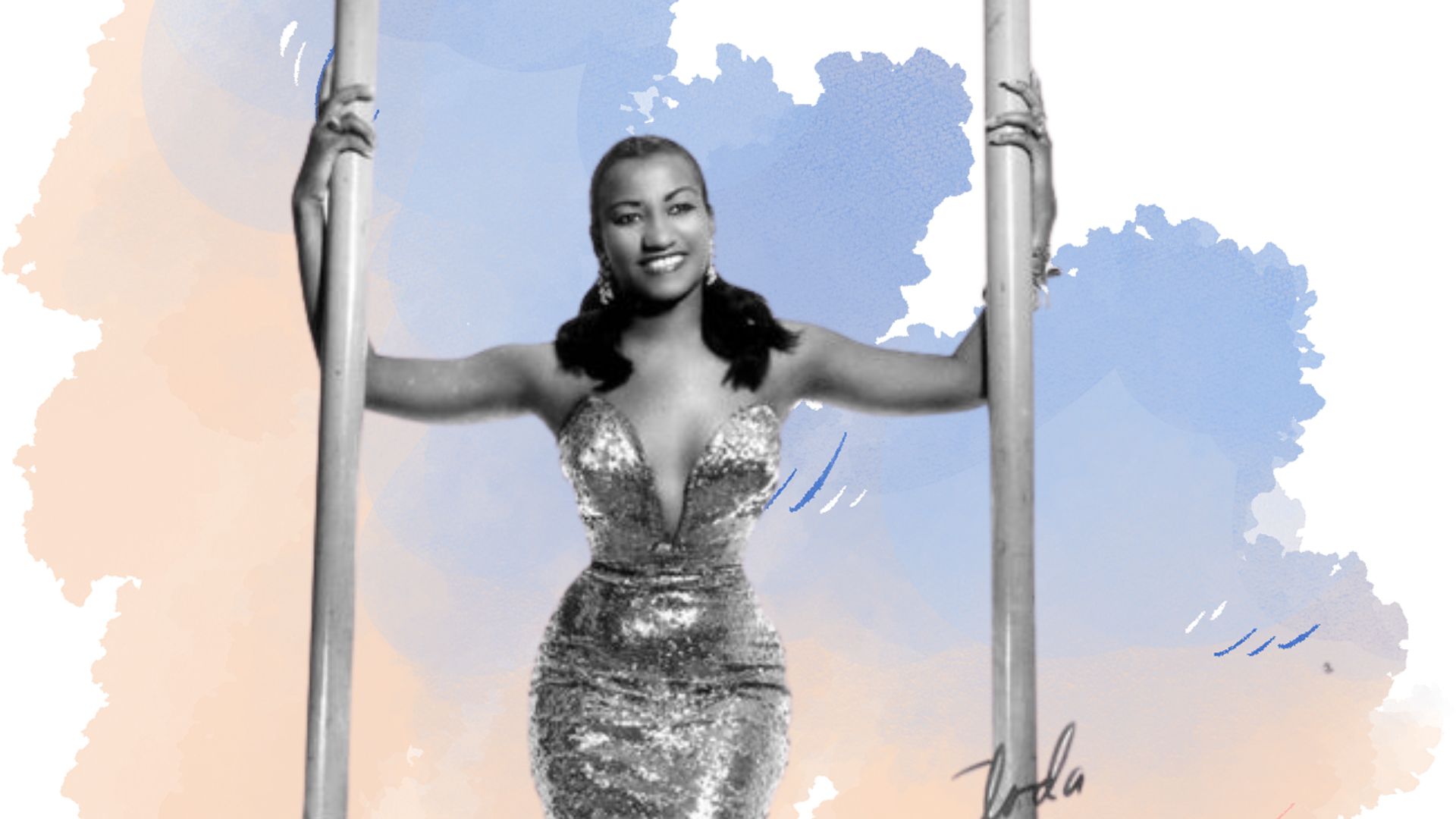
Celia Cruz’s legacy in the global music landscape is as vast as it is undeniable. Over a legendary career that spanned decades, the iconic Afro-Latina singer accumulated an extraordinary array of accolades, including multiple Grammy Awards, a star on the Hollywood Walk of Fame, the prestigious Presidential Medal of Freedom, her own commemorative Barbie doll, and a U.S. quarter featuring her likeness. Her celestial footprint even extends beyond Earth, with an asteroid named in her honor orbiting quietly somewhere between Mars and Jupiter.
In 2023, Rolling Stone cemented her timeless impact by ranking her 18th on its list of the greatest singers of all time. Notably, she stood as the only Latina in the top 20, placed between music titans Elvis Presley and Frank Sinatra in an elite musical category. Marking what would have been her 101st birthday, several remarkable, lesser-known stories from the life of the Queen of Salsa continue to captivate fans and underscore the profound breadth of her cultural reach.
Whoopi Goldberg Spent Years Preparing to Play Her in a Film That Never Got Made
The cinematic history of Celia Cruz’s life is marked by ambition and ultimate disappointment. In January 2025, actress and comedian Whoopi Goldberg shared with the audience on The View that she had spent years preparing to star in a biographical film about the legendary singer. Goldberg recounted that she had thoroughly learned Spanish and had all the preparations in place, only for the project to ultimately languish and outlast the development window.
Historical reports following Cruz’s passing in 2003 had previously indicated that acclaimed actor Samuel L. Jackson was even considered to portray Pedro Knight, Cruz’s devoted husband and musical director. However, the film never managed to secure official green-lighting for production. Studio decision-makers reportedly argued that Cruz had lived a life deemed too normal or stable to sustain a traditional dramatic biopic—a rationale that Goldberg, one of Cruz’s closest friends and most vocal admirers, fiercely rejected.
During her televised remarks, Goldberg described Cruz as entirely unlike any other artist she had ever encountered. Cruz herself had previously spoken about the biopic project during an interview with renowned Cuban-American journalist and host Cristina Saralegui. At the time, Cruz expressed that she had fully authorized a film adaptation based on her autobiography, believing it would serve as a bridge to introduce her music and story to newer generations who might not yet know her name. While the feature film never materialized, Cruz’s voice and cultural influence traversed every continent without the aid of a Hollywood biopic.
The Word ‘Azúcar’ Was Never Supposed to Become an Anthem
The ubiquitous catchphrase that came to define Celia Cruz’s performances carries an origin story far more grounded than the surrounding mythology might suggest. Cruz herself frequently demystified the exclamation, explaining that she adopted the word after an ordinary encounter at a Miami restaurant. A waiter had politely asked whether she wanted sugar in her coffee, prompting Cruz to muse on the interaction and decide to bring the moment directly onto the stage with her.
Over time, shouting "¡Azúcar!" transformed into a powerful stylistic device. It became a joyful way to punctuate the energetic sweetness of a musical performance while simultaneously affirming her deep Cuban and Afro-Latina roots.
The cultural resonance of the single word eventually caught the attention of major institutions. The Smithsonian’s National Museum of African American History and Culture placed a much broader historical and cultural frame around the exclamation. The museum described the word as a poignant echo of the enslaved Africans who toiled in Cuba’s grueling sugar mills. This historical reading transforms what began as a spontaneous, lighthearted stage response into an expression with profound cultural and historical weight. The Smithsonian even produced a dedicated segment through Smithsonian Music to examine why Cruz uttered the phrase, featuring curator Marvette Pérez discussing the full scope of what a single word came to represent in the diaspora.
She Sang in Japanese at Least Once and the Audience Gave Her a Standing Ovation
Throughout her illustrious commercial career, Celia Cruz made a deliberate, steadfast choice to record and perform exclusively in Spanish. She was remarkably open about this artistic boundary during interviews. In a 2002 conversation, she noted that she had recorded a Spanish-language rendition of the Beatles’ "Ob-La-Di, Ob-La-Da," emphasizing that no promoter or audience member had ever realistically pressured her to sing in English. Her memorable cameo appearance in the 1992 film The Mambo Kings required subtitles to translate her vibrant exchanges. Even as late as 2000, when she released "Yo Viviré," her celebrated salsa adaptation of Gloria Gaynor’s disco anthem "I Will Survive," she delivered the lyrics entirely in Spanish.
The notable exception to this rule occurred in 1988, surprising fans and music historians alike. While performing at the Newport Jazz Festival in Madarao, Japan, Cruz took on a piece by renowned Cuban pianist Armando Oréfiche—not in Spanish, but entirely in Japanese. She undertook the linguistic challenge after spotting herself on the cover of a Japanese music magazine and concluding that the international audience deserved the extra effort and respect. The crowd responded to the unexpected performance with an enthusiastic standing ovation, proving the universal language of her charismatic stage presence.
Yuri Opened for Her as a Teenager and Celia Told Her to Change Her Sound
The trajectory of Latin pop star Yuri was fundamentally altered by a piece of backstage advice from the Queen of Salsa. In various interviews over the years, the Mexican singer has recounted how she opened concerts for Celia Cruz as a teenager. Recognizing raw talent, Cruz pulled the young performer aside and suggested she transition away from rock music toward tropical rhythms, assuring her that her voice would achieve its maximum potential within that genre. Yuri has consistently credited that pivotal conversation with unlocking professional doors and shaping a musical direction she would have otherwise missed.
The two artists eventually reunited professionally in Mexico City in 1997 to record tracks for a special compilation album, laying down spirited versions of classic numbers like "Quimbara" and "Burundanga." Audio recordings capturing the studio sessions preserve Yuri joyfully exclaiming, "Ay, Dios mío, Celia, hasta que se me hizo, mama," to which Cruz immediately replies, "Hasta que se te hizo, Yuri."
When an inquisitive reporter later asked Cruz whether Yuri could be considered her official successor in the genre, Cruz simply laughed. She asserted that her own voice bore a unique timbre unlike anyone else’s, adding that Yuri would never be in direct competition with her because Yuri’s style was entirely her own. With characteristic wit, Cruz then playfully asked the press room if they were already attempting to force her into retirement.
There Is an Asteroid Named After Her Orbiting the Sun Right Now
Celestial recognition formally joined Celia Cruz’s earthly accolades in the late 1980s. In 1989, Japanese astronomers Seiji Ueda and Hiroshi Kaneda discovered a main-belt asteroid while observing from the Kushiro Observatory in Hokkaido. The International Astronomical Union eventually cataloged and named the celestial body 5212 Celiacruz in honor of the singer.
The asteroid resides securely in the primary asteroid belt situated between Mars and Jupiter. Measuring approximately 12.9 kilometers in diameter, it completes one full orbit around the sun roughly every 5.27 years.
During an appearance on Cristina Saralegui’s television program, Cruz once jokingly referred to herself as the "high-ranking official of salsa," offering a characteristic laugh that signaled she was well aware of the absolute accuracy of her self-appointed title. Today, alongside her numerous Grammys, her presidential medal, her postal stamp, and her star on the Hollywood Walk of Fame, a literal piece of the solar system bears her name. As history demonstrates, the singular Latina artist featured in Rolling Stone‘s all-time top 20 singers also holds a permanent, astronomical place in the cosmos.