









When Emanuel “Manu” Ginóbili was drafted by the San Antonio Spurs in the 1999 NBA Draft, he arrived in the United States as a relative unknown. Like the vast majority of young Argentine basketball players of his era, Ginóbili had launched his professional career at home before migrating across the Atlantic to hone his craft in Europe. Because he skipped the traditional U.S. collegiate system, talent evaluators initially viewed him as a less certain prospect compared to domestic American players who had played in the National Collegiate Athletic Association (NCAA). Yet, history proved those skeptics wrong, as Ginóbili went on to forge a Hall of Fame career and spearhead Argentina’s legendary "Golden Generation."
Today, that decades-old migration trend is undergoing a dramatic shift. An increasing number of young Argentine basketball stars are choosing to bypass the traditional European route entirely, opting instead for the NCAA—the governing body for college athletics in the U.S. and Canada. This pivot represents a profound evolution in how South America’s top basketball talent develops, offering a direct pipeline to elite competition, commercial opportunities, and educational milestones that were previously difficult to attain simultaneously.
Since 2020, the footprint of Argentine players in NCAA Division I basketball has expanded exponentially. This momentum is set to reach a historic milestone in the upcoming 2026–27 collegiate season, which will feature a record-breaking 10 Argentine players on rosters across the United States. Prominent young talents such as Lee Aaliya, Dylan Bordón, Felipe Minzer, and Tyler Kropp are spearheading this movement, capturing the attention of American scouts and redefining the global recruitment landscape.
A Chance to Develop
For NCAA programs, the pursuit of Argentine talent is rooted in a shared recognition of what the collegiate system can provide. According to Bob Donewald Jr., assistant coach for the South Carolina Gamecocks, NCAA programs offer a crucial transitional pathway for players who have outgrown their domestic leagues in South America but are not yet fully prepared for the immense physical demands of the Argentine senior national team or the hyper-competitive professional spotlight of Europe.
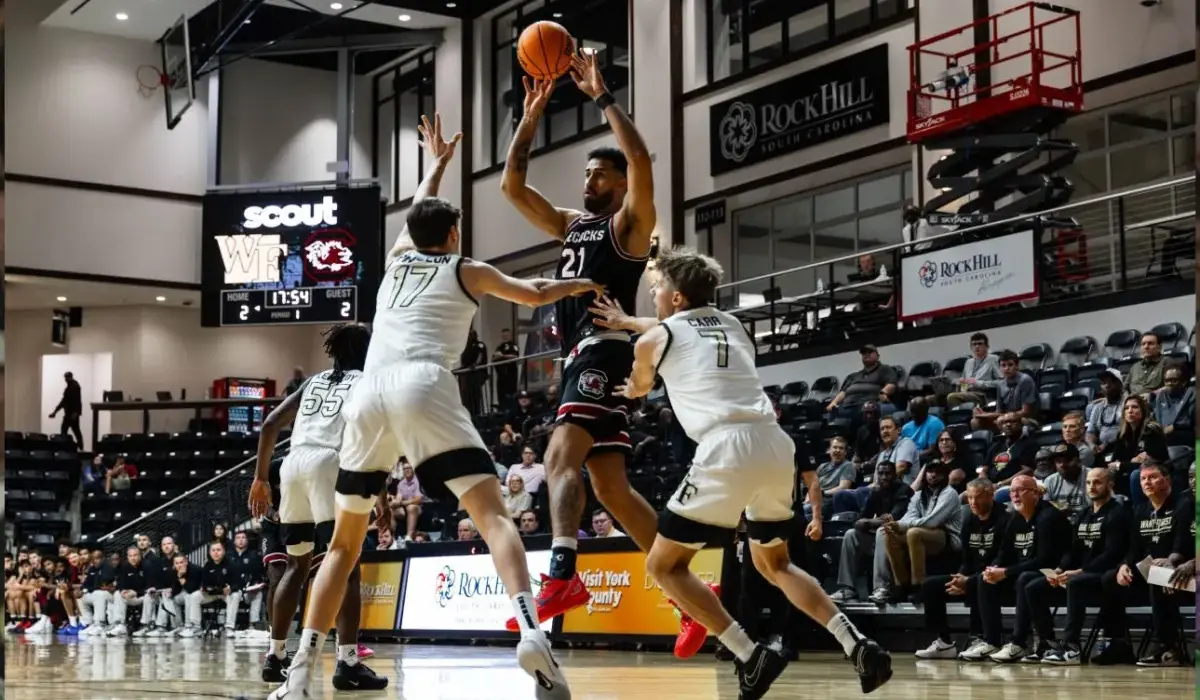
Donewald played an instrumental role in scouting and securing 23-year-old center Juan Fernández, who is set to make his official NCAA debut this season with the Gamecocks. Upon taking the court, Fernández will command attention as the highest-paid Argentine basketball player in the world, surpassing even established EuroLeague stars like Facundo Campazzo and Luca Vildoza.
Donewald’s perspective is informed by a vast international coaching resume. Beyond his time as an assistant on the coaching staffs of the NBA’s New Orleans Hornets and Cleveland Cavaliers, Donewald served as the head coach of China’s men’s national team from 2010 to 2012 and coached professional clubs in Russia and China. Drawing from this extensive background, he emphasizes that the value of the NCAA extends far beyond financial compensation.
"What we offer [Argentine players] coming here is the chance to develop your talent properly," Donewald told reporters.
He highlighted Lee Aaliya’s move to Ohio State as a prime illustration of the unique advantages the NCAA offers—an environment that a young Argentine player simply "can’t get at a top-level club in Europe, where he’ll be sitting on the bench."

"Coming here, he gets to play, he has to deliver, and he’s under pressure," Donewald added. "I think it’s a fast track to helping a player reach his potential if he’s talented enough. That’s why the NCAA is a good option for younger players in Argentina."
Simón Gradín, widely regarded as one of Argentina’s premier young prospects, shares a similar outlook. Gradín, an 18-year-old who plays for Movistar Estudiantes in Spain, traveled to the United States in 2024 to participate in the NCAA College Basketball Academy. The prestigious developmental showcase and evaluation camp is designed specifically to allow elite high school and international prospects to perform in front of collegiate coaches and scouts.
Reflecting on his time at the academy, Gradín pointed to the rigorous physical demands of the American game as a transformative element. "There is more physical training, greater attention paid to gym work, and physically that changes you, it transforms you as a player," he noted.
A Paradigm Shift
While the current influx of Argentine players feels like a modern phenomenon, the NCAA route is technically not entirely new for the South American country. Oscar Furlong, a legendary figure from Argentina’s 1950 World Championship-winning squad, played for Southern Methodist University from 1953 to 1956. Decades later, Golden Generation star point guard Juan Ignacio “Pepe” Sánchez spent four productive years orchestrating the offense for the Temple Owls.
Historically, however, this pathway remained rare due to the NCAA’s strict historical adherence to amateurism. For decades, the governing body strictly prohibited student-athletes from earning financial compensation from their athletic participation. The system operated on the principle that athletic scholarships covering tuition, room, board, and essential educational expenses constituted the entirety of a player’s compensation.
That foundational landscape changed permanently in 2021 with the introduction of NIL (Name, Image, Likeness) regulations. These rules allow college athletes to earn fair-market-value compensation through commercial endorsements, social media promotions, and marketing partnerships.
Donewald believes that as long as these regulatory frameworks remain stable, the NCAA will continue to serve as an exceptional springboard for young international prospects, providing a viable avenue for players like Juan Fernández to compete at a remarkably high level while earning financial rewards.
At the same time, shifting cultural dynamics help explain why more families and players are willing to make the leap, with money serving as only one piece of the puzzle. Gradín points out that the modern collegiate environment is markedly different from decades past.

"There are increasingly more international student-athletes from different cultures, so the environment is steadily opening up," Gradín explained. He noted that in earlier eras, when rosters were overwhelmingly composed of domestic U.S. players, Argentine athletes often harbored anxieties regarding the social climate and whether they would be welcomed into the locker room. "Nowadays, I think it is much easier to adapt to the environment and the people there."
A Unique Opportunity
Beyond the hardwood, the decision to move to the NCAA often encompasses long-term life considerations. For prospects like Gradín, the collegiate system opens doors not only to professional stadiums, but also to academic credentials that are exceptionally difficult to secure while playing professionally in Europe.
"I’d place immense value on the opportunity to earn a university degree," Gradín said. He emphasized that attempting to balance professional sports commitments with a traditional university education in Europe is "extremely complicated" due to inflexible scheduling, rigorous travel demands, and a lack of institutional accommodation for athletes.
In contrast, the U.S. collegiate system is purposefully engineered to support dual pursuits. "In the U.S., everything is prepared for it," he noted. "You train in the same place where you study, you have tutors who help you day-to-day to attend class, they offer online classes, and they reschedule exams if you have games, everything."
Furthermore, placing more Argentine players on the radar of American college basketball inevitably elevates their visibility among NBA scouts. While Gradín acknowledges that being observed by professional evaluators is a natural motivator, he views the NCAA as a stepping stone rather than an immediate golden ticket.
"Being on the radar can serve as motivation, with NBA coaches watching," Gradín said, adding that although the NCAA is heavily monitored by scouts, he does not consider it a guaranteed shortcut. "You are one step closer, but that remaining step to get there is still huge."
Not Just the Players Benefiting
The benefits of this transatlantic exchange flow in both directions. For NCAA basketball programs, recruiting out of Argentina provides access to elite skill sets, tactical maturity, and basketball IQ that are rarely developed within the traditional American high school pipeline.
Donewald pointed out that at 23 years old, Fernández brings a wealth of seasoned experience to the South Carolina Gamecocks. What initially intrigued the coaching staff was Fernández’s sophisticated offensive feel and elite court vision—traits that reflect the advanced tactical training foundational to South American club systems.

This mental maturity and tactical discipline often stand in stark contrast to traditional domestic NCAA recruits. Many American players enter the collegiate ranks with the explicit intention of playing just one or two seasons before declaring for the NBA draft, relying heavily on raw athletic dominance. NBA superstar LeBron James famously made the direct leap from high school to the pros, standing 2.03 meters tall and weighing 109 kilograms.
However, Donewald expressed concern over aspects of domestic youth development in the U.S., where raw physical dominance frequently overshadows technical refinement and fundamental basketball intelligence. That persistent skills gap makes polished Argentine prospects extraordinarily attractive to college programs seeking floor generals with high basketball character and tactical adaptability.
"There’s much respect for [Argentine players’] fight and passion," Donewald said. "It’s certainly a culture that we in South Carolina and many other universities are attracted to."
How It Impacts Argentina and the NCAA
While NIL contracts have permanently altered the financial realities of the NCAA landscape, the growing bridge between the United States and Argentina carries profound implications for South American basketball as a whole.
When asked about the expectations placed upon international recruits, Donewald made it clear that programs invest in players like Fernández to deliver immediate, high-level production rather than serving as developmental projects. "We’re trying to win an NCAA championship, and we need talent to come in and help us do that," he stated.
While scouting overseas remains an intricate and time-intensive undertaking, Donewald confirmed that Argentina is firmly established on the radar of major collegiate programs. "We’re open to going anywhere to get that kind of talent, and Argentina, as you can see, is one [place] we’re looking at."
For the Argentine national team program, integrating the NCAA pathway could fundamentally elevate the competitive ceiling of future generations. Gradín emphasized that historically, Argentine basketball has occasionally struggled to match the sheer physical attributes of elite global powerhouses. By combining Argentina’s renowned tactical ingenuity with the rigorous physical conditioning of the American collegiate system, the upcoming generation may find themselves better equipped to compete on the world stage, echoing the historic legacy left by Manu Ginóbili and the Golden Generation.