










Stainless steel cookware is experiencing a remarkable cultural renaissance. While this foundational genre of kitchen equipment never truly vanished from the culinary landscape, the post-pandemic online shopping boom was once defined by an endless scroll of advertisements for trendy nonstick cookware brands. Now, as the dust settles from that digital retail surge, market tides are shifting. Today, consumers investing in comprehensive cookware sets want absolute assurance that their purchases will endure—both in terms of high-level cooking performance and maintaining an attractive aesthetic year after year. For many home cooks, and especially professionals working in fast-paced commercial kitchens, that enduring standard is where the craftsmanship of great stainless steel truly pulls its weight.
To understand why virtually every professional commercial kitchen is stocked primarily with stainless steel, it helps to look at how the material performs under pressure. Carlye Lester, the sous chef at HAGS—a queer fine dining restaurant located in New York City’s East Village—relies heavily on stainless steel during her shifts. Speaking about why she reaches for it at her restaurant, Lester points to the same reasons many other chefs and culinary professionals prefer it for their own stations: unmatched reliability.
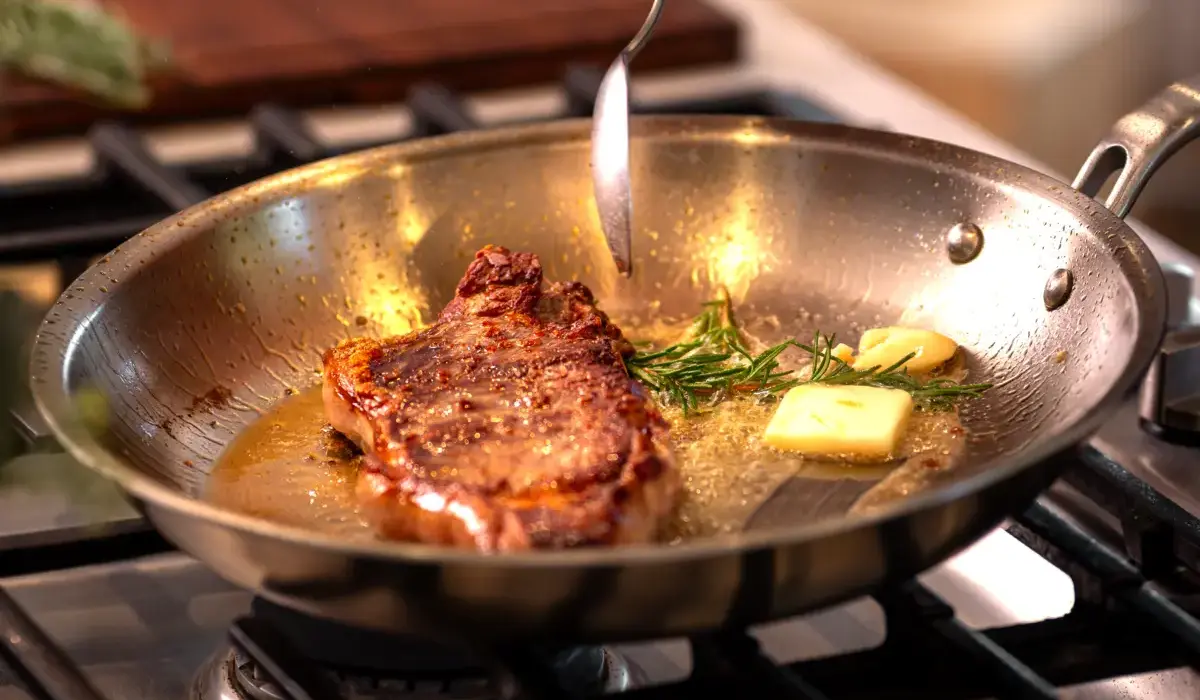
"I love that it gets super hot and heats evenly; it is [easy] to get a good sear on whatever you are making," Lester explains, noting that she routinely uses stainless steel pans to sear and crisp a mustard-marinated cod at HAGS. "[And] I love that stainless steel can be more reliable than a nonstick if you’re using the correct methods."
That reliability highlights one of the greatest and most persistent misconceptions about stainless steel cookware: the widespread belief that it is inherently not nonstick. In practice, however, stainless steel can easily acquire nonstick properties through proper technique. If a cook heats up stainless steel cookware to the correct temperature—typically around 400 degrees Fahrenheit, or the point at which a few water droplets tossed into the pan start dancing and beading instead of immediately evaporating—and adds a modest amount of cooking oil, it creates a powerful nonstick effect governed by a thermodynamic principle known as the Leidenfrost effect.
Despite its performance benefits, stainless steel does require a specific approach to aftercare. Chefs and kitchenware experts advise letting a hot pan cool down naturally before washing it to prevent warping, followed by thorough drying with a microfiber cloth to prevent unsightly water spots. Beyond basic maintenance, quality stainless steel—ideally constructed with at least three layers of metal, though five-ply construction is frequently recommended for optimal heat distribution, oven use, and high-heat searing—stands out as the ideal material for commercial kitchens. Because it is completely nonporous, the material will not react adversely with highly acidic ingredients like tomatoes, citrus juices, or wine. Furthermore, home cooks can whisk sauces to their heart’s content in a stainless steel saucepan and use metal spatulas, spoons, and tongs without worrying about damaging a delicate nonstick coating, as there is no coating to scratch or flake off.
This ability to withstand aggressive daily wear and tear is precisely why media outlets like Eater chose to develop their own 5-ply stainless steel cookware line in collaboration with Heritage Steel, noting that they would only ever attach their name to a product range that is chef-approved, hardy enough for intense culinary abuse, and built to last across decades of service.
According to Lester, if a cook is willing to learn its nuances, stainless steel cookware can actually become a profound cooking teacher in its own right. Acknowledging the hesitation that many beginners feel when stepping away from coated pans, she notes that the intimidation factor is largely unfounded.

"I think people think it is hard to use," Lester says about the initial hesitation new cooks might experience when transitioning to stainless steel. "But there are countless YouTube videos, TikToks, and Reels out there, and if you’re friends with a chef, we are always happy to pick up the phone and walk you through [it]."
Looking at the broader consumer shift back toward traditional metal cookware, Lester views the trend as a natural market correction following the realization that the primary selling points of nonstick pans often degrade over time. Countless home cooks have grown frustrated after discovering that their slippery, coated pans eventually lose their nonstick efficacy, thereby forfeiting their main point of appeal.
"I think we are entering a new era of cooking," Lester tells Eater, "where people are less interested in the shortcuts."
In that context, the growing appeal of steel extends far beyond its sleek visual aesthetic; it represents an investment in equipment that has the genuine potential to last for decades when cared for correctly.
This shift has not gone unnoticed by the wider retail market. Even the design-forward, Instagram-centric cookware companies that once built their entire business models around selling ceramic nonstick pans have begun introducing titanium and stainless steel collections. These brands now actively market their new metal lines by promising both contemporary style and enduring craftsmanship.
While stainless steel never truly lost its foothold in professional commercial kitchens, its enduring appeal has become increasingly enticing to everyday consumers, particularly as the cost of living skyrockets and households search for kitchen tools that offer long-term value rather than short-term convenience.
"It is a pan that asks for your attention and intuition," Lester reflects, "but that is always my favorite way to cook."