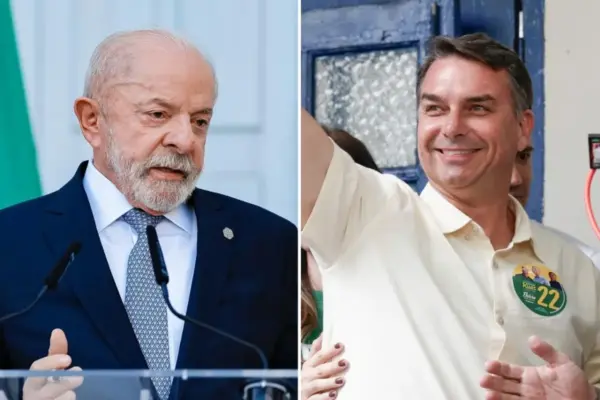











Whether incumbent President Luiz Inácio Lula da Silva or opposition candidate Flávio Bolsonaro secures victory in Sunday’s high-stakes runoff, the incoming administration will inherit a complex and formidable array of economic challenges when it takes office on January 5, 2027.
As the second-most populous country in the Americas and the largest economy in South America, Brazil commands a nominal GDP of US$4.1 trillion and a population of 214 million. Trailing only the United States in both categories within the hemisphere, the nation holds a pivotal position on the global stage as a member of the G20 and the de facto leader of the Mercosur trade bloc. Consequently, Sunday’s electoral outcome is being monitored closely by international markets, multilateral institutions, and key trading partners across the globe, with neighboring Argentina paying particularly close attention to how bilateral trade, exchange rates, and regional ties might be affected.
According to economic analysts and regional experts consulted by the Herald, the next occupant of the presidential palace in Brasília will face the delicate and precarious task of balancing aggressive fiscal consolidation against the persistent risk of slowing national economic growth.
Where Brazil’s economy stands ahead of te runoff
Entering the final stretch of the electoral cycle, Brazil’s macroeconomic landscape displays a mixture of underlying resilience and mounting fatigue. Honorio Zabaleta, an economist at the consulting firm Eco Go, observed that while the domestic economy remains resilient, it is gradually losing the momentum that characterized its earlier performance.
Official data underscores this trajectory, showing that gross domestic product expanded by 0.5% on a quarter-on-quarter basis and 2% year-on-year during the second quarter. However, high-frequency indicators point toward a cooling trend. The IBC-Br, a monthly economic activity index published by the Central Bank of Brazil, rose by a modest 0.3% in August following consecutive contractions in June and July. These figures highlight a clear deceleration after stronger growth figures registered at the beginning of the year.
Labor market indicators present a similarly nuanced picture. Zabaleta noted that the national unemployment rate stands at 5.3%, marking an improvement from the 5.6% recorded during the same period a year earlier, while real wages have experienced upward adjustments. Nevertheless, the economist cautioned that the most recent data points toward a distinct moderation in domestic consumption.
This cooling off aligns naturally with a monetary policy defined by very high real interest rates, Zabaleta added. Brazil’s benchmark interest rate, known as the Selic, is currently anchored at 13.75%. Meanwhile, consumer price inflation, tracked via the official IPCA index, reached 4.2% on an annualized basis in August.
Federico Vaccarezza, an economist and lecturer at the Institute of International Relations within the National University of La Plata, explained that while these elevated interest rates have successfully attracted substantial capital inflows into the country, they carry a profound structural downside. The tight monetary stance is generating severe levels of household indebtedness across the nation.
Vaccarezza pointed to widespread household debt as a critical factor that influenced voter sentiment and contributed to Lula’s softer-than-expected performance during the initial round of voting on October 5. In response to mounting consumer financial distress, the Lula administration expanded the coverage of the Desenrola Brasil program in May. The initiative was originally designed to assist households in renegotiating accumulated liabilities and to tackle a troubling surge in consumer defaults, which reached a record 6.6% among loans that lacked government subsidies.
Brazil’s fiscal problem
Despite the pressures of monetary tightening and consumer debt, economists agree that the single most severe vulnerability confronting Brazil is its deteriorating fiscal position.
Zabaleta characterized this structural imbalance as the regional powerhouse’s “Achilles’ heel.” He explained that while primary government revenues and expenditures—excluding interest payments on the national debt—remain relatively orderly and manageable, factoring in debt-servicing costs exposes the true magnitude of the fiscal crisis.
High interest payments have torn a significant deficit hole in the public accounts of the Lula administration, driving the overall fiscal deficit to approximately 9% of GDP. Data published by Brazil’s Central Bank indicates that gross general government debt has climbed to 82.9% of GDP.
Under alternative accounting methodologies, that burden appears even heavier. For instance, a recent report from Argentine brokerage Portfolio Personal Inversiones estimated that Brazil’s gross debt-to-GDP ratio swells to 97% when evaluated using International Monetary Fund standards.
Gustavo Pérego, director of the consulting firm ABECEB, warned that whoever wins Sunday’s runoff will be forced to confront a fiscal deficit that he considers already unsustainable. Compounding the difficulty, the incoming administration will have very few administrative tools at its disposal to force immediate corrections, given that roughly 88% of Brazil’s total public spending is classified as automatic or mandatory.
Fiscal austerity and slower growth
Echoing these assessments, Zabaleta emphasized that the immediate priority for either Lula or a triumphant Bolsonaro administration must be the formulation and presentation of a credible fiscal stabilization plan aimed at anchoring public debt and dampening market uncertainty.
Should Lula secure a new term, Zabaleta believes his administration would likely prioritize tighter administrative spending controls while fiercely protecting core social assistance programs and public capital investments. However, he noted that it would prove challenging for a leftist leader to fully convince skeptical international investors of an unyielding commitment to orthodox fiscal discipline.
Conversely, a government led by the opposition would be far more likely to pursue an aggressive agenda anchored in strict fiscal discipline, sweeping spending cuts, accelerated privatizations, and structural economic reforms. Regardless of which political path prevails, Zabaleta warned that the inevitable implementation of fiscal restraint will weigh heavily on overall economic activity, dampening growth projections for 2027. Market consensus forecasts currently peg national GDP growth at 1.8% for the current year, slipping further to 1.3% next year.
Vaccarezza suggested that a reelected Lula administration would likely maintain general continuity in its economic management. If the opposition candidate captures the presidency, however, the central policy pivot will center directly on cutting government expenditures.
Even so, Vaccarezza highlighted a delicate balancing act for an austerity-driven administration. While any prospective leader must slash public spending to narrow the fiscal gap, they must simultaneously avoid suffocating the broader economy. For an economy of Brazil’s sheer scale, economists argue that annualized growth must hover around 3% to maintain a genuinely sustainable pace of long-term development. Consequently, an incoming conservative government might front-load spending cuts during the first two years of its mandate before attempting to stimulate renewed economic expansion later in its term.
To achieve meaningful expenditure restraint, Pérego argued that a government aligned with the Liberal Party would need to fundamentally alter the indexation formulas governing the minimum wage, ensuring that annual adjustments no longer outpace official inflation rates. Similar modifications would likely need to be applied to public pensions, healthcare outlays, and educational spending. Enacting such measures would prove politically fraught, particularly as consumer price inflation has already breached the 5% annual threshold, sitting comfortably above the central bank’s target range.
On the external front, Pérego suggested that robust export performance could provide a crucial buffer to sustain economic momentum next year. Nevertheless, maintaining that support would require global market prices for Brazil’s primary commodity exports—most notably soybeans and oil—to remain close to their current levels. Potential exogenous risks, such as severe weather patterns driven by a prolonged El Niño cycle, introduce additional volatility into the agricultural and macroeconomic outlook.
No major changes to the economic model
Looking beyond the immediate fiscal and monetary hurdles, Vaccarezza argued that Brazil’s foundational economic model is no longer a subject of existential political debate, sharply distinguishing the country from neighbors like Argentina. The fundamental architecture of the Brazilian economy is firmly established and broadly accepted across the political spectrum.
Sometimes policies lean slightly more orthodox, while at other times they tilt toward social-democratic priorities, but the core economic and foreign relations model remains remarkably durable.
The political reality of governing that model, however, will pose distinct hurdles for the next president. Pérego noted that if Lula is returned to office, he will be forced to navigate what is widely regarded as the most conservative and right-wing National Congress Brazil has seen since 1998.
Governing under such conditions would present immense operational difficulties, as the executive branch would face immediate, complex economic realities while contending with a legislative branch likely to resist its policy initiatives regardless of their individual merits.
By contrast, an opposition-led administration would likely enjoy greater political leeway and institutional alignment during the initial stages of its mandate, though Pérego cautioned that no leader enters office with a blank check. With 88% of the federal budget already locked into mandatory fixed expenditures, the remaining 12% is divided almost evenly between the executive and legislative branches. This structural reality grants Congress a formidable degree of budgetary autonomy, ensuring that the legislature will continue driving its own distinct political agenda regardless of who occupies the presidential residence in Brasília.