








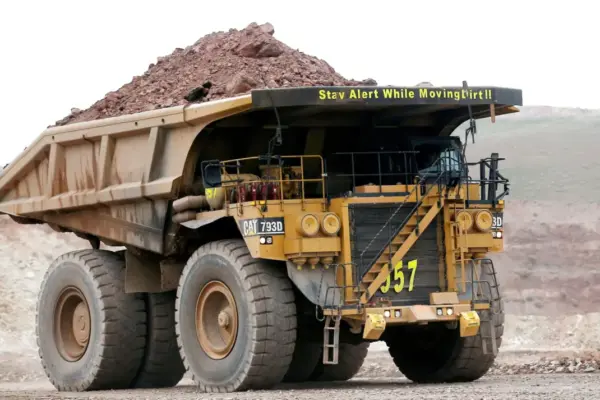
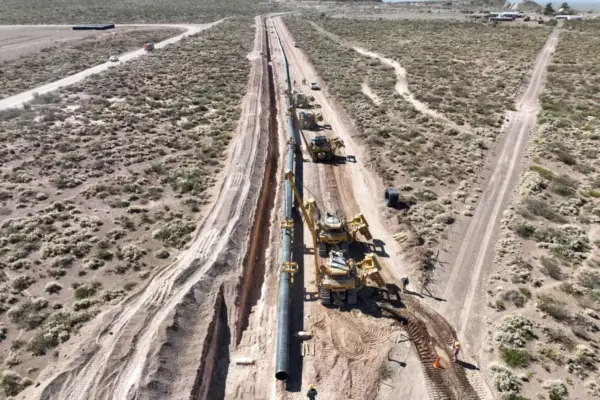

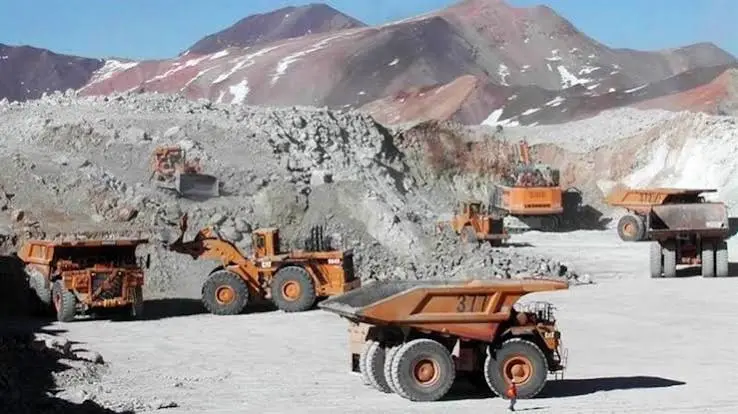
Canadian mining companies are intensifying their strategic push into Argentina, laying the groundwork for an ambitious "Andean financial corridor" designed to bridge the gap between North American capital markets and lucrative extraction projects across South America.
This burgeoning financial and industrial bridge aims to address a critical hurdle for the region’s mining sector: a persistent shortage of early-stage exploration capital. By leveraging Canada’s deep-rooted financial ecosystem and the global reach of the Toronto Stock Exchange (TSX) alongside the TSX Venture Exchange, industry leaders hope to unlock unprecedented growth for mineral-rich provinces in Argentina, Chile, and neighboring nations.
The momentum behind this cross-border collaboration is underscored by massive capital commitments under Argentina’s Large Investment Incentive Regime, commonly known as RIGI. To date, four major mining projects have secured approval under the scheme, representing a combined investment of more than US$13.6 billion. An additional project worth US$5.2 billion is currently awaiting official approval, cementing Canadian and international players as foundational pillars of the country’s modern mining landscape.
This prominent footprint is far from a recent development. Long before the implementation of RIGI and its associated fiscal incentives, Canadian firms were already leading the charge in developing Argentina’s vast resource potential. Data compiled by the Argentine Chamber of Mining Companies (CAEM) in 2021 revealed that out of 13 active mining projects nationwide, an overwhelming seven originated from Canadian companies.
Against this dynamic backdrop, a specialized delegation of Canadian experts, financial analysts, and business leaders recently converged at Torcuato Di Tella University in Buenos Aires. The intensive training workshop was jointly organized by the University of Toronto’s Mining Industry Management Program (MIMP) and The Andean Bridge, a strategic financial initiative dedicated to linking South American mining ventures with both domestic and international capital markets. Operating under the guiding slogan "Building the Andean Financial Corridor," the initiative seeks to integrate the mineral development hubs of Argentina, Chile, and Peru into a cohesive, highly accessible investment network.
Speaking in an interview, Guillaume Légaré, director for South America at the Toronto Stock Exchange and the TSX Venture Exchange and a featured speaker at the event, characterized the gathering as a vital and unique opportunity. He emphasized that the workshop successfully showcased the undeniable strength and resilience of the Canadian mining and financial ecosystem to regional stakeholders.
Légaré pointed out that early-stage mining initiatives across Latin America face a chronic scarcity of funding, a bottleneck that stifles long-term industrial potential. He noted that the junior mining sector serves as the absolute lifeblood for future growth, yet development remains severely constrained due to a lack of domestic equity capital markets within Argentina.
Consequently, Légaré explained, the TSX assumes a monumental responsibility in facilitating smooth, reliable access to early-stage capital for promising international ventures. The overarching strategy involves tapping into Canada’s vast financial fortitude and decades of specialized experience in risk capital financing to accelerate South American projects from exploration to production.
The Mendoza Connection
The cross-border dialogue is rapidly transitioning from the classroom to the field. Légaré announced that a high-level delegation consisting of 12 Canadian investors, including key representatives from major commercial banks and retail brokerage firms, is scheduled to arrive in the western Argentine province of Mendoza.
The visiting financial delegation is eager to conduct on-the-ground evaluations of prospective mining projects across Argentina and Chile. Furthermore, the itinerary includes exploratory assessments for one project in Bolivia, another in Colombia, and three major undertakings in Brazil, highlighting the broader regional scope of the initiative.
The primary objective of the delegation’s tour is to present prospective investors with operational assets that are mature and well-positioned for a near-term public listing on the TSX Venture Exchange. For projects that require additional preparation and are not yet fully aligned with international standards, the organizers have established targeted developmental initiatives designed to guide them systematically toward eventual integration into global capital markets.
The strategic selection of Mendoza as the focal point for this investor tour was deliberate. According to Légaré, the core organizers are actively working to position the province as a premier international mining and finance hub. This vision is heavily supported by local institutional backing, given that The Andean Bridge counts both the Mendoza Stock Exchange and the provincial government among its foundational partners.
Investor Appeal and Political Stability
When questioned about whether the upcoming legislative and executive elections could generate operational uncertainty or hesitation among risk-averse mining investors, Légaré expressed robust confidence in Argentina’s current trajectory. He maintained that external and domestic financiers remain unfazed by short-term political cycles.
He observed that Argentina is currently well-positioned at the federal level under the administration of President Javier Milei. At the same time, he emphasized that equally critical leadership is emerging at the provincial level, where local governors and agencies are actively engaging with international investors and streamlining the pathways required to attract large-scale capital projects.
This decentralized governance structure was a central theme during the academic sessions at the university workshop. Lawrence Devon Smith, a distinguished member of the MIMP, drew particular attention to the annual competitiveness rankings of global mining jurisdictions compiled by the Fraser Institute, a prominent Canadian public policy think tank.
Because Argentina’s constitutional framework grants provincial governments exclusive jurisdiction over the administration and management of their respective natural resources, individual Argentine provinces are evaluated separately from the federal state in the institute’s global index. This granular approach allows international investors to pinpoint the exact regions offering the most stable, business-friendly regulatory environments.
In the most recent assessment covering 2025, the Argentine province of San Juan emerged as the top performer within the country. San Juan secured an impressive 14th place out of the 82 global mining jurisdictions evaluated by the Fraser Institute, outranking established regional competitors in Brazil, Chile, and Peru.
A Emerging Risk for the Lithium Market
Despite the overwhelmingly optimistic outlook for capital formation and regional expansion, experts at the workshop sounded a cautionary note regarding external market vulnerabilities, particularly concerning lithium—one of Argentina’s most prized mineral commodities. Devon Smith raised serious concerns that isolated safety incidents involving consumer lithium-ion batteries could create a public relations backlash, ultimately dampening global demand and altering market projections.
Smith pointed to recent events in Canada, where investigators documented a series of alarming accidents involving lithium batteries utilized in electric scooters and personal kick scooters. He noted that several of these batteries had catastrophically exploded and ignited severe fires within multi-family apartment buildings, on residential balconies, and inside enclosed parking structures.
While Smith clarified that these dangerous malfunctions were generally attributable to the substandard quality of aftermarket replacement components rather than original manufacturer batteries, he warned that public perception is difficult to manage if negative trends persist. He cautioned that if such safety concerns escalate, everyday consumers may increasingly shy away from lithium-powered technology, sending shockwaves through the global supply chain.
Emphasizing the unpredictable nature of consumer sentiment and regulatory policy, Smith warned that public backlash could easily translate into restrictive legislation. He noted that if public panic leads to sweeping bans on personal electric transport devices or increased regulatory hurdles for lithium-reliant vehicles, the long-term destination and stability of the global lithium market remain uncertain.