





By Johanna Ferreira
September 24, 2026
The recent public speculation surrounding Jenna Ortega’s appearance has been difficult to watch—not because her body requires an explanation, but because the response shows how acceptable people still find it to discuss women’s bodies as though they’re public property, open to observation, assessment, and criticism.
In an era where cultural conversations around body positivity and neutrality have supposedly progressed, the relentless dissection of female celebrities remains a troubling constant. When high-profile young women experience shifts in their physical appearance, the immediate reflex of the internet and media outlets is often not to look away or extend grace, but to launch into diagnostic speculation. This dynamic highlights a broader, deeply ingrained societal comfort with treating a woman’s physical form as collective territory.
I have spent most of my life relatively thin, and I know that the comments I receive about my body aren’t equivalent to the systemic judgment and discrimination experienced by people in larger bodies. Still, this year reminded me how deeply we’ve normalized treating weight as public information. After I unintentionally lost weight while struggling with SIBO—sometimes unable to digest more than one meal a day—neighbors and acquaintances began congratulating me. Their compliments reflected a culture so committed to thinness that visible weight loss was seen as good news, even when it showed I wasn’t well.
This paradoxical reaction exposes a dangerous cultural blind spot. When society automatically equates shrinking with improvement, health is entirely divorced from physical well-being. A person can be suffering from a severe gastrointestinal illness, grappling with intense stress, or navigating a hidden medical condition, yet the cultural reflex remains tethered to aesthetic approval. If you weigh less, you are implicitly perceived as doing better, regardless of the internal toll or the medical reality driving the change.
It’s no wonder so many women struggle with body image and eating disorders. In a July interview with Jay Shetty, Camila Mendes described how receiving compliments when she lost weight because of her eating disorder confused her. The praise reinforced the idea that she looked best at her thinnest, even when she wasn’t well.
Mendes’s reflection underscores a harrowing paradox familiar to many survivors of disordered eating: the very behaviors that signal a severe psychological and physical crisis are often rewarded by the outside world. When friends, family members, or colleagues offer praise for weight loss rooted in illness or distress, it validates the destructive mechanisms behind it. It sends a powerful, albeit toxic, message that the external aesthetic result matters infinitely more than the psychological or physical state required to achieve it.
That’s the thing about being a woman: No version of our bodies seems to escape commentary. We’re too thin, too fat, or not curvy enough. People always find something to observe, question, praise, criticize, or worry about—and it’s exhausting to be on the receiving end of that scrutiny.
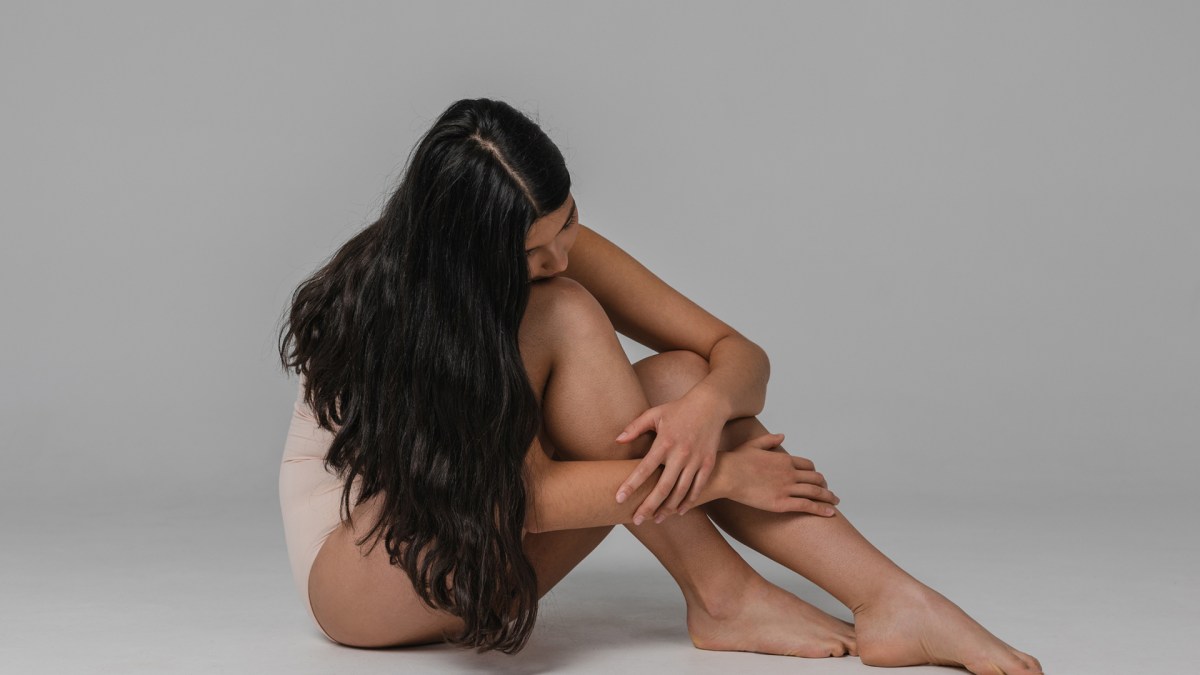
This constant appraisal creates an inescapable double bind. Women are socialized to internalize the gaze of others, measuring their worth by how closely their bodies align with shifting cultural ideals. Yet, those ideals are moving targets, impossible to permanently capture. The moment a woman adjusts to fit one standard, the cultural pendulum swings, or the microscopic lens shifts to find a new flaw. Whether it is muscle mass, softness, height, or weight, the female form is treated as an unfinished project subject to endless peer review.
For Latinas, that scrutiny often begins when we’re young. Many of us grow up in families and cultures where comments about women’s bodies are so normalized that we don’t always recognize them as boundary violations. One relative tells you that you’ve gotten too skinny; another is quick to point out that you’ve gained weight—a tía comments on your thighs or waist. My girl cousins often told me I was too skinny and needed to gain weight. In my family, one of my nicknames has always been flaca. It was usually a term of endearment, yet losing even a few pounds could suddenly become a source of concern. Jokes about my thinness rarely bothered me, and I knew they often came from love. But loving intentions don’t erase the underlying message: My body is available for others to evaluate.
In many Latin American and Hispanic households, food and physical appearance are deeply intertwined with expressions of care, hospitality, and communal identity. Grandmothers express affection by insisting you eat more, while aunts and uncles treat physical changes as community property, open to casual dinner-table commentary. While these remarks are frequently framed as expressions of familial concern or affection rather than malice, their cumulative impact is profound. They teach young girls from an early age that their bodies do not belong solely to them, but are instead subject to collective observation, commentary, and critique.
What makes this scrutiny particularly complicated for Latinas is how contradictory the expectations can be. We’re told to be thin—but not too thin. Curvy, but never “fat.” Feminine and voluptuous, as long as our stomachs are flat and our waists are tiny. We’re encouraged to eat, then criticized for gaining weight. We’re praised for losing weight, then asked whether we’re eating enough—a question I’ve heard my entire life. No version of our bodies is allowed to be.
These contradictory standards create a labyrinth of impossible expectations. The cultural archetype often demanded of Latina women balances traditional ideals of curves and nourishment with modern, Western pressures for thinness and flat-stomached perfection. Walking this tightrope means that no matter how a woman’s body naturally distributes weight, she will inevitably fall short of one expectation while trying to meet another. The resulting psychological friction fosters a continuous cycle of self-doubt and hyper-awareness.
That’s why the reaction to Ortega’s body felt so familiar. Her younger sister, Aliyah, recently supported a fan’s message reminding people that Jenna “doesn’t owe anyone an explanation” for her body, which she doesn’t. The idea is simple: Women shouldn’t have to explain why their bodies look the way they do. And yet, in 2026, we still need to say it. A woman’s body is not a public question she is required to answer.
The collective cultural obsession with policing public figures sets a damaging precedent that trickles down into everyday life. When social media platforms and tabloid columns turn physical fluctuations into trending topics, it normalizes the same invasive behavior among peers, family members, and strangers. Until we collectively shift our perspective to view a woman’s body as her own private domain rather than a topic for public debate, this exhausting cycle of scrutiny will continue. A woman’s physical appearance belongs to her alone, and she owes no justification, defense, or explanation to anyone else.