










When people think of Las Vegas, they almost immediately gravitate toward its legendary origin stories. The collective imagination is saturated with the cinematic lore of Bugsy Siegel and the Flamingo Hotel, the effortless cool of the Rat Pack crooning in the lounges, the eccentric empire-building of Howard Hughes, and the visionary risk-taking of Steve Wynn that birthed the modern megaresort era. These narratives are woven tightly into the cultural fabric of the desert oasis, defining a city famous for its perpetual reinvention and towering neon architecture.
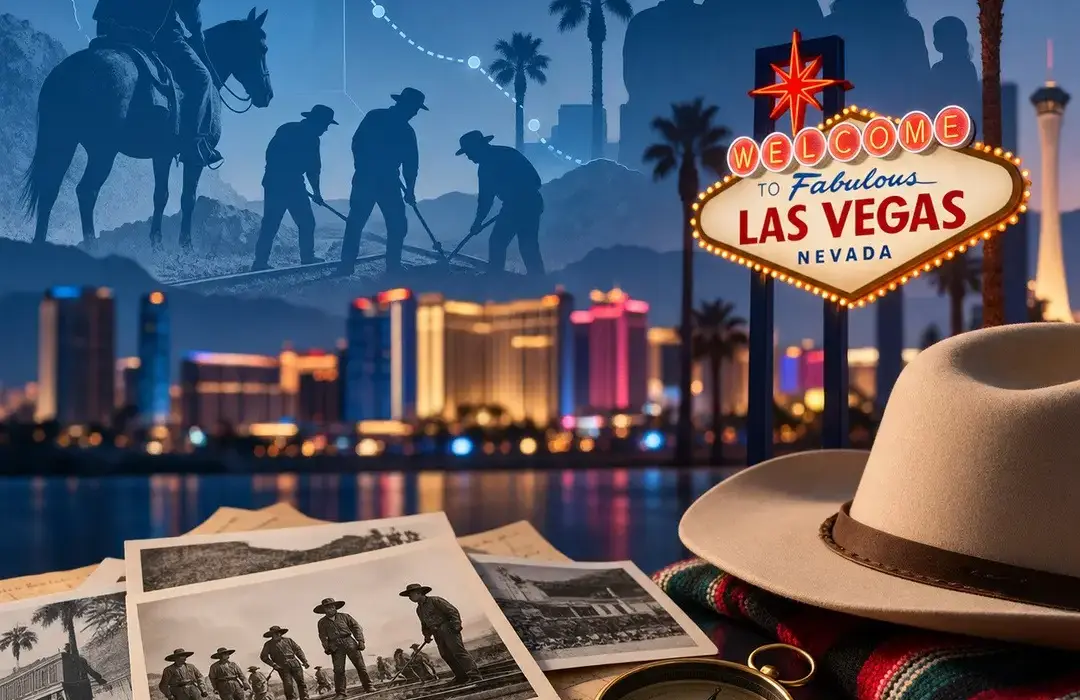
However, if you turn the clock back further—past the rise of the Strip, past the post-war building booms, and past the mid-century glamour—a vastly different historical landscape emerges. In this earlier version of the valley, Latino contributions are not merely a footnote or an eventual demographic addition to the Las Vegas story. Instead, they are present almost from the very beginning, serving as foundational threads in the creation of the community long before a single casino chip was ever stacked or a roulette wheel spun.
Before Las Vegas Had Casinos, a Mexican Scout Found the Shortcut
The foundational timeline of the region shifted fundamentally in 1829, nearly eight decades before Las Vegas was officially incorporated as a municipality. During this era, Mexican merchant Antonio Armijo set out from New Mexico leading an expedition comprising roughly sixty men and one hundred pack mules. Their ambitious goal was to establish a viable, efficient trade route connecting Santa Fe to the burgeoning settlement of Los Angeles, a commercial artery that would stimulate regional commerce in the Mexican territory of Alta California.
Among Armijo’s trusted personnel was a scout named Rafael Rivera. While navigating the grueling and unpredictable terrain of the Mojave Desert, Rivera separated from the main caravan to explore alternative paths. His exploratory venture led him to the lush Las Vegas Springs around January 1830. The discovery was monumental for the expedition; Rivera’s mapping of the local terrain helped establish a significantly shorter passage through what would eventually become known as the Old Spanish Trail.
By identifying a reliable source of water in an otherwise unforgiving desert, Rivera transformed the springs into a vital oasis and stopping point for travelers traversing the vast expanse between Santa Fe and Southern California. Today, the modern city of Las Vegas acknowledges this pivotal piece of history through a local street, a public park, and a community center bearing Rivera’s name. Yet, the more profound legacy remains entirely geographical: one of the earliest and most consequential documented routes bringing outsiders directly into the valley was mapped by a Mexican traveler. In the truest sense of the phrase, Latino history in Las Vegas actually predates Las Vegas itself.
Then Came the Railroad and Mexican Workers Helped Build the Town
While explorers and traders mapped the initial paths through the valley, modern Las Vegas emerged decisively because of the railroad. The arrival of the San Pedro, Los Angeles and Salt Lake Railroad in the early twentieth century fundamentally altered the geography and economy of the region. The construction of the rail line led directly to the official creation of the Las Vegas townsite and the famous 1905 land auction, an event widely recognized as the formal founding of the city.
Yet, long before the gavel came down at that initial land auction, Mexican workers were already on the ground, sweating under the desert sun to lay the tracks that would connect the isolated outpost to the rest of the nation. Historical research preserved in the archives at the University of Nevada, Las Vegas (UNLV) documents that Mexican laborers were actively working on local railroad crews as early as 1905. Furthermore, subsequent United States Census records from 1910 reveal a substantial and critical Mexican presence within the railroad workforce.
This initial wave of migration accelerated significantly during the tumultuous years of the Mexican Revolution, as families and individuals traveled north seeking economic stability, safety, and opportunity. Their growing presence did not go unnoticed by the institutions shaping the early town. Historical documents show that by 1909, an official with the Las Vegas Land and Water Company formally complained that the town’s Mexican population—along with other minority groups—was growing rapidly. The official raised these concerns while discussing administrative attempts to geographically segregate local residents.
While this historical detail is an uncomfortable reminder of the racial and social tensions of early twentieth-century America, it remains an indispensable part of the historical record. Latino workers were never mere spectators watching Las Vegas take shape from the sidelines. They were an essential, active component of the manual workforce that built the foundational infrastructure around which the entire city eventually grew.
The East Side Became Its Own Latino Las Vegas
As the twentieth century progressed, the next major chapter in the region’s demographic and cultural evolution arrived in the wake of World War II. The established Mexican communities in the valley expanded significantly, while waves of Cuban migration during the 1960s and 1970s added new dimensions to the local culture. Later, substantial Salvadoran migration further enriched the community, cementing the foundation of what would become widely known locally as Las Vegas’s East Side. Research conducted at UNLV consistently identifies these Mexican, Salvadoran, and Cuban communities as paramount to the social, cultural, and structural development of the area.
With population growth came the inevitable creation of enduring community institutions designed to support, advocate for, and unify the growing populace. The Nevada Association of Latin Americans was established in 1969, providing a crucial framework for community advocacy and social services. A few years later, in 1976, Cuban immigrants Otto Merida and architect Arturo Cambeiro founded the Latin Chamber of Commerce. Initially, the organization focused heavily on helping Latino entrepreneurs secure vital financing, navigate bureaucratic hurdles, and establish sustainable businesses.
This development highlights another compelling Las Vegas story running parallel to the iconic neon of the Strip. While casino resorts were growing vertically into architectural marvels, Latino communities were diligently building economic infrastructure horizontally. They forged resilient business networks, established civic organizations, cultivated vibrant neighborhoods, and built institutions that sustained families generation after generation.
And Behind the Neon, Latino Workers Changed the Economics of Hospitality
Nowhere is the influence of the Latino community more visible, vital, and transformative than in the massive workforce that powers the Las Vegas hospitality and entertainment industry. At the heart of this labor movement stands the Culinary Workers Union Local 226, which evolved into one of the most politically and economically consequential labor organizations in the United States. As casino expansion accelerated dramatically through the decades, the union increasingly recruited internationally, building a diverse membership that deeply reflected Las Vegas’s growing immigrant workforce.
Among the most remarkable personal and professional trajectories within this labor movement is that of Geoconda Argüello-Kline. Fleeing political turmoil in Nicaragua in 1979, she eventually made her way to Las Vegas. For seven years, she earned her living cleaning hotel rooms before transitioning into a full-time role as a union organizer. Her dedication and leadership culminated in 2012 when she was elected secretary-treasurer—the highest office in the organization—a decade after making history as the union’s first Latina president. Prior to reaching these leadership heights, she served as a lead organizer during the legendary Frontier strike, a grueling labor action that famously stretched for six years, four months, and ten days.
That incredible journey—moving from a guest-room attendant cleaning hotel rooms to leading one of the most powerful and influential labor organizations in the state of Nevada—encapsulates the true spirit of Las Vegas. It is a narrative defined by relentless reinvention, fierce ambition, and an uncompromising scale of achievement.
The Bottom Line
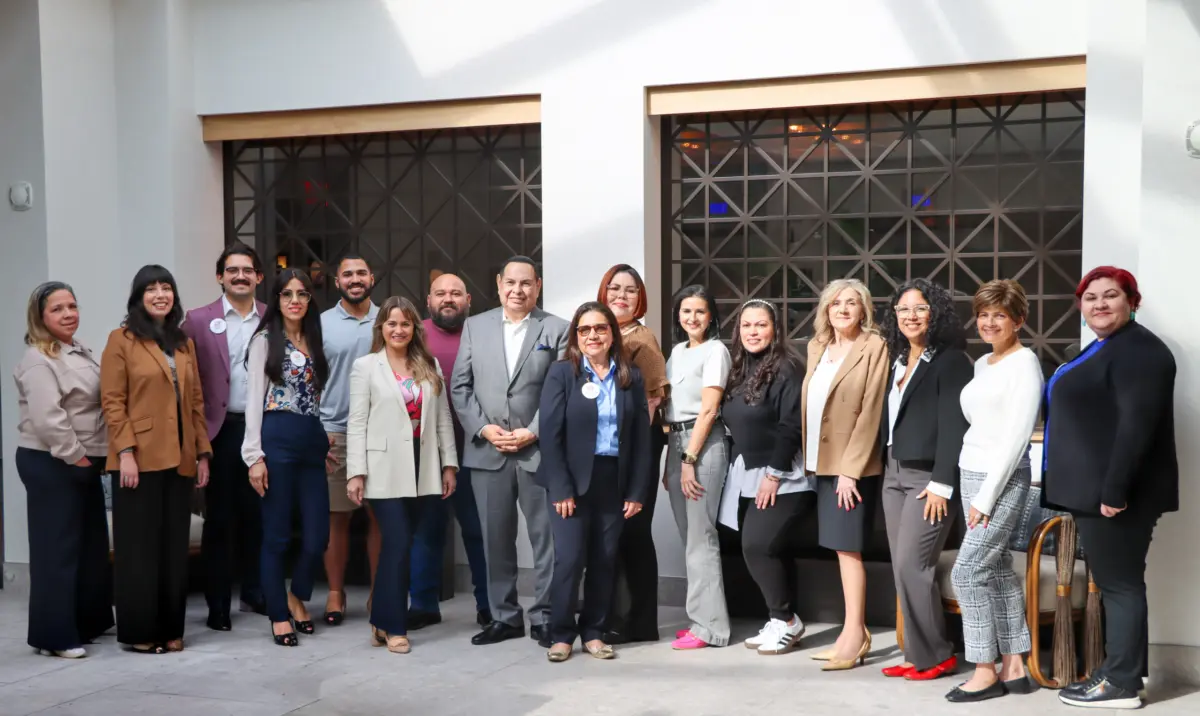
Today, demographic data shows that approximately 32.8 percent of Clark County identifies as Hispanic or Latino. Yet, looking exclusively at statistical percentages misses the deeper, more compelling historical narrative of the region. Long before modern business leaders and executives arrive in the city for major conventions such as AVANCE Global, Latinos were already deeply invested in the valley. They helped map Las Vegas, build its initial infrastructure, organize its labor force, work within its iconic resorts, create enduring businesses, and fundamentally redefine who could exercise social and political power inside the city limits.
Vegas may have built a global reputation on its ability to reinvent itself time and time again. The historical record demonstrates that Latinos have been an integral, driving force of that very reinvention for nearly two centuries.