




Growing up in New Jersey, the television screen served as much more than a source of evening entertainment. For many first-generation children of immigrants, the familiar glow of Spanish-language broadcasts was a vital anchor to a distant homeland. Long before the era of targeted streaming algorithms, on-demand content, and pocket-sized screens, appointment television was a communal ritual. For one Dominican American growing up in the Garden State, the worlds of Caribbean heritage and suburban American life collided daily in the living room, mediated by the magnetic pull of Univision and Telemundo.
When recalling childhood memories of growing up Dominican in New Jersey, the most profound recollections are rarely grand milestones. Instead, they are rooted in the sensory backdrop of domestic life: the television glowing brightly in the corner of the room while dinner was prepared in the kitchen. Spanish-language dialogue echoed through the speakers, competing with the lively clatter of pots and pans, overlapping family conversations, and the occasional good-natured argument over who would control the remote control. More often than not, the household split its viewing allegiance between the heavyweights of Spanish-language broadcasting, Univision and Telemundo.
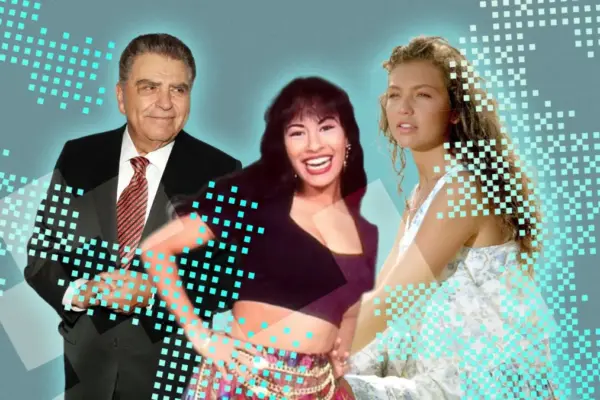
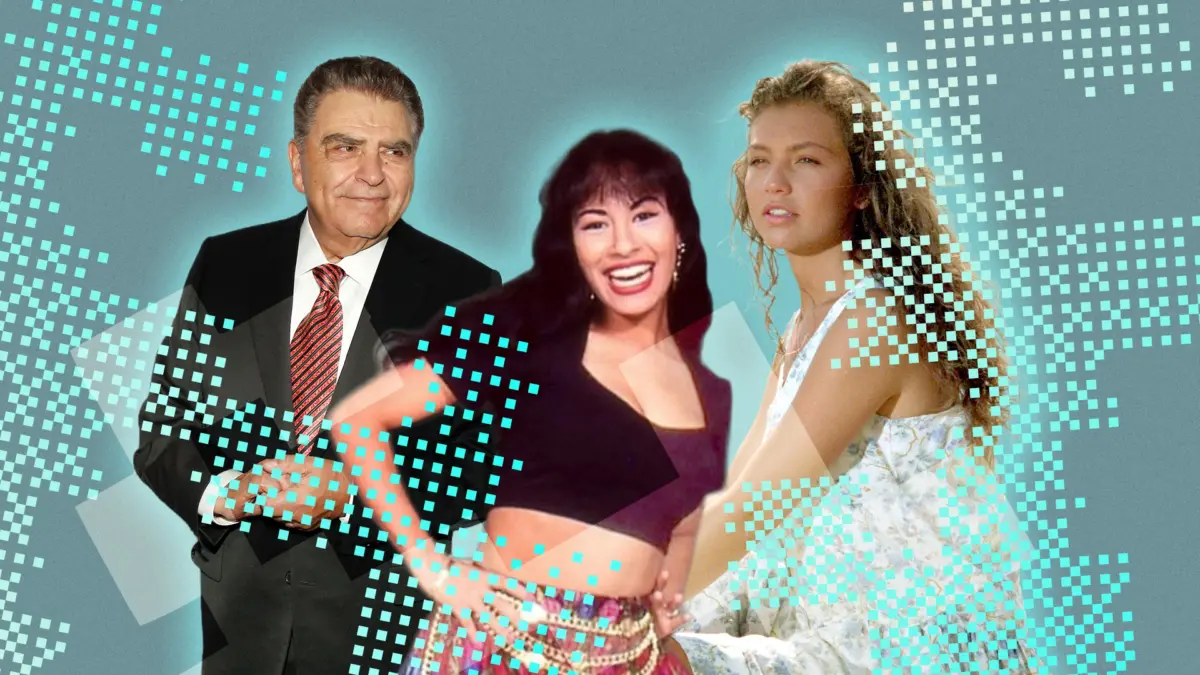
Those screens introduced enduring icons into American living rooms. Viewers tuned in religiously to Marimar, the hit telenovela starring Thalía and Eduardo Capetillo, which captured the imaginations of audiences coast to coast. Weekends brought the massive variety spectacle Sábado Gigante hosted by the inimitable Don Francisco, a program that families anticipated throughout the entire workweek. Alongside dramatic serials, musical performances by Tejano legend Selena captivated viewers, whose interviews and music videos were replayed endlessly by families reluctant to let those vibrant cultural moments fade.
Hearing Spanish spoken fluently and passionately within the domestic sphere carried a distinct emotional weight. Even when the specific plots of the programs did not directly reflect Dominican history, geography, or colloquialisms, the underlying cultural framework felt instantly familiar. The specific facial expressions, intricate family dynamics, rapid-fire humor, and larger-than-life personalities mirrored pieces of a shared heritage that immigrant families instinctively recognized.
Watching Marimar alongside relatives was never a quiet, passive experience. Mothers would frequently shake their heads at a character’s questionable decision, prompting an immediate retort from another family member declaring, "¡Te dije que eso iba a pasar!" Within moments, the room would fill with a cacophony of overlapping voices, hearty laughter, good-natured teasing, and lively debates over who among the characters was right or wrong.
This dynamic closely mirrored the energetic atmosphere of traditional Dominican family gatherings, where adults regularly laughed over inherited stories, debated neighborhood gossip, and analyzed the latest television plot twists in real time. Someone was always calling out from an adjacent room, yet somehow, the entire household remained tethered to a single, flowing conversation. Even though the television programs did not tell the exact story of the Dominican diaspora, experiencing them shoulder-to-shoulder with immediate family created an undeniable sense of home.
Marimar was produced outside of Caribbean traditions, and Selena was celebrated as a Mexican American icon, yet culture does not always depend on literal, direct representation. Frequently, it thrives on broader recognition and shared emotional resonance. At the time, those evenings were rarely conceptualized as acts of intentional cultural preservation. To a child growing up in New Jersey, it was simply a matter of watching television with loved ones. Decades later, however, those ordinary, routine moments reveal themselves as foundational lessons in identity and origin.
For countless immigrant families across the United States, broadcast media functioned as an essential bridge. It successfully spanned the vast chasm between the native countries left behind by parents and the novel, sometimes alienating environments where their children were being raised. For Dominican households, these broadcasts provided a vital mechanism for preserving language proficiency, musical appreciation, humor, and a visceral connection to the islands while simultaneously building stable, productive lives in the United States.
That cultural cohesion was the distinct magic of appointment television. Families watched specific programs simply because they aired at a designated hour, and those broadcasts naturally integrated into domestic conversations because everyone had consumed the exact same content simultaneously. A child could navigate the English-dominant world of American public schooling all day and return home to an environment saturated with Spanish, successfully navigating the duality of growing up in New Jersey while maintaining a visible connection to Latin America and the Caribbean. There was no internal pressure to choose between being proudly Dominican and proudly from New Jersey; the medium allowed individuals to simply be both.
Even years later, hearing the familiar opening notes of Marimar instantly evokes vivid memories of those evenings spent with family. Yet, the mechanics of media consumption have shifted dramatically. Contemporary viewers no longer wait anxiously for a scheduled broadcast time, nor do they necessarily negotiate with household members to determine what the entire family will watch together. Modern entertainment habits lean heavily toward individualized streaming, allowing users to consume content independently whenever time permits. When a modern show or digital clip triggers a memory of home, the method of sharing has similarly evolved, migrating from the living room sofa to a digital meme or video clip dropped into a family group chat.
While the underlying cultural connection remains robust, its physical manifestation has transformed completely. During earlier decades, a single telenovela episode, a standout musical performance on Sábado Gigante, or a popular song broadcast on television routinely became the primary topic of the next day’s family conversation without any premeditated planning. Everyone had witnessed the exact same cultural touchstone, and everyone possessed an opinion about it. In the modern media landscape, characterized by endless choices and hyper-personalized digital feeds, audiences frequently consume divergent shows, follow entirely different digital creators, and discover cultural touchstones through fragmented channels. Shared cultural moments have not vanished entirely, but they have undeniably become less automatic.
Concurrently, contemporary Latino creators no longer wait passively for institutional representation within traditional media pipelines; they actively generate that representation themselves. Today, a young Dominican child in New Jersey can open a mobile phone and instantly locate a digital community that accurately reflects their distinct lived experiences. That unprecedented access and creative autonomy represent a monumental shift for marginalized storytellers.
Yet, alongside this modern abundance, a subtle nostalgia remains for the collective experience of simultaneous viewing. Platforms have expanded exponentially from traditional network telenovelas and variety shows to TikTok, independent podcasts, YouTube channels, and subscription streaming services, but the fundamental human desire for communal connection persists. Audiences still actively seek out media that evokes the feeling of home and desire the ability to share those touchstones immediately with the people who defined that feeling in the first place.
For those navigating life between multiple cultures, heritage is transmitted through far more than formal historical narratives about ancestral homelands. It resides deeply within spoken language, family recipes, rhythmic music, and the quiet, ordinary moments shared in domestic spaces. For many, that heritage is permanently etched into the memory of a television glowing brightly in a New Jersey living room, filling the physical space with the cadence of Spanish dialogue. What ultimately shapes cultural identity is not merely the passive consumption of media, but the shared experience of watching it together alongside family, transforming simple entertainment into an enduring legacy.