







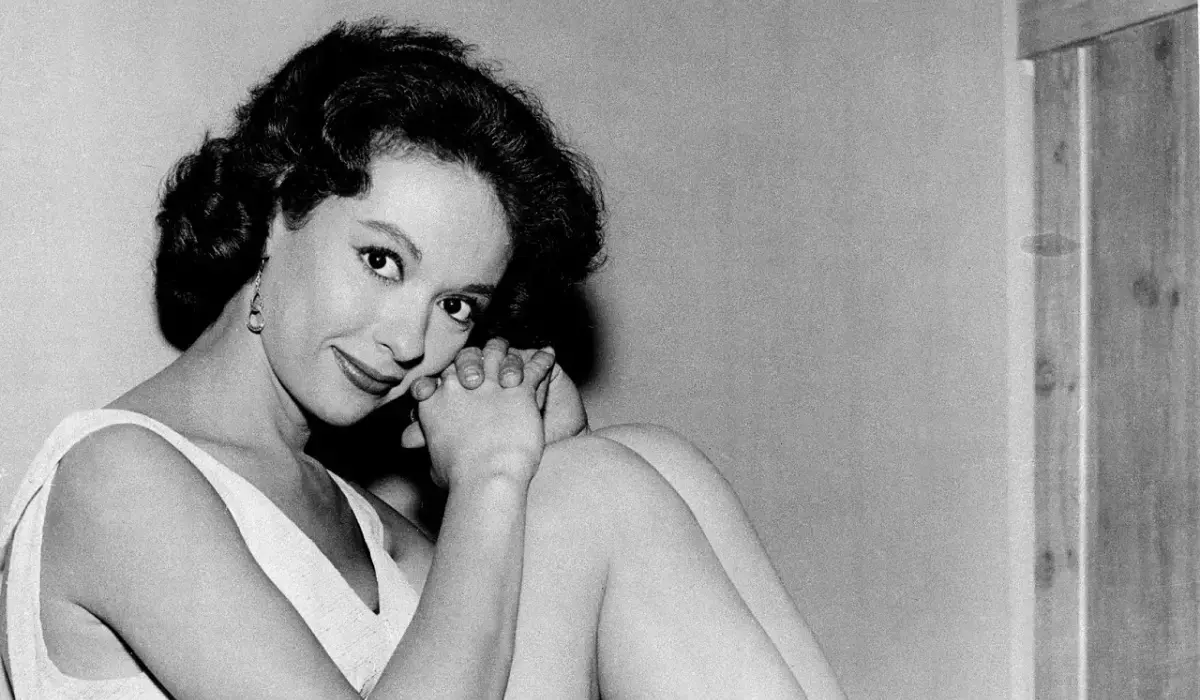
When conversations turn to the figures who fundamentally shifted the paradigm of Latina representation in the entertainment industry, the name Rita Moreno stands out as an enduring cornerstone of artistic excellence. As one of the most universally recognized and celebrated faces in the history of cinema, television, and theater, the Puerto Rican icon is perhaps most famously etched into cultural memory for her electrifying portrayal of Anita in the timeless 1961 cinematic masterpiece West Side Story. Yet, defining her monumental career by a single role only scratches the surface of a breathtaking, barrier-breaking journey. With an illustrious career spanning more than seven decades, Moreno has fundamentally transformed the landscape of Hollywood, leaving an indelible mark on the industry and carving out pathways for generations of performers who followed in her footsteps.
From her groundbreaking early appearances in the Golden Age of Hollywood—such as her memorable turns in classic musicals like Singin’ in the Rain—to her historic achievement as the very first Latina to attain coveted EGOT status by winning an Emmy, a Grammy, an Oscar, and a Tony, Moreno’s trajectory is a testament to extraordinary talent, resilience, and unyielding determination. Looking back at her seven-decade career reveals not only a collection of rare artistic accolades, but also a profound narrative of cultural endurance, resilience against systemic typecasting, and a lasting legacy that continues to inspire the global Latin American community and beyond.
Early Life and the Move to New York
Born Rosa Dolores Alverío Moreno on December 11, 1931, in the municipality of Humacao, Puerto Rico, the future star spent her earliest childhood years on the island before immigrating with her mother to the bustling metropolis of New York City at the age of five. Settling into a vastly different cultural environment, Moreno quickly immersed herself in the city’s vibrant arts scene as a means of navigation and expression. She began earnest training in dance, studying Spanish dance under the tutelage of Paco Cansino, who notably was the uncle and dance instructor of legendary Hollywood star Rita Hayworth.
Her introduction to professional performance came at an astonishingly young age. When she was just nine years old, Moreno made her first public appearance dancing at a Greenwich Village nightclub, capturing the attention of audiences with her natural grace and stage presence. By the time she reached her early teens, she was independently commanding the stage in regular performances across various New York clubs. Her professional momentum accelerated further when, at just 11 years old, she was hired to record Spanish-language voiceovers and dubbed versions of American films for distribution in Latin markets. Shortly after, at the tender age of 13, Moreno made her official Broadway debut portraying the character of Angelina in the theatrical production Skydrift. This pivotal stage role served as a crucial catalyst, opening the doors to the burgeoning motion picture industry on the West Coast.
The turning point that bridged her New York theater days with Hollywood came during a local dance recital. A talent scout spotted Moreno’s dynamic stage presence and promptly recommended her to Louis B. Mayer, the legendary studio head of Metro-Goldwyn-Mayer. Impressed by her screen test and raw potential, the studio signed the young performer to a standard seven-year movie contract on the spot. Upon her arrival in Hollywood, however, industry norms dictated certain alterations. Casting agent Bill Grady informed her that her given name, Rosita, needed streamlining. She ultimately adopted the stage name Rita Moreno, brilliantly combining her stepfather Edward Moreno’s last name with the first name of her dance instructor’s famous niece, Rita Hayworth.
West Side Story and the Shadow of Hollywood Typecasting
Before landing her career-defining breakthrough, Moreno’s early cinematic credits consisted largely of small, often unbilled or minor supporting roles as studios attempted to figure out how to market her unique look and ethnicity. Her early big-screen appearances included the 1950 drama So Young, So Bad, where she was still credited under her birth name, Rosita, prior to the official adoption of her stage moniker. Her first official film assignment under her MGM contract was The Toast of New Orleans, which was soon followed by a small, charming cameo in the legendary musical Singin’ in the Rain. However, shortly after her appearance in the iconic 1952 film, MGM dropped her from its roster, prompting the young actress to navigate the fiercely competitive landscape independently, auditioning tirelessly to support her family.
Throughout the early and mid-1950s, Moreno maintained a steady working presence in Hollywood, securing roles in a diverse array of cinematic projects including The Fabulous Señorita in 1952, Latin Lovers in 1953, El Alamein also in 1953, and the critically acclaimed 1956 adaptation of The King and I. Her rising profile and undeniable talent caught the attention of major mainstream publications, leading to a prestigious cover story profile in Life Magazine in 1954. That same prominent exposure helped secure her a new, highly anticipated seven-year studio contract, this time with 20th Century Fox.
The defining zenith of this era arrived in 1961 when Moreno secured the role that would change her life and cinematic history: Anita in the landmark film adaptation of the groundbreaking Broadway musical West Side Story. Conceived as a modern-day, gritty New York City retelling of Shakespeare’s Romeo and Juliet set against the backdrop of bitter rivalries between street gangs, the film became an instant cultural phenomenon. Moreno’s incandescent, passionate performance captured the complexity, heartbreak, and resilience of her character, earning widespread critical acclaim and cementing her place in cinematic lore. At the 34th Academy Awards held in 1962, she made history by becoming the first Latina performer to win an Academy Award, taking home the coveted Oscar for Best Supporting Actress.
Yet, this monumental triumph existed in stark contrast to the grim realities of the entertainment industry during the mid-20th century. Despite her undeniable talent and historic Oscar win, Moreno faced relentless institutional barriers. Hollywood executives and casting directors routinely pigeonholed her into narrow, highly offensive stereotypes, casting her as the proverbial "Mexican spitfire" and offering overwhelmingly one-dimensional ethnic or hyper-sexualized roles. In a disheartening industry practice, she was frequently cast to portray characters from ethnic backgrounds entirely outside her own heritage, playing Asian, Pacific Islander, and Native American figures because studios lacked the imagination or willingness to cast authentic representatives.
Casting agents continued submitting her name almost exclusively for "exotic" or monolithically defined Latina tropes, refusing to recognize her range as a versatile actress capable of playing standard leading or character roles. Weary of enduring years of systemic typecasting, institutional mistreatment, and professional frustration, Moreno made the courageous decision to walk away from Hollywood entirely shortly after her historic Oscar victory. She turned her back on the film industry for several years, choosing instead to focus her immense creative energies on the stage and live theater.
Return to Acting and Earning Historic EGOT Status
Moreno’s strategic pivot to theater and her eventual return to film and television in the late 1960s and 1970s marked a triumphant second act in her storied career. She re-entered the cinematic fold with compelling dramatic performances in films such as the 1969 neo-noir mystery Marlowe alongside James Garner and Mike Nichols’ critically acclaimed satirical drama Carnal Knowledge in 1971. Around the same time, she expanded her cultural footprint by joining the core cast of the highly influential PBS children’s educational television series The Electric Company, starring in the beloved program from 1971 to 1977 and introducing her vibrant energy to an entire generation of young viewers. Her work on the show yielded immediate critical recognition; in 1972, she won a Grammy Award for The Electric Company Album, laying the foundational milestone for her eventual pursuit of the entertainment industry’s most exclusive club.
Returning to the theatrical stage in New York, Moreno delivered a tour-de-force performance in the Broadway play The Ritz. Her razor-sharp comedic timing and magnetic stage presence earned her the Tony Award for Best Featured Actress in a Play in 1975. Demonstrating her extraordinary versatility across every available medium, she followed this theatrical triumph with a celebrated guest-starring television appearance on The Muppet Show in 1977, a performance that earned her a Primetime Emmy Award for Outstanding Individual Performance in a Variety or Music Program.
With that historic Emmy win, Rita Moreno achieved a milestone that few artists in history have ever reached: she officially attained EGOT status. As the first Latina in history to win an Emmy, a Grammy, an Oscar, and a Tony, and only the third person overall to accomplish the feat at the time, Moreno shattered glass ceilings that proved the breadth of her talent could not be contained by any single medium or genre.
As decades progressed, Moreno seamlessly transitioned through generations of entertainment, maintaining a vital, active presence on both screens and stages. In the later chapters of her career, she delighted modern television audiences starring as the fiercely independent matriarch Lydia Alvarez in the critically acclaimed, Latina-led sitcom One Day at a Time from 2017 to 2020. Demonstrating a poetic full-circle moment in her cinematic journey, she returned to the very universe that had earned her an Oscar decades prior, taking on the newly created role of Valentina in visionary director Steven Spielberg’s sweeping 2021 reimagining of West Side Story.
Recognition and Legacy
The magnitude of Rita Moreno’s contributions to American culture and the global entertainment landscape has been formally acknowledged at the highest possible levels of government and artistic society. Her decades of barrier-breaking work earned her the Presidential Medal of Freedom, bestowed upon her by President George W. Bush in 2004, followed by the National Medal of Arts, presented by President Barack Obama in 2009. In addition to these presidential honors, she has received a sweeping array of lifetime achievement accolades, including the Screen Actors Guild (SAG) Life Achievement Award and the Peabody Career Achievement Award in 2013, as well as a prestigious Kennedy Center Honor in 2015.
Moreno’s profound cultural legacy continues to educate and inspire contemporary generations through various forms of tribute and remembrance. Her remarkable life story has been adapted into literary works for young readers, including the biographical children’s book A Girl Named Rosita. Furthermore, her enduring cultural footprint was immortalized by Mattel with the release of a specialized Barbie doll modeled directly after her iconic 1962 Academy Awards look. Now in her nineties, Rita Moreno stands as one of the very few surviving legends of Hollywood’s Golden Age, an enduring pioneer whose courage, resilience, and incomparable artistry forever transformed the place of Latinas in entertainment and permanently changed the cultural fabric of American storytelling.