



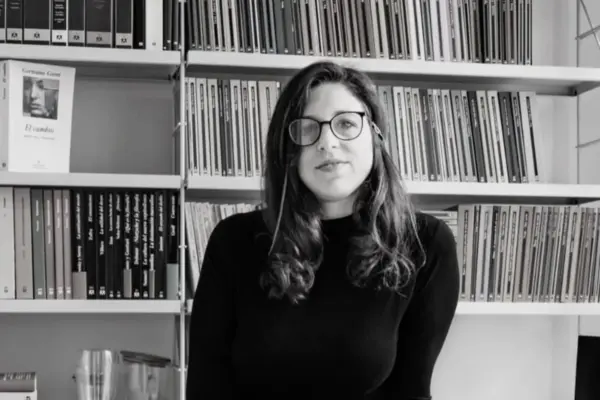






Nearly three years after her high-profile and controversial dismissal from the blockbuster horror franchise Scream VII due to her public support for Palestine, Mexican actress Melissa Barrera continues to find herself at the center of cultural and industry-wide conversations regarding artistic freedom, activism, and accountability. Her unwavering stance during a period when the entertainment industry was largely hesitant to engage with the topic reflects a form of communal solidarity deeply familiar to many Latines: the enduring belief that caring for one’s communities should never stop at geographical borders.
This uncompromising commitment to standing up for others stands in stark contrast to the initial reactions of other prominent figures in the music industry, most notably Ed Sheeran, who faced criticism for his initial reluctance to take a stand during a similar political controversy involving his own concert tour.
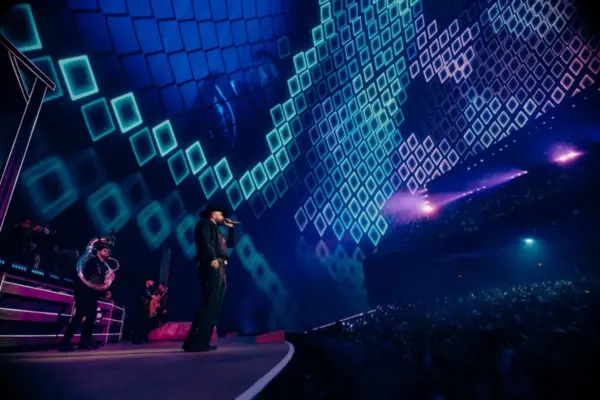
The dialogue surrounding solidarity and the cost of speaking out resurfaced recently following a sequence of events on the international music scene. Ed Sheeran found himself thrust into the center of a major controversy after rapper Macklemore was removed from the United States dates of a shared concert tour. The friction began when Macklemore used his opening set to address the audience directly. During his performance, Macklemore told the crowd that one of the primary reasons he wanted to join the tour was to stand upon stages and stadiums across America and articulate two words that remained very near and dear to his heart: "Free Palestine."
Beyond those initial remarks, Macklemore expanded his political message by calling for liberation and justice in Lebanon, Cuba, Congo, and Sudan, before launching into the performance of his politically charged protest song, "HIND’S HALL," which quickly became an anthem for anti-war and pro-Palestinian activists across digital platforms.
Shortly after these onstage statements, Macklemore alleged on social media that tour promoters and venue organizers were threatening to cancel subsequent tour dates if he continued to make political statements during his performances. As the pressure mounted, Sheeran chose to continue the tour without Macklemore on the bill. However, other supporting acts on the tour took a different path. Finneas and several other opening artists chose to pull out of the remaining dates entirely in solidarity with Macklemore and in defense of free expression.
This collective departure demonstrated the tangible difference a supportive community can make when an artist faces professional penalties for political speech—a level of solidarity that Barrera openly notes she did not experience when she faced her own sudden termination from Scream VII.
The situation naturally invites a broader hypothetical inquiry: What might have transpired if Ed Sheeran had handled the unfolding controversy differently from the outset? What would have happened if, much like Barrera, he had firmly stood up for other communities and artists facing censorship or retaliation?
The parallel between the two events became a focal point during a recent interview when Barrera was asked by the Associated Press to share her thoughts on the situation involving Macklemore, Sheeran, and the supporting acts who walked away. Reflecting on the courage displayed by Finneas and the other musicians, Barrera admitted that witnessing their collective action brought up powerful emotions.
"It was so beautiful to see Finneas and the band and all the opening acts pulling out in support of Macklemore," Barrera told the AP in the recent interview. "It made me emotional. You know, I didn’t get that when it happened to me. I didn’t have any of that happen. It was too soon. People were too scared. But it’s good to see that almost three years later, at least things have changed."
Continuing her reflections on the mechanics of the music industry and the power dynamics at play between major headliners, promoters, and venues, Barrera raised pointed questions about how power could have been leveraged differently. She noted that she could not help but wonder what the outcome might have been if a commercial powerhouse like Ed Sheeran had decided to push back against the pressure from organizers.
"I can’t help but wonder what would have happened if Ed Sheeran had been like, ‘No,’ and called the bluff," Barrera said. "I mean, it’s possible that he still would have had his shows canceled, but I bet you that he could have rebooked those shows in other venues just as easily, and people would have rallied behind him."
For many Latines, the concept of collective care is not merely an abstract political philosophy; it is a foundational value woven into the fabric of everyday life. It is manifested in routine acts of communal support, such as offering food when someone is in need, helping extended family members without waiting to be asked, and showing up physically and emotionally when a local community is struggling through hardship.
For many within the diaspora, that instinctual drive to protect and care for others naturally extends beyond immediate familial and social circles. This empathy is particularly pronounced when the experiences of another marginalized or besieged community echo familiar historical traumas, such as long histories of displacement, systemic discrimination, political violence, or the dehumanizing experience of being treated as perpetual outsiders in one’s own land.
This cultural predisposition toward solidarity does not imply monolithic political alignment, nor does it mean that every single Latine person shares identical viewpoints on complex global conflicts. However, Barrera’s willingness to risk her professional success, financial stability, and standing within a major Hollywood studio rather than abandon her deeply held beliefs speaks directly to a widely recognizable cultural value: authentic solidarity is not something one expresses only when it is convenient, safe, or professionally advantageous. True solidarity demands that individuals see another community’s struggle as worthy of serious attention and defense, even when the personal and professional consequences are immediate and severe.
Barrera’s vocal pro-Palestine commentary ultimately cost her a leading role in a major, highly anticipated blockbuster film franchise. Yet, despite the industry backlash and the sudden termination of her contract, she steadfastly refused to alter or soften her views simply to shield her career from fallout.
Meanwhile, after weeks of public scrutiny and industry debate, Ed Sheeran eventually addressed the controversy directly. Speaking out at his first show back since the departures of Macklemore and the supporting acts, Sheeran offered an apology and context for his initial silence. He stated that he had never intended to become an active political musician, but rather found himself unexpectedly caught in the middle of an important and passionate argument regarding freedom of speech and what he described as the most complex political issue on the planet. During his remarks, he also took the opportunity to address systemic injustices taking place in the West Bank.
Despite his eventual statements, Sheeran’s delayed response continues to invite the exact question that Barrera posed to the public: What might have transpired if he had stood shoulder-to-shoulder with Macklemore and successfully called the promoters’ bluff from the very beginning of the ordeal?
While Barrera’s career path shifted dramatically, resulting in her permanent departure from the Scream franchise, her principled actions succeeded in opening up a much larger, necessary conversation within the global entertainment industry—a discussion that remains intensely relevant today. Her prominent example continues to demonstrate precisely what authentic solidarity looks like when it moves far beyond safe, performative statements and instead carries a tangible, real-world cost for the individual speaking out.