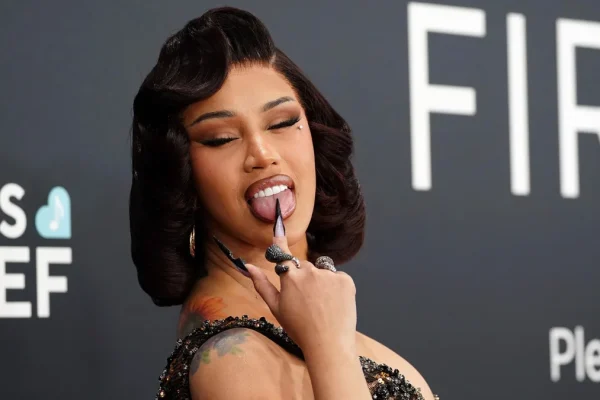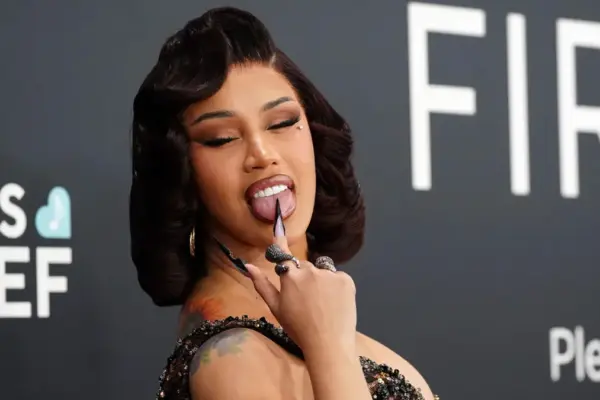

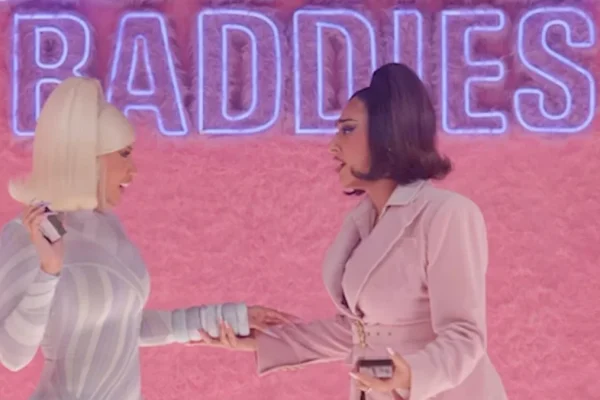



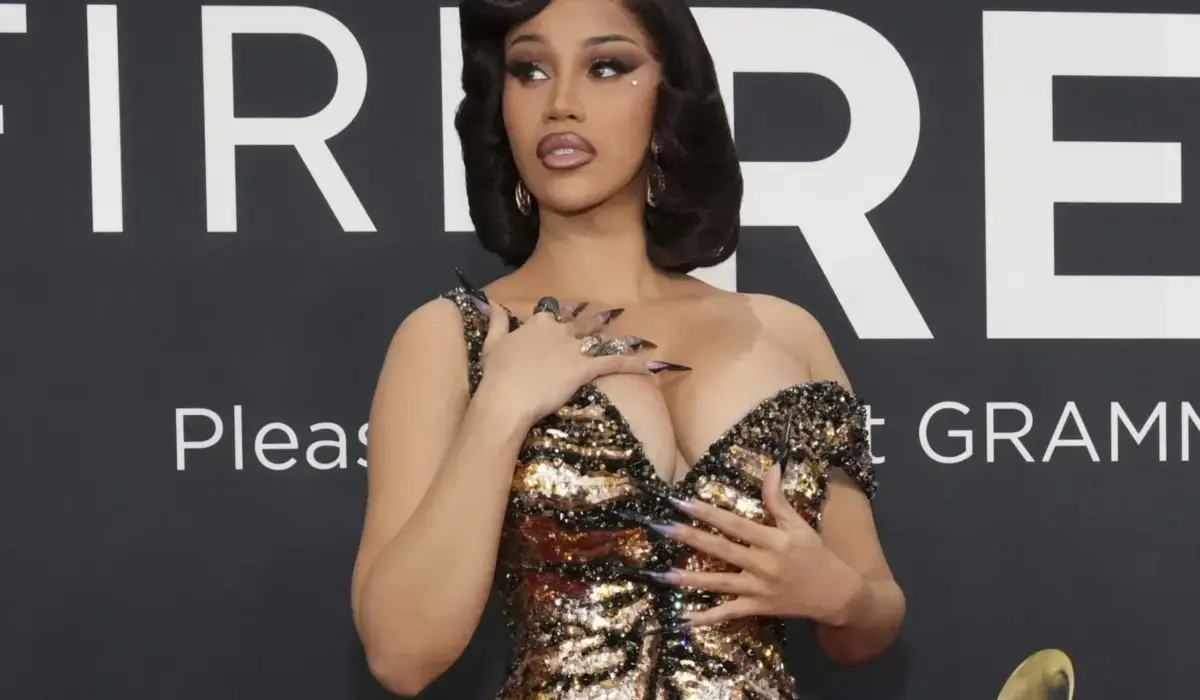
Earlier this year, rap superstar Cardi B captured widespread attention when she announced plans to travel to Colombia following her Little Miss Drama tour to undergo a procedure to have her butt implants removed. The candid revelation followed a playful backstage moment with singer Kehlani. Following their surprise performance of their collaborative track "Safe" at the rapper’s sold-out Los Angeles show on Monday, February 16, Kehlani turned to her and remarked, “You have so much ass!”
"After this tour, I’m taking some out," Cardi told Kehlani playfully, capturing the moment in a lighthearted exchange that quickly circulated online. "After this tour, I don’t hear nobody for three months. I’m going to Colombia, nobody hit me up, nothing. I’m taking this ass out!"
However, it appears the Grammy-winning artist has had a change of heart. During a recent appearance on the TODAY show with hosts Jenna Bush Hager and Sheinelle Jones—where she was promoting the launch of her new hair care brand, Grow Good—Cardi opened up about why she has ultimately stepped back from her initial plans to reverse the cosmetic procedure.
"I was just gonna take a little bit of butt out, but I don’t have time for that," she explained to the hosts, citing the demanding schedule that leaves little room for a major surgical recovery process.
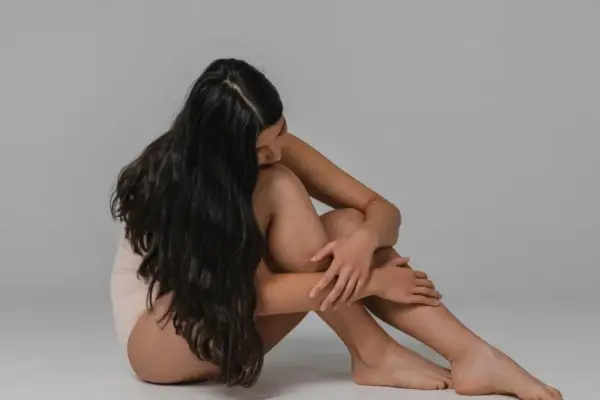
While Cardi’s shifting plans offer a brief, candid look into the personal decisions public figures face regarding their bodies, the news serves as a broader lens through which to examine how beauty standards relentlessly shift every five to ten years—almost always to the detriment of women of color. While the societal pressure to maintain an ultra-thin physique has persisted in Western culture for decades—particularly during the hyper-restrictive diet culture of the 1990s—there was a brief period lasting roughly seven to eight years where body inclusivity and acceptance were seemingly taken seriously by mainstream media and institutions. During that window, even major fashion houses and designers faced mounting accountability for promoting an exceptionally narrow and exclusionary view of the feminine body.
Yet, the cultural pendulum has swung back with force. With the surging popularity of Ozempic and other GLP-1 receptor agonists—drugs that have transitioned from specialized medical treatments to a widespread cultural craze and a normalized lifestyle accessory—extreme thinness is firmly back in style. This resurgence is not confined to private lives; it is playing out prominently onscreen and across digital spaces. From reality television, such as Love Thy Nader, where Brooks Nader faces an on-camera intervention from her sisters regarding her GLP-1 use, to The Secret Lives of Mormon Wives, where cast member Layla Taylor has openly discussed her complicated and unhealthy relationship with the drug, the normalization of rapid weight loss is everywhere.
Then there is "SkinnyTok," a pervasive corner of TikTok where creators casually document what they eat in a day, demonstrating how they shrink portion sizes, suppress appetites, and power through severe physical cravings. Rather than being framed as warning signs of disordered eating or unhealthy behavior, these habits are presented as routine wellness. It is as if the cultural consciousness has suddenly forgotten that thinness and physical health are not synonymous.
This regression, however, is about much more than the return of thinness as a preferred aesthetic. It exposes a deeper systemic double standard regarding who is permitted to move in and out of these body trends without facing social consequence or lasting stigma.
Across TikTok and broader influencer culture, the transition is currently playing out in real time. Brazilian butt lifts (BBLs) are being systematically reversed, bodies are being reshaped once more through surgical reduction or dramatic weight loss, and the exact same women who were once heavily encouraged or pressured to "enhance" their curves are now being nudged to scale back. This ongoing shift provides further proof that even when curvier bodies and BBL enhancements were considered culturally acceptable and mainstream, they were never truly embraced on Black and Latina women. Instead, those physical traits were only validated and celebrated when adopted by white women.
Whether society is willing to acknowledge it or not, what is deemed "beautiful" has historically been dictated by proximity to whiteness rather than cultural origin. Even as Black and Latina celebrities and everyday women embraced their naturally curvier shapes and fuller figures, those attributes were often marginalized until white women popularized them on a massive scale.
This pattern is far from new; it is deeply cyclical. For decades, curves, fuller figures, and physical features naturally associated with women of color were branded as less desirable, routinely rejected, or hypersexualized. The "slim-thick" or heavily contoured curvy body type only began receiving widespread praise and mainstream acceptance once public figures like the Kardashian family rose to massive prominence—a cultural shift that happened to coincide with the rapid rise in popularity of surgical enhancements like BBLs.
Yet, with this recent pivot back to extreme thinness—which is frequently marketed under the guise of being "disciplined," "clean," "healthy," and "timeless"—the cultural whiplash is immediate. What was once considered the ultimate beauty aspiration is now casually positioned as excessive or outdated. Naturally occurring bodies that do not conform to the new standard tend to align far more closely with what has suddenly gone out of style.
The underlying message sent to women is clear: when curves are trending, you may find yourself temporarily considered desirable, but that desirability is inextricably tied to hypersexualization and fetishization. And when thinness returns to favor, it signals to curvier women that it is time to shrink themselves to fit the mold.
When thinness dominates the cultural conversation, weight loss is frequently reframed as an act of "taking care of yourself," while maintaining a fuller figure is unfairly cast as "letting yourself go." Furthermore, when thinness is the prevailing standard, Black and Latina women are frequently subjected to specific criticisms implying a lack of personal restraint or excessive indulgence.
Conversely, when BBLs and fuller figures were at the height of their trendiness, it did provide a degree of mainstream praise for women of color who possessed naturally curvier physiques. It also helped dismantle some of the lingering social stigma surrounding women of color undergoing cosmetic procedures like liposuction and body contouring. However, at its core, that trend was largely driven by the commodification of marginalized features, turning them into a temporary, highly profitable aesthetic for the broader market.
The most harmful aspect of this dynamic is not the existence of the trends themselves, but the underlying pattern: these aesthetics are consistently built from the blueprints of marginalized women’s bodies without offering any structural protection, financial benefit, or lasting cultural value in return. When the trend inevitably fades, Black and Latina women are left carrying the societal stigma once again, having never truly reaped the rewards of genuine acceptance.
Ultimately, this rapid cultural shift away from curves and back toward extreme thinness is less about fleeting body types and more about a systemic cycle that profits from Black and Latina bodies, shifts beauty standards without accountability, and leaves women of color to bear the heavy psychological and social costs.
When Cardi B makes a casual, humorous remark about "taking this ass out," it does not exist in a vacuum. It lands squarely within a culture that constantly dictates to women like her when their bodies are considered fashionable—and when they are not. The fundamental problem has never been the trend itself; it is the realization that those who bear the physical blueprint of the trend were never truly meant to fit safely or permanently into the rigid definitions of mainstream beauty.