







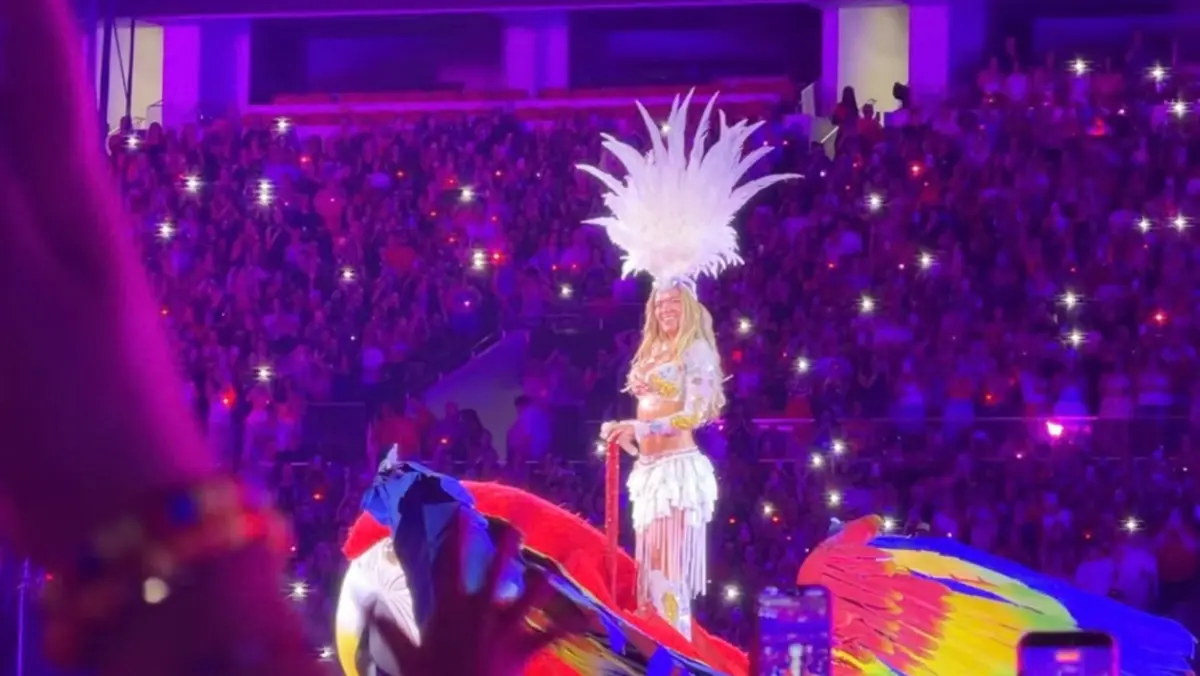
The Miami stop of Karol G’s Viajando por el Mundo Tropitour nearly did not happen for me, a realization that carries heavy weight considering how entirely different this narrative would feel had I chosen to stay home. An opportunity materialized through Acoustyle, prompting me to invite my Colombian friend Angélica Romero along. Together, a paisa from Medellín and a costeña from Barranquilla navigated the aggressively humid Miami streets on an evening that ultimately unfolded into something far more profound than either of us had anticipated. The thick, tropical heat outside welcomed us like a physical reminder of our geography, immediately wrapping us in a familiar atmosphere. Even before walking through the venue doors, we were already carrying that distinct, electric energy that surges through two Colombian women preparing to watch a fellow paisa command a massive international stage.
It is worth acknowledging with complete honesty the initial hesitation many dedicated Karol G fans felt as the Tropitour era began to take shape, because that doubt resonated within me as well. In the wake of Mañana Será Bonito—an album and tour that functioned as a collective, therapeutic healing process for women everywhere, feeling less like a traditional concert and more like a safe space for emotional recovery—some of us still craved that specific musical embrace. That earlier era spoke directly to the fractured pieces of countless Latinas, validating our pain and making us feel profoundly seen. Tropicoqueta introduces a distinctly different sonic and visual energy, and at first, that shift felt somewhat disorienting. It was akin to being handed something vivid and celebratory when a part of you was still holding tightly to something tender and unresolved. Yet, standing firmly in that packed Miami crowd, sweating through a carefully chosen outfit while holding a cold beverage that dripped steadily down my arm and singing every single lyric at the top of my lungs, the transition finally made complete sense. Latinas are wonderfully multifaceted individuals; we do not reside permanently in a single healing chapter. There are seasons when we step unapologetically into our vibrant, fully alive, tropical eras, and Karol G was offering everyone in that arena the explicit permission to inhabit that version of ourselves without a single ounce of guilt or hesitation.
The Mañana Será Bonito Era and Why It Still Lives in My Body
To fully comprehend the emotional weight and significance of what the Tropitour ultimately delivered, it is essential to first understand the transformative impact of Mañana Será Bonito. That specific era provided a psychological lifeline during one of the most arduous chapters of my life—a grueling year defined by a heaviness so profound that I genuinely questioned whether I possessed the strength to make it through intact. Karol G’s voice became a constant companion, echoing through my headphones on a continuous loop while I quietly harbored hopes and daydreams of a future day when I might finally feel whole again. Playing her music felt like making a binding promise to myself that healing was attainable. Because she is a fellow Colombian hailing from Medellín, her presence felt distinctly familial, mirroring the warmth of a sister who understood life’s complexities without requiring lengthy explanations. That deep sense of cultural and emotional proximity carried me safely through numerous dark nights that I care not to recount.
Given how deeply intertwined that album became with my personal survival, attending her Mañana Será Bonito concert at Miami’s Hard Rock Stadium was non-negotiable. I adorned myself in sparkles, dressed up, and walked into the massive venue carrying a heart weighed down by lingering grief, yet fully prepared to embrace every second of the performance. Live music possesses a unique, almost magical capacity to forge profound intimacy with artists we will likely never meet in person. Sometimes, a familiar voice and a resonant melody provide sufficient proximity to chase away the isolation of personal hardship, which is precisely what that evening was intended to be. However, the moment "Amargura" began to echo through the stadium speakers, a sudden wave of emotion rose sharply in my chest, threatening to overwhelm me. To protect myself from a vulnerability I simply was not prepared to process publicly, I quietly slipped away from my seat and allowed the performance of that song to pass without me. I carried that unfinished, dangling emotional thread for a long time, unaware that it remained quietly tucked beneath the surface, patiently waiting for a safer environment to finally catch its breath.
What the Tropitour Gave Me That I Did Not Know I Was Looking For
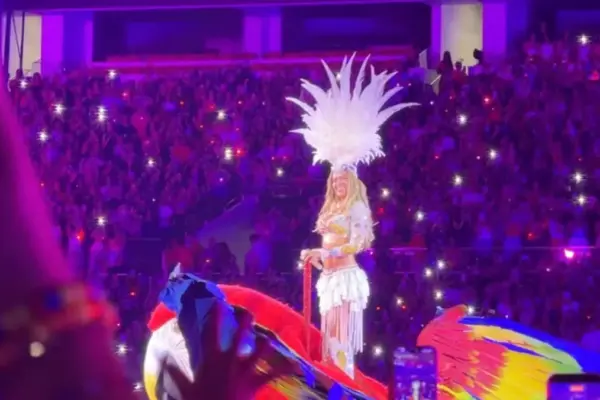
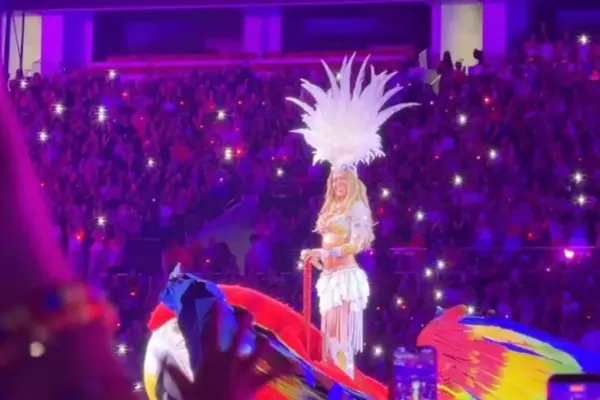
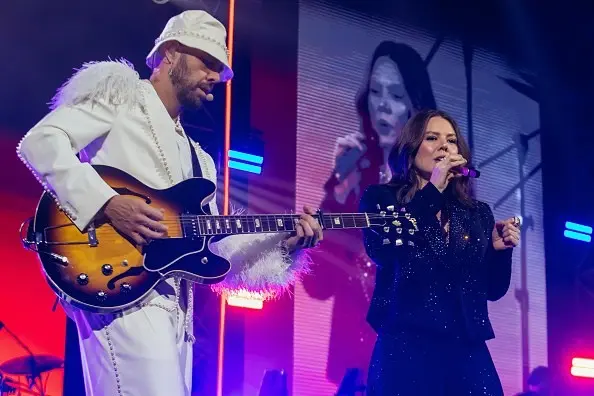
When Karol G finally materialized on stage during the Tropitour, her signature kinetic energy swept through the roaring audience before I could even brace myself for the impact. In an instant, I was completely absorbed in the moment—dancing, singing, and fully absorbing the vibrant tropical atmosphere she had carefully constructed around us. The version of myself that had wrestled with heavy burdens during the Mañana Será Bonito era suddenly felt distant, in the most liberating and positive sense possible.
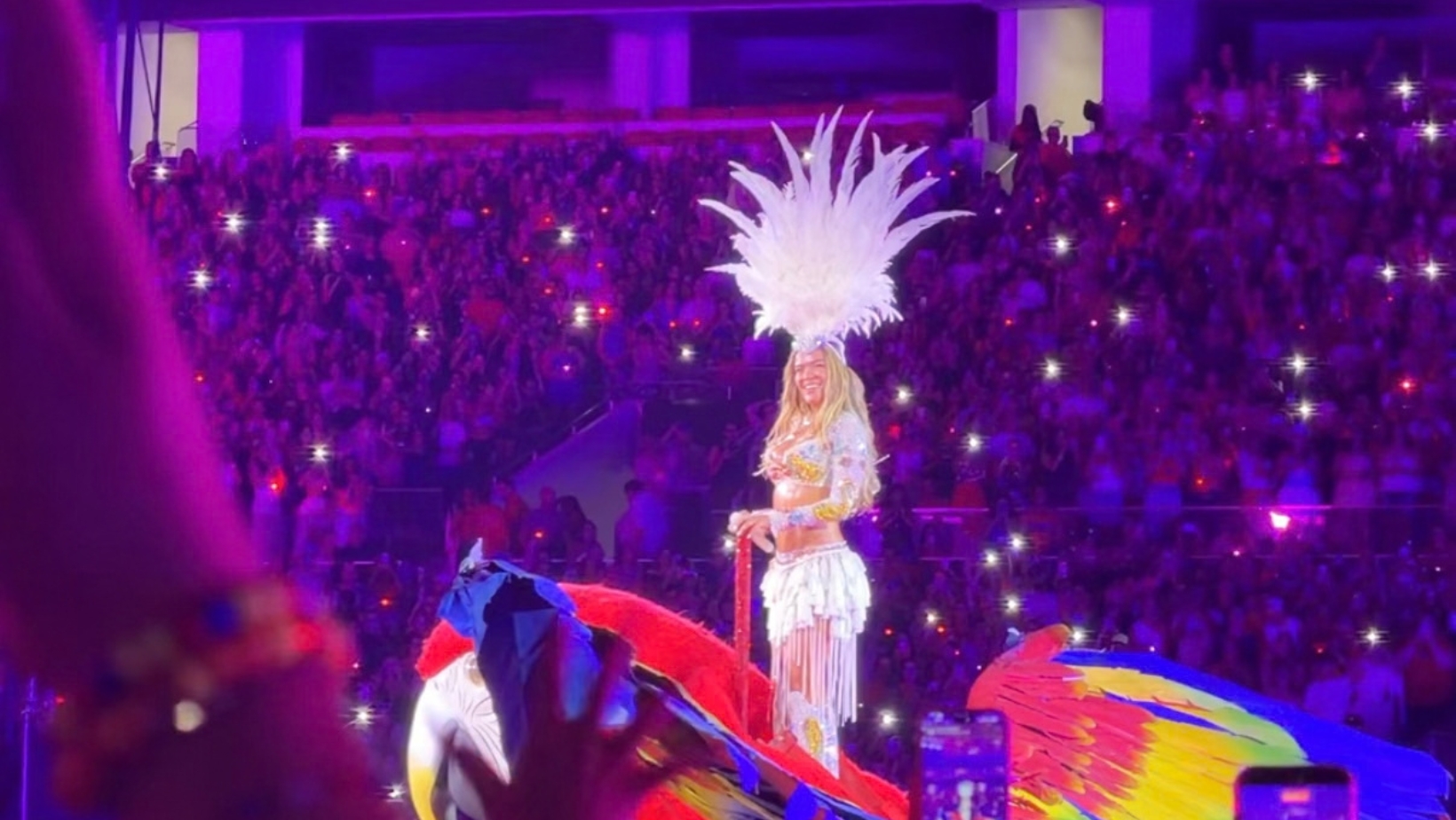
Throughout the set, she moved seamlessly through her foundational catalog before inviting several fans onto the stage to dance alongside her. Among them were two Cuban fans whom she noted were the first Cubans she had ever welcomed onto her stage, alongside a Mexican fan and two Colombians. Watching individuals from diverse backgrounds converge in real-time for an energetic perreo to "Bby Wow" epitomized the highest aspirations of live performance—a room packed with strangers finding collective joy in the exact same second.
Adding an innovative layer to the connection, her production incorporated viral TikTok videos of fans executing the "Bby Wow" choreography directly onto the stage screens. This creative choice spoke volumes about how closely Karol G and her management team monitor and value grassroots community engagement. Rather than taking her monumental influence for granted, they actively honor it, demonstrating the attentiveness that distinguishes artists who merely entertain crowds from those who genuinely co-create experiences with their audiences.
That same spirit of generosity and artistic community was palpable when she welcomed mariachi musicians to the stage, followed by guest performances from Elena Rose and Greeicy. By deliberately carving out space for emerging artists who are actively building their own legacies—a gesture not always practiced by performers operating at her elevated tier—Karol G modeled a powerful lesson in lifting others as you climb. By the time she launched into a cumbia-infused rendition of "Bichota," the track felt like it had evolved alongside everyone gathered in the venue. It felt as though thousands of us were collectively reconnecting with our folkloric roots, recognizing that beneath layers of modern urban rhythms, we have always maintained an enduring appetite for traditional sounds. The Tropitour served as Karol G’s resounding declaration that contemporary women are permitted to embrace every facet of their musical identities simultaneously.
‘Amargura’ and the Moment I Realized How Much I Have Healed
Midway through the concert, pyrotechnic flames erupted near the stage, intensifying the already sweltering heat of the tropical night just as the familiar opening notes of "Amargura" began to play. My physical body recognized the melody long before my conscious mind had time to react, and everything I had unconsciously suppressed since the last time I heard that song live rushed back in an instant. During the Mañana Será Bonito tour, that exact track had forced me to abandon my seat because the emotional fallout was simply too raw to navigate. This time, however, the outcome was entirely different. I stood my ground, sang every single lyric at full volume, danced with uninhibited freedom, and allowed myself to experience genuine joy inside the boundaries of a song that once felt suffocatingly heavy.
Somewhere amidst the flashing lights, the roaring crowd, and the searing heat, a profound realization settled over me: the unresolved emotional chapter I had carried since the previous tour had finally reached its conclusion. Karol G’s career is defined by her constant evolution through distinct artistic eras, yet her musical foundation consistently honors the complex emotional realities of her listeners. Whether her audience is navigating profound heartbreak, celebrating personal triumphs, or lingering somewhere in the messy gray space between the two, her catalog walks alongside them.
The Tropitour stands as living proof that her commitment to emotional resonance has never wavered, even as her sonic palette continues to expand. Latinas can embody the resilient, fierce energy of a matadora while simultaneously making space to sing playful anthems like "Pineapple" and "Mamiii," because humanity encompasses the entire spectrum of emotion. Karol G continues to champion this multifaceted reality unapologetically across every genre she touches. Standing shoulder-to-shoulder in that vibrant Miami crowd, finally singing "Amargura" from start to finish without needing to retreat from the room, I understood that the healing journey initiated during Mañana Será Bonito was never truly abandoned. It had simply transformed into something stronger, brighter, and entirely whole.