









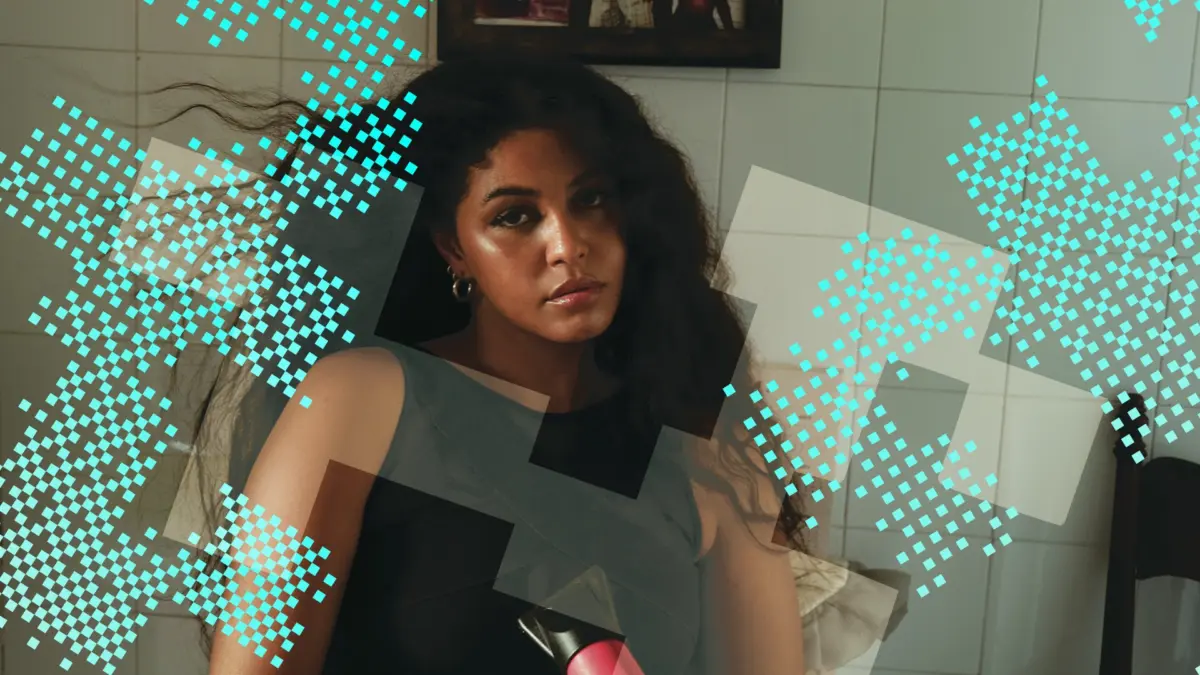
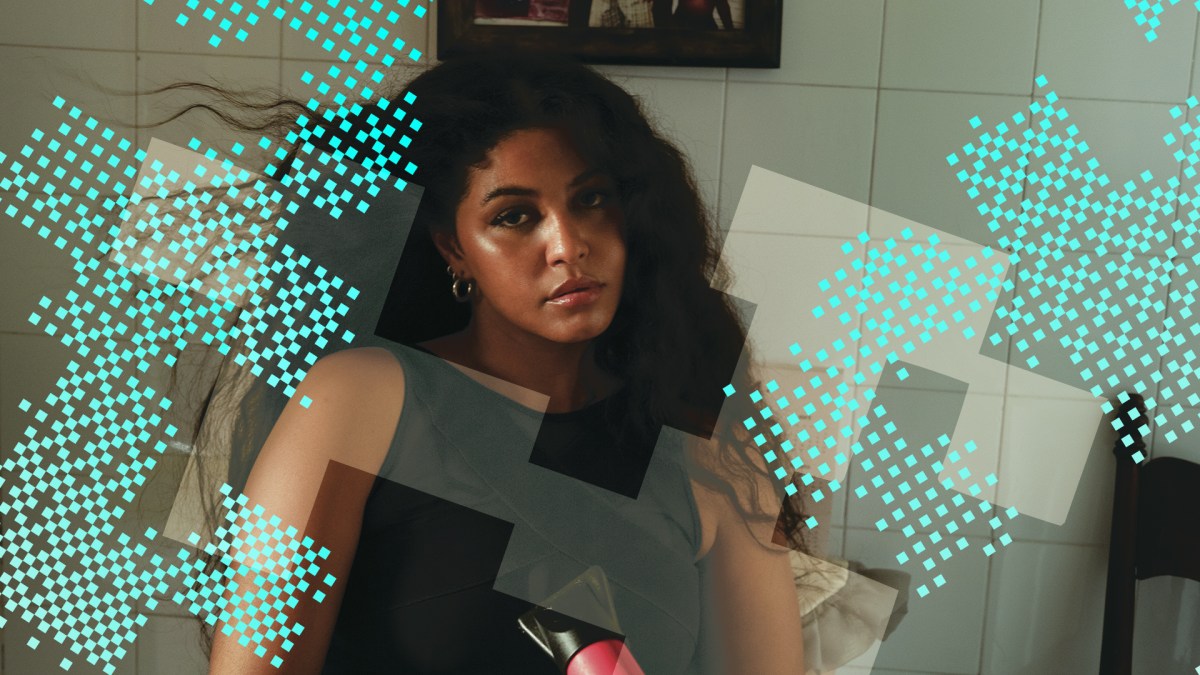
For much of her life, singer-songwriter Yendry has found herself trapped in a continuous cycle of explaining where she belongs. Born in Santo Domingo, raised in Turin, Italy, and now based in Los Angeles, the multifaceted artist has long navigated the delicate, often complicated space between cultures, national identities, and distinct versions of herself. Throughout this journey, she has frequently discovered that she does not quite fit neatly into any single label.
In her home country of the Dominican Republic, people often tell her that she lacks a traditional Dominican accent. In Italy, meanwhile, she faces assumptions that she does not look conventionally Italian. Upon relocating to Los Angeles, she found that she did not instantly slot into the local cultural landscape there either. Musically, her struggles have mirrored her personal life; she has long found it difficult to define her sound within the rigid boundaries of a single genre, frustrating industry gatekeepers who prefer easily marketable classifications.
Yet, with the arrival of her long-awaited debut solo album, Como Agua, Yendry is firmly rejecting the pressure to force herself into a restrictive box. Released on September 18, the album serves as a deeply personal, unflinching exploration of migration, cultural identity, healing, and self-discovery. The project was born out of a severe period of burnout—a time that forced her to confront unresolved personal conflicts and parts of herself she had spent years actively avoiding. Across the record’s three distinct emotional pillars—the remedy, the ritual, and the mirror—Yendry examines her complex relationship with her roots, her family dynamics, her career ambitions, and the heavy societal expectations she has carried for years.
The album’s title offers the clearest metaphor for where Yendry finds herself today. For the artist, water is far more than a simple poetic symbol of her Caribbean roots and upbringing; it has evolved into a vital philosophical framework for understanding what it means to move through the world as a modern immigrant.
"The way water exists in different forms—when I realized it, it blew my mind," Yendry explains in an interview. "Water molds the rocks. It really paves its own path. And I think I felt the same way when I migrated again for the second time in my life, from Italy to LA, for a personal choice as an adult. That’s why I wanted to call this album Como Agua because I feel like now I’m flowing, and that’s a universal immigrant experience."
For Yendry, reaching that profound realization was far from instantaneous. Much of her life has been defined by the persistent burden of explaining herself—to casual acquaintances, industry professionals, and, at various points, even to herself.
"I struggle so much to define myself, and I think my job requires me to do that a lot," she says, reflecting on the demands of the music industry. "Not just musically, but when I meet people, and they ask me, ‘What kind of music do you make?’ I’m like, ‘Oh, I don’t know how to classify that.’ Or, ‘What kind of genre of music do you have?’ I have no idea, man. Or, ‘Where are you really from, because you don’t look Italian?’ It’s been part of my life having to explain myself, and this happens everywhere."
For years, that inherent inability to fit neatly into a predetermined category created intense pressure to define her identity more precisely. But today, Yendry insists, she no longer feels that urgent need for categorization.
"I think that will always be part of my life, but at the same time I think that’s what brought me to dive deeply into who I am, where I come from, what am I? In the past, I felt way more pressure to label myself," she notes. "But now I don’t care anymore. I don’t care about doing it… and once you know who you are, you don’t care too much about how people label you."
That newfound freedom and self-assurance, however, has not completely erased the quiet loneliness that inherently comes with belonging to multiple places at once. In previous interviews, Yendry has spoken candidly about the profound isolation of never feeling entirely at home in any single geography. Now, she is sharing how the creative process of making Como Agua allowed her to explore that isolating sensation further and find peace within the contradiction.
"I think I know now that two things can exist—can coexist. I do know I belong to these places more deeply, but I still feel the loneliness of not belonging completely to a place, or not being able to stay in one place," she reflects. "I’m always going to go back to Italy, always going to go back to the art. But because there are these people there, like my mom, who will take me back there at some point in my life, but at the same time I won’t be able to stay there."
Rather than attempting to eliminate or fix that feeling of displacement, Yendry has learned to let those seemingly opposing truths coexist. The intensive work of understanding herself began during a time when she was operating on dangerously low reserves.
"I was coming from a burnout, overworking myself, and not getting what I aspired to, and from the outside, everyone thought I was okay," she recalls. "I was not sure how to dig deeper into who I am, into my roots, into my art, into why I never felt like I belonged to Italy, but at the same time I love it. My relationship with my dad—there were so many things that just came out, and I think naturally when I started going to therapy, when I started learning how to put boundaries, taking care of myself in a new city, in LA, all this stuff came up because I was already working on myself."
The creation of the album became an invaluable opportunity for Yendry to ask herself those deeper, necessary questions, while also forcing her to reconsider a survival-oriented mindset she had carried throughout most of her life.
"I lived my whole life in survival," she admits. "I had to stop and think, ‘Oh, this is what I really want.’ So, okay, I’m going to operate differently now."
Operating differently meant actively making room for personal desires that did not necessarily conform to the traditional timelines or pathways expected by society. That underlying tension is especially prominent on the track "Mala Mia," a spirited song centered on letting go of the external expectations that often grow louder as women advance in age.
"I really had to let go of those external expectations, like okay, I’m getting older, but at some point, I’m gonna have to stabilize and have a family. You know the normal cycle of life that people expect you to have, you know?" she says.
Those same external expectations heavily influenced how people viewed her artistic ambitions, particularly her steadfast decision to write and record music primarily in Spanish.
"Why don’t you sing in Italian and start from here?" she recalls loved ones asking during the nascent stages of her music career. "But I needed to be true to myself. And stay true to myself and sing in the language that felt best and most natural for me, and that was Spanish. I had to let go of the weight of these expectations that were put on me by external entities, and I also had to trust my ideas and trust my gut."
Trusting her gut ultimately meant making a decision that appeared deeply risky from an outside perspective: starting over entirely—not only by moving to a new country, but by fundamentally dismantling and rebuilding her career approach.
"My gut told me to start again. Start my career again from scratch, and I did. And leave Italy," she says. "I didn’t really love that guy that I was with, so I didn’t want to stay comfortable there because I would end up being miserable if I were still in Italy, yearning for what could have been."
That willingness to embrace radical uncertainty—leaving behind a romantic partner and the country that raised her—became an integral part of the album’s larger narrative. Yet, she openly admits that it was not always easy to recognize her own progress, particularly when a myriad of circumstances completely outside her control repeatedly delayed the album’s long-awaited release.
"People from the outside are always going to think it took me four years to make the album. The album was made in a few months, and it’s been ready for two years," she explains. "For a year and a half it’s been ready. But in the meantime, I had a toxic manager, and I had to heal my vocal cords because I was completely burned out."
To compound these personal and artistic hurdles, she was forced to endure a grueling series of logistical obstacles, ranging from complex immigration paperwork and production availability to contract negotiations and label indecision.
"I had to wait six months for the visa," she says. "I had to wait six months for this executive producer to be available. I had to wait for the contract to be in place, and for the label to decide that, yes, they were on board. It’s so much."
If there is one definitive lesson Yendry says she has taken away from the creation of Como Agua, it is the paramount importance of trusting her own creative instincts and artistic vision.
"I think I didn’t know how to trust my own ideas," she shares. "Before, I always felt like I wasn’t enough, or that I didn’t know enough. I always felt like someone else who has been in this industry for longer might know way more than me."
Completing the album required her to challenge that ingrained instinct to defer to industry veterans she once believed knew better than she did. Instead, she began anchoring herself in what felt authentic.
"And then I think with this album, something changed," she says. "I switched, and I was like, ‘Oh, actually no one will know better than me how I feel and how I want to write things and how I want to present things because these are songs that I’m going to have to sing for the rest of my life.’"
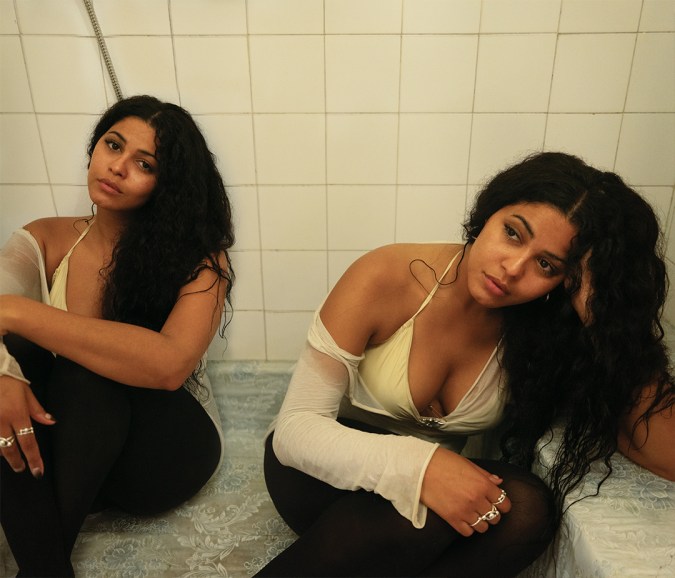
That newfound trust extended far beyond the studio. Yendry took a thoroughly hands-on approach to the project’s visual identity, directing her own album cover shoot and paying a photographer out of pocket after realizing that none of the corporate imagery presented to her felt authentic. The entire grueling process healed her relationship with self-doubt, as every minor decision—from the album artwork to the final lyric—forced her to rely exclusively on her own judgment.
All of these intersecting tensions—identity, migration, isolation, ambition, societal expectations, self-doubt, and the difficult journey toward self-trust—ultimately converge in the album’s evocative title.
"I think it became my manifesto when I started. After the burnout, when I started healing, it became my manifesto in a way that I want to flow through life," Yendry reflects.
She also recognizes that, within the context of that metaphor, flowing does not automatically mean that life has become frictionless. Rather, it simply means she has fundamentally changed the way she navigates it.
"Yes, I feel like things are coming to me," she says. "Not just because I’ve been working so hard, because in the past I worked hard too. But I feel like now I do it with a different grounding. Now I know who I am. I know what I like. I know what I don’t want. I know my boundaries. I know the people I don’t want in my life. It feels great to be honest. It feels amazing, and things flow that way. It doesn’t mean it’s easier, but it’s way more satisfying."
Ultimately, this may be what Como Agua truly represents for Yendry: the freedom of not having to arrive at a singular, definitive answer about who she is, but instead finding deep comfort in the reality that she can continue to evolve at any moment.
For someone who spent years trying to decode where she belonged, the most radical part of Yendry’s evolution is her realization that she never has to settle on just one answer. She can be a proud Dominicana, and she can also be Italian. She can belong to multiple countries while still carrying the quiet loneliness of not fully belonging to any single one of them. She can craft music that outright refuses to be boxed into a single genre. She can change her mind about what she wants out of life, start over, leave behind what no longer serves her, and choose to relocate whenever she pleases—with cities like New York already catching her eye. Yet, all of these varied versions of herself remain part of the exact same story. Like water, she will simply keep moving.