






By Johanna Ferreira
September 24, 2026
The recent public speculation surrounding Jenna Ortega’s appearance has been difficult to watch—not because her physical form requires any explanation, but because the response highlights just how acceptable people still find it to discuss women’s bodies as though they are public property. In the eyes of the public and the media, a woman’s frame remains open to constant observation, intense assessment, and unsolicited criticism.
This invasive dynamic is something that spans across industries, celebrity statuses, and everyday lives. Having spent most of my life relatively thin, I am well aware that the comments I receive about my own body are not equivalent to the systemic judgment and discrimination experienced by individuals in larger bodies. Still, this past year served as a stark reminder of how deeply our society has normalized treating weight as public information. After I unintentionally lost weight while struggling with Small Intestinal Bacterial Overgrowth (SIBO)—at times finding myself unable to digest more than one meal a day—neighbors and acquaintances began eagerly congratulating me. Their compliments reflected a culture so intensely committed to thinness that visible weight loss was automatically interpreted as good news, completely ignoring the reality that I was unwell.
It comes as little surprise that so many women struggle intensely with body image and eating disorders under these conditions. During a July interview with Jay Shetty, actress Camila Mendes opened up about her own past struggles with bulimia, body image, and perfectionism during her time on Riverdale. Mendes described the deep confusion she felt when people showered her with compliments after she lost weight as a direct result of her eating disorder. That praise only reinforced the toxic idea that she looked her absolute best at her thinnest, even during periods when she was deeply unwell and suffering physically and mentally.
That is the persistent reality of navigating the world as a woman: no version of our physical selves seems to escape commentary. We are constantly told we are either too thin, too fat, or simply not curvy enough. People always manage to find something to observe, question, praise, criticize, or worry about. Being on the receiving end of that relentless scrutiny is profoundly exhausting.
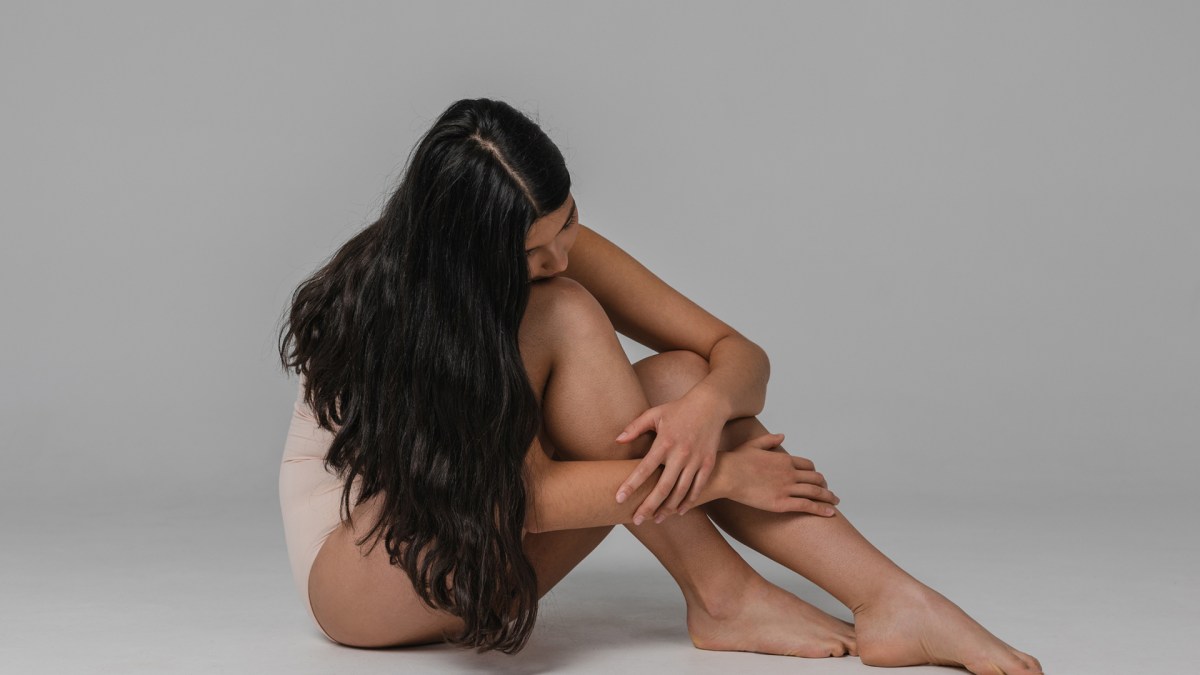
For Latinas, that scrutiny frequently begins at a very tender age. Many of us grow up within families and cultural environments where comments about women’s bodies are so thoroughly normalized that we do not always recognize them as direct violations of personal boundaries. One relative will casually tell you that you have gotten too skinny, while another is quick to point out that you have gained weight. A tía will offer an unprompted critique of your thighs or your waist. Growing up, my own girl cousins often told me I was far too skinny and desperately needed to gain weight. Within my family, one of my enduring nicknames has always been flaca. While it was usually intended as a term of endearment, losing even a few pounds could suddenly transform that affection into a source of immediate concern and anxiety.
Jokes about my thinness rarely bothered me on the surface, and I always knew they often stemmed from a place of love and familial care. However, loving intentions do not erase the underlying, pervasive message being communicated: that my body is entirely available for others to evaluate, measure, and judge.
What makes this kind of scrutiny particularly complicated for Latinas is the web of contradictory expectations that surround us. On one hand, we are implicitly and explicitly told to be thin—yet cautioned never to be too thin. We are expected to be curvy, but under no circumstances should we be considered "fat." The ideal is to be feminine and voluptuous, provided our stomachs remain entirely flat and our waists impossibly tiny. We are encouraged to enjoy food and eat heartily, only to be criticized the moment we gain any weight. Conversely, we are praised for losing weight, immediately followed by anxious inquiries about whether we are eating enough—a question I have personally heard echoed throughout my entire life. No version of our physical selves is ever simply allowed to exist as it is.
This broader cultural context is precisely why the intense public reaction to Jenna Ortega’s body felt so painfully familiar. The cycle of speculation reached a point where her younger sister, Aliyah, recently stepped in to support a fan’s message on social media. The message rightly reminded the public that Jenna "doesn’t owe anyone an explanation" for her body, a sentiment that is undeniably true.
The underlying principle here is simple and long overdue: women should never have to explain why their bodies look the way they do. And yet, looking at the cultural landscape in 2026, it is disheartening to realize that we still need to articulate this basic boundary. A woman’s body is not a public question that she is ever required to answer.