










“We need to control the capital because that’s how you control the agenda.”
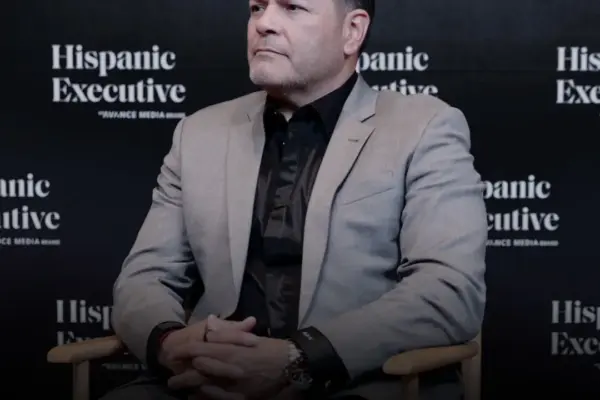
For Martin Cabrera Jr., chief executive officer of Cabrera Capital, economic influence is a concept that extends far beyond simple purchasing power or consumer visibility. Speaking at the AVANCE Global 2026 conference in Las Vegas, the seasoned investment banker argued that the time has come for the Latino community to move past being recognized primarily as a valuable demographic of consumers. Instead, he emphasized, Latinos must actively step into roles as influential investors, business owners, and major decision-makers who shape the direction of the broader economy.
It is a distinction that warrants a closer examination of how wealth and economic power are distributed across the United States.
Recent projections from the Latino Donor Collaborative estimate that U.S. Latino economic output reached an astonishing $5.1 trillion in 2026. That massive figure reflects an increasingly vital contribution to the American financial landscape, demonstrating that Latino productivity and commercial activity are central engines of national growth.
However, economic output, consumer spending, and accumulated wealth are fundamentally different economic measures. An entire community can generate substantial economic activity, fuel retail markets, and drive corporate revenues without necessarily owning a proportional share of the foundational assets behind that activity.
And that is precisely where the conversation regarding modern economic parity becomes considerably more complicated.
A Growing Economy, a Persistent Wealth Gap
The complex relationship between economic participation and accumulated wealth is vividly illustrated by data from the Federal Reserve’s Survey of Consumer Finances.
According to the federal survey, the median Hispanic family held approximately $79,600 in net worth. By comparison, the median non-Hispanic white family held a net worth of $332,100.
Put simply, the typical Hispanic family’s net worth sits at roughly one-quarter of that of its white counterpart.
These figures do not imply that Latino households are failing to make progress. In fact, Hispanic median wealth experienced notable upward movement between 2022 and 2025. Yet, the persistence of this substantial gap demonstrates why raw economic growth and high consumer spending numbers cannot tell the entire story of community prosperity.
In financial terms, wealth represents what households own minus what they owe. Unlike annual income or day-to-day spending, wealth reflects accumulated assets—such as real estate, stocks, and business equity—that provide genuine financial security, support future investments, and can be passed down between generations to build lasting legacies.
Understanding the true scope of Latino economic influence, therefore, requires looking far beyond the retail marketplace and examining the underlying structures of asset accumulation.
Why Ownership Changes the Equation
Homeownership serves as one of the most accessible and traditional examples of how daily economic participation can successfully translate into long-term asset ownership.
According to the State of Hispanic Homeownership Report published by the National Association of Hispanic Real Estate Professionals, Hispanic households added 441,000 owner-households, bringing the total to a historic record of approximately 10.2 million.
At the same time, however, the overall Hispanic homeownership rate declined slightly to 48.5 percent as the rapid formation of new households across the country outpaced homeownership gains.
These mixed figures illustrate a dual reality characterized by significant progress tempered by ongoing structural challenges.
Owning a home allows families to steadily build equity through regular mortgage payments and the potential long-term appreciation of property values. Yet, the realities of rising housing costs, limited housing supply in desirable markets, and persistent financing barriers can make that vital opportunity difficult to access for many first-time buyers.
Business ownership represents another critical pathway toward closing the wealth gap and establishing long-term financial independence.
Data compiled by the U.S. Census Bureau shows that Hispanic-owned employer businesses numbered approximately 465,000, generating more than $650 billion in annual revenue.
These dynamic enterprises create jobs within their communities, build substantial business equity, and give their founders a direct, active stake in the broader expansion of the national economy.
Still, the mere presence of ownership does not automatically guarantee widespread prosperity. Businesses require reliable access to capital, a steady stream of customers, and genuine opportunities to scale their operations beyond local markets.
Beyond Ownership: Who Controls the Capital?
For financial leaders like Cabrera, the next frontier in the evolution of Latino economic power involves actively influencing where capital flows and how major financial transactions are structured.
Cabrera Capital routinely works with major corporations and institutional clients, while its active real estate development arm is currently involved in a massive $550 million project in Chicago.
During his candid conversation at AVANCE Global, Cabrera described his deliberate practice of intentionally partnering with Latino attorneys, contractors, and engineers on major corporate and development initiatives.
His operational approach illustrates how strategic investment decisions made by leaders at the top can create cascading economic opportunities that extend far beyond a project’s immediate owners.
The broader, systemic question facing the financial sector is whether Latino entrepreneurs and financial firms currently possess sufficient access to the high-level capital and institutional relationships required to participate in projects operating at that scale.
Research published by the Stanford Latino Entrepreneurship Initiative has repeatedly documented the unique financing hurdles and capital constraints facing Latino-owned businesses. These findings reinforce the vital importance of examining not only who has the ambition to start companies, but who holds the keys to funding their sustained growth.
For corporate leaders across corporate America, these dynamics raise important strategic questions regarding supplier diversity, institutional investment opportunities, and the criteria by which potential business partners are evaluated.
Latino economic influence is already vividly visible in what the community produces, purchases, and consumes every single day. As financial experts note, the next chapter of this economic evolution will likely be defined by something far less visible on the surface: how much of the underlying economy Latinos own, and how much influence they command over what gets built next.