









The Hispanic Association of Colleges and Universities and Our Lady of the Lake University recently hosted “The Road to 40 Years: A Conversation,” a milestone panel discussion held on October 7, 2026, at the OLLU campus in San Antonio, Texas. The event served as a foundational cornerstone of HACU’s broader year-long observance commemorating four decades of dedicated advocacy, institutional growth, and educational empowerment for Hispanic-Serving Institutions and the millions of students they champion across the United States and beyond.
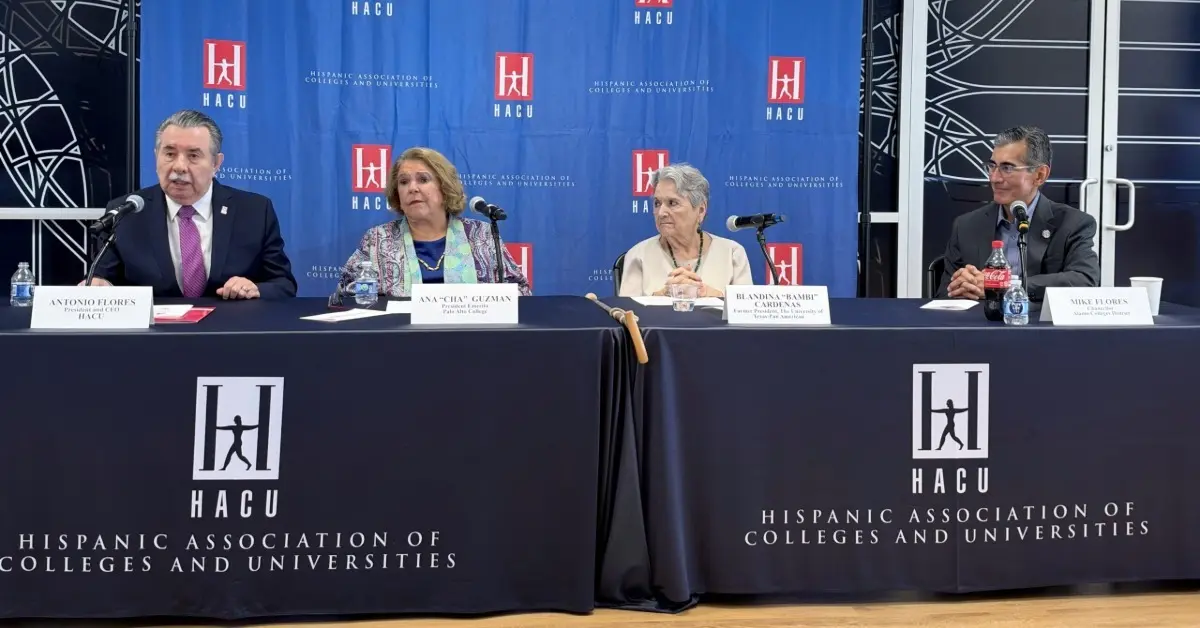
The high-profile panel brought together some of the most influential figures in modern American higher education, individuals who have not only witnessed the evolution of the association but have actively shaped its trajectory over the past forty years. The discussion featured HACU President and CEO Antonio R. Flores; Alamo Colleges District Chancellor and immediate past chair of the HACU Governing Board Mike Flores; Blandina “Bambi” Cárdenas, former president of the University of Texas-Pan American; and Ana “Cha” Guzman, president emerita of Palo Alto College. The conversation was expertly guided and moderated by OLLU President Abel A. Chávez, who framed the dialogue within the historical and ongoing mission of educational equity.
The gathering at Our Lady of the Lake University was more than a ceremonial look backward; it served as a dynamic forum where visionary leaders reflected on the association’s storied history, its landmark accomplishments, and its relentless advocacy efforts on Capitol Hill and across educational landscapes. Panelists engaged in a robust exchange of ideas, exploring the current complex challenges facing Hispanic-Serving Institutions and identifying emerging opportunities designed to secure a prosperous future for the diverse student populations they serve.
The historical resonance of holding the event at OLLU cannot be overstated. HACU was originally founded in 1986 during a momentous meeting held right on the OLLU campus in San Antonio, starting with a visionary group of just 18 charter member institutions. Over the past four decades, what began as a grassroots coalition of committed educators and administrators has expanded exponentially. Today, the association has grown into a powerful international network encompassing member institutions across the United States, Latin America, and Spain. Throughout this remarkable expansion, HACU has remained steadfast in its core mission: championing Hispanic-Serving Institutions and ensuring that underrepresented students receive the resources, recognition, and academic support necessary to thrive in an increasingly competitive global economy.