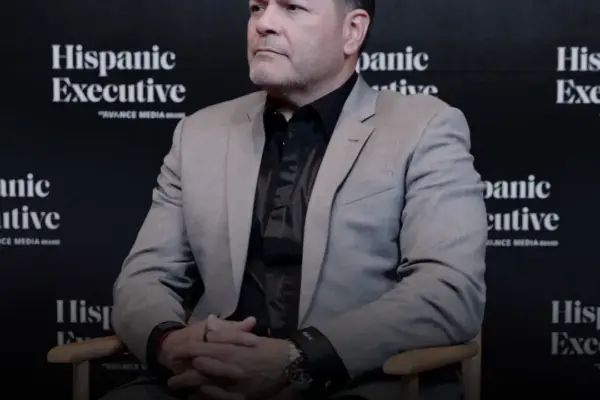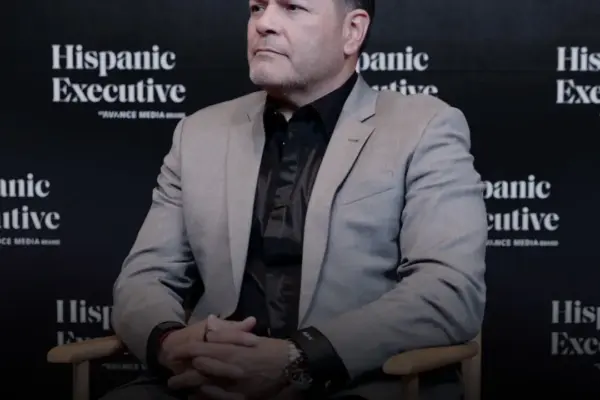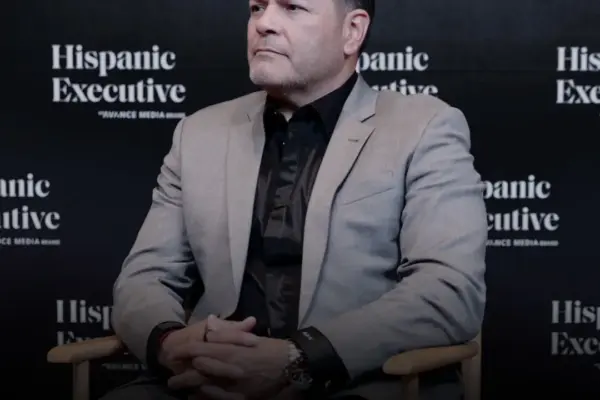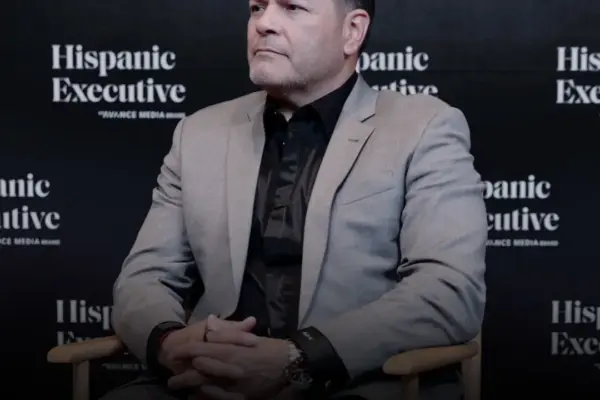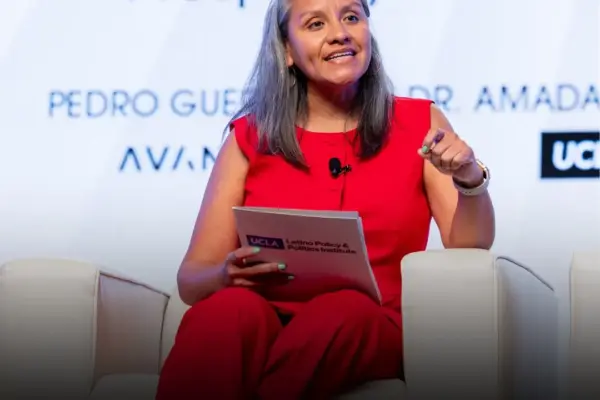









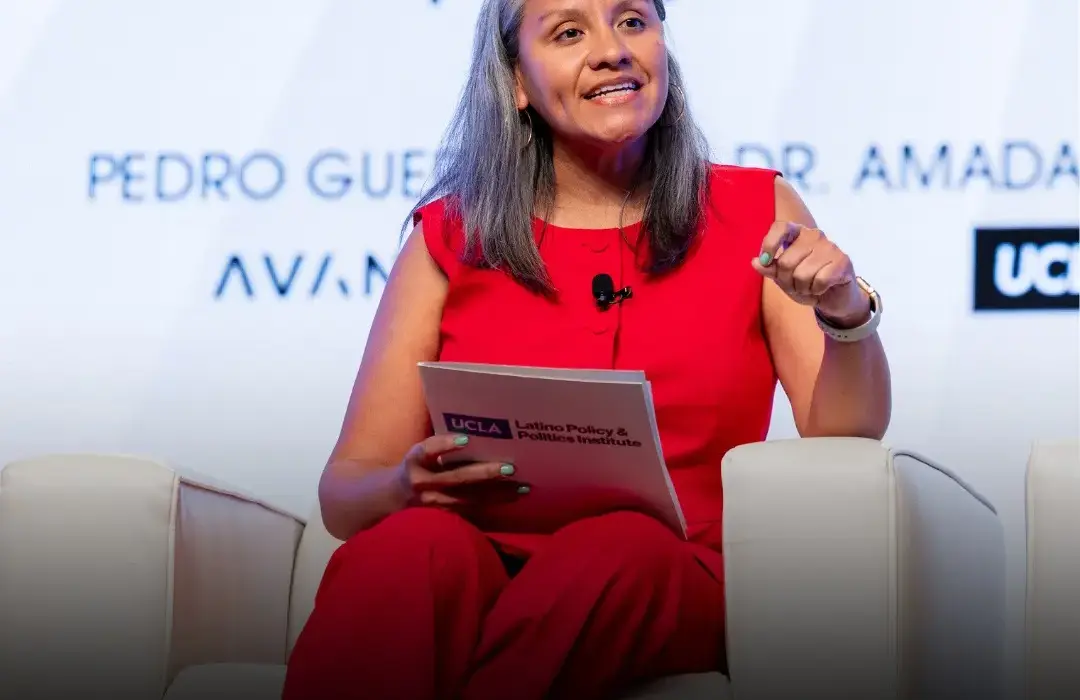
LAS VEGAS — When Dr. Amada Armenta published her seminal 2017 book, Protect, Serve, and Deport: The Rise of Policing as Immigration Enforcement, its exploration of the intersection between local law enforcement and federal immigration policy was undeniably timely. Years later, as immigration policies and their human impacts remain at the forefront of national discourse, her research has taken on an even more urgent resonance.
For attendees gathered at the Bellagio in Las Vegas for the 2026 AVANCE Global conference, Dr. Armenta provided an essential scholarly lens. As an associate professor at the University of California, Los Angeles (UCLA) and the faculty director of the UCLA Latino Policy and Politics Institute (LPPI), she brings a rigorous academic framework to some of the most pressing socio-political issues facing the nation. Yet her presence at the conference highlighted more than just her academic credentials; it emphasized a critical need for research that is deeply rooted in lived experience and driven by a genuine passion for community storytelling.
A Lived Perspective on Community Research
Throughout her career, Dr. Armenta has been a vocal advocate for shifting how research on Latino communities is conducted. Historically, she points out, academic studies focusing on these populations have frequently been led by researchers operating from a position of social distance, lacking an intimate understanding of the communities they study. In contrast, scholars like Armenta bring both a lived-experience perspective and a profound personal investment in the narratives they uncover.
This distinct approach changes not only how data is gathered, but also how it is utilized. Rather than producing scholarship designed solely for insular academic advancement or peer-reviewed journals that rarely reach beyond university libraries, Dr. Armenta views her work as a bridge between separate worlds.
"We also do research that is meant not just for academic advancement, but to bridge worlds," Dr. Armenta explains. "We share research with policymakers, nonprofit organizations, or community-based organizations that want to use it for advocacy, and business communities that may not have time to read academic studies. We do research translation that really illustrates why data is so important."
This philosophy of translation sits at the core of the LPPI’s mission. By taking complex demographic trends, legal frameworks, and socioeconomic metrics and distilling them into accessible, actionable insights, the institute empowers advocates, lawmakers, and business leaders to make informed decisions that directly impact vulnerable populations.
From Political Aspirations to Scholarly Expertise
Dr. Armenta’s path to becoming one of the nation’s leading voices on immigration and policing was shaped by an early and intense fascination with the inner workings of government and public policy. As a young person, she was an enthusiastic political junkie, spending her time canvassing for political campaigns and boldly telling those around her that she harbored aspirations of one day becoming president of the United States.
However, a pivotal internship in Washington, DC, fundamentally altered her trajectory. Immersed in the day-to-day realities of federal politics, she quickly realized that the political arena was not the lens through which she truly wanted to view and engage with the world. She did not want to be the politician navigating the shifting winds of public opinion; instead, she wanted to be the trusted expert that politicians, activists, and leaders turned to for guidance when attempting to understand complex, systemic issues.
That desire for clarity and authority defines her professional identity today. Known for a refreshing candor, Dr. Armenta possesses a rare gift for directness that leaves little room for ambiguity. When she speaks, audiences are rarely left wondering about her intentions or conclusions.
"I think I’m really direct," Armenta notes, reflecting on her communication style. "It’s unusual for researchers to be able to distill information in an understandable way, and it’s something I feel really passionate about."
The Power of Narrative in Economic Empowerment and Representation
The 2026 AVANCE Global conference centered heavily on themes of economic empowerment, representation, and unity within the broader Latino community. Within that framework, addressing systemic challenges such as immigration—forces that structurally and psychologically impact millions of Latinos—requires robust empirical evidence combined with compelling human narratives.
Dr. Armenta emphasizes that in an era defined by information overload and polarized debates, society has a profound need for reputable, empirically sound information produced by scholars who care deeply about the human outcomes of their work. Raw statistics and demographic numbers, on their own, are often insufficient to drive meaningful change or policy reform.
"Because data doesn’t speak for itself," the researcher observes, underscoring a central tenet of her methodology. "We need to help craft the story to make our data have power."
By pairing quantitative research with qualitative storytelling, scholars like Dr. Armenta help transform abstract data points into vivid narratives of human experience. This synthesis is vital for cutting through partisan rhetoric and demonstrating the real-world consequences of policy decisions on families, workers, and local economies.
Balancing the Demands of Scholarship and Public Engagement
Despite her immense impact and the growing demand for her insights, Dr. Armenta currently finds herself stretched exceptionally thin. Balancing the heavy administrative responsibilities of directing the UCLA Latino Policy and Politics Institute, maintaining an active teaching schedule, conducting ongoing research, and fulfilling high-profile speaking engagements leaves little margin for downtime.
Consequently, she finds herself weighing whether she is ready to commit the substantial time and emotional energy required to write a follow-up book to Protect, Serve, and Deport. The writing process demands a deep, uninterrupted focus that is difficult to sustain amidst a demanding public-facing schedule.
This tension has prompted her to consider alternative avenues for scholarship. She is currently exploring whether the same critical information and research findings could be distributed through more digestible, modern formats while still preserving the rich storytelling that remains the hallmark of her work. While she believes it is possible, figuring out how to balance these competing demands remains a work in progress as she navigates her packed academic and professional calendar.
As discussions at events like AVANCE Global continue to shape the future of Latino leadership, policy, and economic opportunity, voices like Dr. Amada Armenta remain indispensable. By insisting that academic research must actively engage with the communities it studies—and by ensuring that data is always married to a human story—she continues to light a clear path forward for researchers, advocates, and leaders alike.