











Heart disease remains the leading cause of death among Latinos in the United States, a persistent public health challenge that continues to demand urgent attention from medical professionals, policymakers, and community leaders alike. Recent data highlights widening gaps in hypertension control, obesity rates, and diabetes prevalence among Hispanic populations. These interconnected health conditions significantly heighten the overall risk of heart disease and stroke, according to a comprehensive scientific statement released by the American Heart Association (AHA).
The scientific statement underscores that achieving true cardiovascular equity will require a fundamental shift in how the medical community approaches Hispanic health. Addressing these disparities goes beyond traditional clinical interventions, necessitating a deeper understanding of the unique social, cultural, and environmental drivers of cardiovascular disease within diverse Hispanic communities. Furthermore, public health advocates emphasize that eliminating barriers such as language discordance and a lack of insurance access, alongside implementing culturally tailored policies and interventions, will be critical components of any effective long-term strategy.
As communities observe Hispanic Heritage Month, public health organizations are utilizing the occasion to bring renewed focus to the AHA’s findings and explore actionable pathways toward better health outcomes. The dialogue surrounding these issues points directly to the systemic and structural factors that influence the day-to-day well-being of millions of individuals across the country.

Heart Issues and Early Onset Among Latinos
According to the American Heart Association’s scientific statement, cardiovascular issues are characterized as highly prevalent among Latinos and frequently emerge much earlier in life compared to other demographic groups. This early onset compounds the long-term toll of heart disease, as individuals face chronic health complications during their peak working and family-raising years.
The statement points to significant gaps across standard cardiovascular health metrics, overall disease burden, and long-term health outcomes. At the same time, the AHA notes critical deficiencies in disaggregated data, which often lumps diverse Hispanic subgroups into a single monolithic category. This lack of granular data can obscure specific health trends and make it more difficult for researchers and policymakers to allocate resources effectively or design targeted interventions for distinct communities.
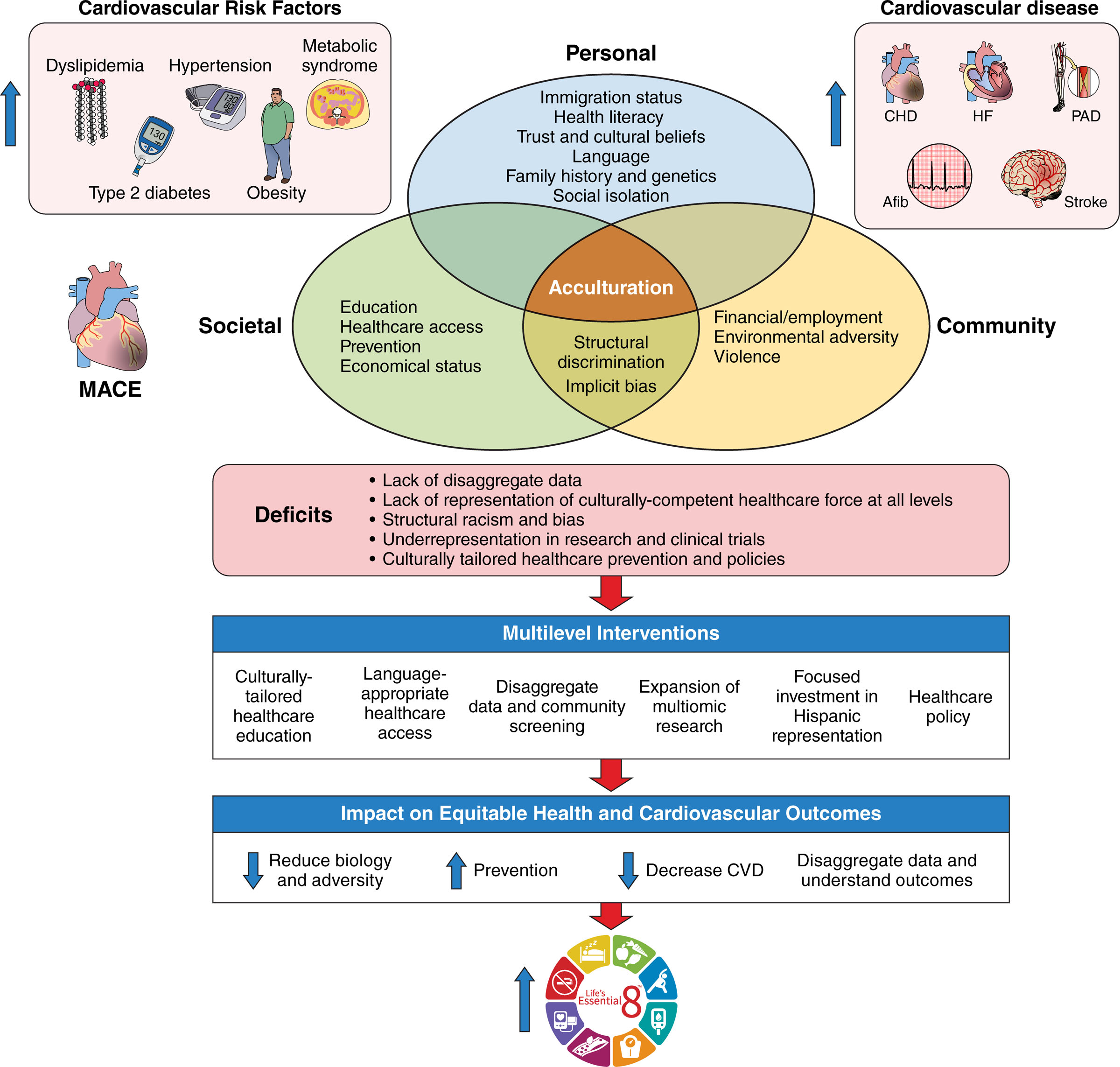
Understanding the full scope of the crisis requires looking closely at how personal, societal, and community factors intersect to influence cardiovascular risk. The AHA’s findings illustrate that heart disease in Hispanic populations is not merely a matter of individual lifestyle choices, but rather the result of a complex matrix of social determinants, environmental exposures, and systemic healthcare hurdles.

Risk Factors and the Path Forward for Precision Medicine
Latinos navigate a wide array of risk factors that directly impact their cardiovascular health, ranging from physiological indicators like high blood pressure and elevated blood sugar to broader environmental and socioeconomic stressors. To combat these intertwined challenges, the AHA’s scientific statement outlines several key priorities aimed at advancing cardiovascular health among Hispanic adults.
Chief among these priorities is the urgent need to expand disaggregated data collection to capture the distinct experiences of various Hispanic nationalities and communities. Researchers stress that increasing Hispanic representation in clinical research is equally vital to ensuring that medical treatments and preventive guidelines are effective across diverse populations.
In addition to traditional research and data collection, the AHA emphasizes the importance of ensuring the fair and equitable implementation of modern precision medicine approaches. This includes leveraging advanced scientific tools such as genomics, multi-omics, and artificial intelligence to better understand and predict cardiovascular risk. However, experts caution that technological innovation must go hand in hand with efforts to address external factors, including environmental exposures, chronic psychosocial stressors, and policy-related drivers of health disparities.
Expanding Bilingual Support and Community Resources
In response to these findings, the American Heart Association is actively developing and expanding resources designed to address heart health disparities during Hispanic Heritage Month and throughout the year. These efforts focus heavily on bridging communication gaps and providing accessible, culturally relevant education to Hispanic patients and their families.
A central component of this outreach involves the provision of comprehensive bilingual materials aimed at guiding individuals toward healthier lifestyle habits and better management of chronic conditions. By ensuring that educational tools, medical information, and preventive guidelines are readily available in Spanish, healthcare providers and community organizations can help patients navigate complex medical systems more effectively and take proactive control of their cardiovascular health.
Beyond direct patient education, the AHA is promoting initiatives like the EmPOWERED to Serve Business Accelerator program. This initiative is designed to support local communities, grassroots organizations, small businesses, and community innovators in tackling health inequities. By providing targeted training, mentorship, and crucial funding opportunities, the program empowers local leaders to implement sustainable solutions tailored to the specific needs of their neighborhoods.

Addressing Non-Medical Drivers of Health in Local Communities
A comprehensive approach to reducing heart issues among Latinos must also confront the non-medical drivers of health—often referred to as social determinants of health—that profoundly shape daily life. These factors include access to safe and affordable housing, reliable transportation, nutritious and affordable food, quality education, equitable income levels, and consistent healthcare access wherever individuals live, learn, work, and grow.
Addressing these foundational community issues requires localized data and actionable insights that allow residents and advocates to identify specific areas of need. Tools such as the Salud America! Health Report Card are designed to help community members visualize and explore local challenges by entering their county name to generate detailed data, interactive maps, and comparative gauges across multiple health indicators.
These report cards allow local advocates to see precisely how their county stacks up against state and national averages in areas ranging from education and housing to food security and healthcare access. Armed with this empirical data, residents, healthcare workers, and community leaders can raise local awareness, incorporate hard evidence into grant proposals or presentations, and share findings on social media platforms to advocate for meaningful policy changes. By transforming data into community action, stakeholders can begin to dismantle the root causes of health disparities and foster environments where long-term cardiovascular health is achievable for everyone.