









This piece is part of the Argentine-Chinese Chamber of Commerce’s monthly column in the Buenos Aires Herald.
Argentina’s mining sector has achieved an unprecedented milestone, cementing its status as one of the primary pillars of the nation’s changing economic landscape. According to official data released by Argentina’s National Mining Secretariat, sector exports reached US$6 billion between January and August 2026. This represents the highest value in history for the first eight months of any calendar year, nearly matching the total export volume recorded during the entire previous year of 2025.
With this robust performance, the mining industry now accounts for 9.2% of Argentina’s total exports. Alongside the energy sector, mining has firmly established itself as one of the dynamic new drivers of the Argentine export basket, reshaping trade dynamics at a time when traditional agricultural and industrial sectors face varying macroeconomic pressures.
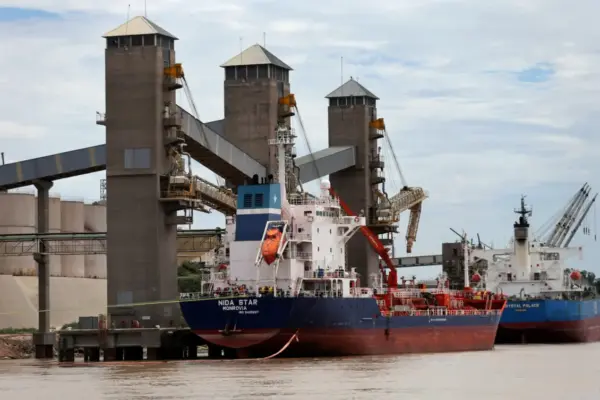
Among international buyers, China emerged as the market that grew the most during this period. Chinese importers purchased Argentine minerals valued at US$1.5 billion, marking a staggering 180% increase compared to the same eight-month period in 2025. This substantial volume represents 26% of Argentina’s total mining exports, positioning China just behind Switzerland, which remains the primary destination for the country’s gold shipments.
This dramatic growth in bilateral trade is far from a random market fluctuation. Data compiled by the International Energy Agency (IEA) and published in its Global Critical Minerals Outlook 2025 report underscore China’s dominant position in the global supply chain, identifying the country as the principal refiner in 19 out of the 20 strategic minerals analyzed. Across these crucial elements, China’s average participation in the refining stage hovers close to 70%, making it an indispensable destination for raw and semi-processed minerals from resource-rich nations like Argentina.
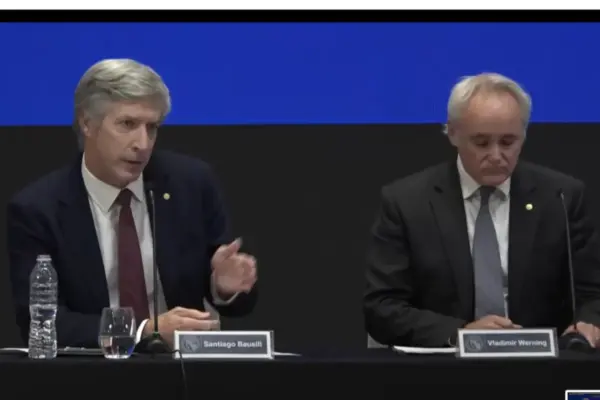
The implications of this deepening commercial relationship took center stage during a recent panel at China Day Salta. The event, organized by the Argentine-Chinese Chamber, was designed to bring together Salta’s productive ecosystem to explore and capitalize on the economic opportunities generated by Chinese demand. Discussions during the gathering focused heavily on a critical, ongoing challenge for the domestic economy: how to effectively integrate local suppliers into the complex mining value chain.
A matter of prices rather than production
A deeper dive into the data provided by the mining secretariat reveals nuanced underlying trends that explain the composition of the record-breaking export figures. Specifically, the numbers demonstrate that the historic export values are currently being driven more by international commodity pricing dynamics than by massive surges in physical production volumes.
Gold continues to dominate the sector, accounting for a commanding 60% of total mining exports. However, the financial growth of gold exports—which rose by 42.8% so far this year—occurred alongside a notable drop in export volumes, which fell by nearly 25%. This divergence highlights how soaring global gold prices have cushioned and inflated revenue totals despite lower output quantities.
Lithium, on the other hand, is following a fundamentally different trajectory characterized by genuine physical and structural expansion. Lithium exports grew by 56.8% over the period, causing the metal’s share of the national mining export basket to jump from 14% to 24% in the span of just one year. This rapid expansion represents the primary structural change underpinning the sector’s overall record-breaking performance.
Looking ahead, industry projections suggest that future growth will not follow a linear path. According to forecasts issued by the Argentine Chamber of Mining Companies industry group, known by its Spanish acronym CAEM, total mining exports are expected to grow by a robust 52% over the course of 2026, but that momentum is projected to slow drastically to a meager 3% growth rate in 2027.
Under these projections, gold exports are expected to remain relatively stable, while silver exports are anticipated to decline. Lithium stands out as the primary exception, projected to continue its upward trajectory. Meanwhile, copper—long heralded as the sleeping giant and the sector’s great future promise—is conspicuously absent from the short-term production and export projections for either of the two evaluated years.
Within this evolving scenario, the government’s Large Investment Incentive Regime, widely known by its Spanish acronym RIGI, functions as a major strategic bet designed to attract large-scale capital. However, this policy framework immediately brings to the forefront longstanding debates regarding domestic industrial integration and the creation of added value within the country.
According to a comprehensive publication released in September 2026 by the Buenos Aires-based think tank Fundar, Argentina is currently situated among the nations that "dispense almost entirely with coercive instruments," prioritizing instead the aggressive attraction of foreign direct investment. While this liberalized approach successfully favors the rapid arrival of international capital, analysts point out that it does not, by itself, automatically guarantee the long-term development of local suppliers, technological transfer, or the creation of skilled domestic employment.
The case of Australia
To understand the long-term stakes of Argentina’s current mining boom, economists often point to the historical trajectory of Australia. For decades, Australia operated primarily as a major mineral exporter that relied heavily on imported mining equipment, heavy machinery, and foreign technology.
Beginning in the 1980s, however, the growing operational complexity of its projects, combined with top-tier university engineering programs and dedicated public research initiatives, catalyzed the growth of a robust domestic supplier sector.
The eventual results of that strategic pivot have been resounding. Today, the Australian Mining Equipment, Technology and Services sector—commonly referred to as METS—brings together more than 1,500 specialized companies and employs upward of 200,000 people. Australia has successfully transitioned from a nation that merely exports raw minerals to one that exports sophisticated mining knowledge, engineering services, and specialized technology globally.
The contrast between this Australian model and the current reality in Argentina remains stark. According to estimates from CAEM, the entire mining sector in Argentina currently accounts for approximately 105,000 direct and indirect jobs, having registered anemic growth of barely 0.5% over the past year.
Argentina clearly possesses world-class natural resources and is currently reaping the rewards of favorable international commodity prices. Yet, experts emphasize that for this current economic cycle to avoid being reduced to a temporary generator of short-term foreign currency, it must successfully leave behind lasting installed capacities. These include robust local supplier development, upgraded infrastructure, comprehensive technical training programs, and a strategic approach to managing and utilizing sector revenues.
The central question raised at the recent China Day event regarding the integration and future role of local suppliers serves as an essential starting point for addressing these structural challenges as the industry continues to expand.