


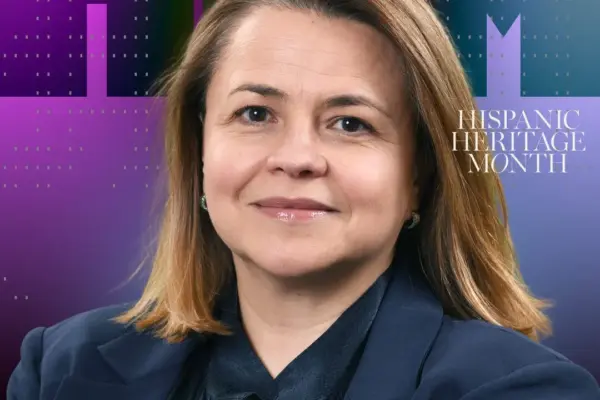





Over the past couple of years, artificial intelligence has expanded far beyond experimental tech laboratories and niche creative tools, becoming increasingly integrated into the fabric of our daily lives. From generative art and music production to workplace automation and mainstream entertainment, AI is reshaping how industries operate and how audiences consume media. Now, media company Entravision is taking the evolution of digital broadcasting a step further by introducing an artificial intelligence-generated Latina newscaster, a move that highlights both the innovative potential of modern technology and the deep-seated anxieties surrounding automation in the media landscape.
Last month, Entravision officially introduced LIA—short for Latina Inteligencia Artificial—as a new digital member of the team for AHORA, its newly launched Spanish-language news streaming service. The introduction of the AI personality marks a significant milestone in how digital media companies are experimenting with synthetic media to deliver fast-paced updates to audiences. In a promotional and explanatory video published to YouTube on September 22, veteran newscaster Jorge Viera formally introduced viewers to LIA, bringing the digital creation into the spotlight and allowing her to address the audience directly about her role, her limitations, and her relationship with the human journalists who guide her work.
Speaking directly to the viewers in the introductory broadcast, LIA outlined the precise boundaries of her existence within the newsroom ecosystem, aiming to clear up any immediate confusion or apprehension from the audience. "I want to be absolutely clear with our audience. I am an AI-created newscaster. I’m not a person, and I’m not a journalist," LIA told viewers during the segment. She went on to emphasize the rigorous human oversight behind every broadcast, noting that "every word I say is selected, written, discussed, revised, and approved by Entravision’s editorial team."
Furthermore, the AI personality was programmed to acknowledge the irreplaceable value of human labor and investigative reporting in the field of journalism. "I cannot replace the work of a journalist. I cannot go out into the field, earn a source’s trust, press an official, witness events in a community, or make editorial decisions," LIA explained to the streaming audience. "That responsibility belongs to journalists like you and the human team behind every piece of information I present."
According to Entravision, the core operational goal for integrating LIA into the AHORA lineup is to efficiently deliver real-time information to viewers across its digital platforms. This includes handling high-frequency reporting tasks such as weather updates, complex news explainers, data visualizations, and rapid election results tracking, thereby freeing up human reporters to focus on deeper investigative work and fieldwork. Rather than replacing human talent, the network frames the tool as an operational enhancement. The AI personality operates under the direct guidance of Entravision’s Caroline Vázquez and LeaAnna Hernandez, who work alongside the broader editorial team to direct her outputs, structure her segments, and ensure editorial integrity.
However, despite these clear boundaries and the reassurances provided by both the network and LIA herself, the decision to introduce an artificial intelligence-generated Latina newscaster has drawn substantial criticism and sparked intense debate across social media platforms. Industry observers, media critics, and viewers have taken to various digital spaces to voice their concerns, with many users openly calling LIA a potential threat to Latina journalists who are already fighting for representation and job security in a notoriously competitive and historically exclusionary media landscape.
The reaction underscores broader cultural and professional sensitivities within the journalism industry. Given that Latinas in journalism generally have to work twice as hard to earn their place, gain recognition, and secure leadership roles in mainstream newsrooms, many critics see the deployment of a synthetic Latina persona as a painful slight. To these detractors, creating a simulated Latina face to read the news—while human women fight for actual representation, airtime, and career advancement—feels like a slap in the face to real Latina journalists who have dedicated their lives to the craft of reporting.
At the same time, a differing perspective exists within the broader conversation. Some industry participants and digital media observers believe that emerging technology, when properly managed and supervised, could potentially aid media organizations in reaching broader audiences and helping Latina journalists tell more of their own community’s stories by streamlining repetitive broadcast tasks. Proponents of digital innovation argue that utilizing synthetic media for routine data delivery and rapid updates can optimize newsroom workflows, allowing news organizations to produce more localized and culturally relevant content across multiple streaming channels.
As Entravision pushes forward with its AHORA streaming service and continues to integrate LIA into its daily broadcast rotations, the long-term impact of this technological experiment remains to be seen. Time will ultimately tell whether the inclusion of an AI-generated newscaster helps or hurts Entravision AHORA’s credibility, audience engagement, and news reporting standards. As media outlets increasingly grapple with the ethical, professional, and cultural implications of artificial intelligence in broadcasting, the fundamental question facing the industry persists: Would you trust an outlet that uses an AI-generated Latina newscaster?