











While political analysts generally anticipated that the Democratic Party would make gains in the United States midterm elections—and that President Donald Trump would face a notable political setback—the sheer scale of the shift caught both supporters and opponents entirely by surprise. The results have already begun sending ripples through domestic financial markets and international economies alike, drawing sharp focus from investors looking for clues about the trajectory of U.S. economic policy and its subsequent global fallout.
Of the 435 seats in the House of Representatives and the 35 Senate seats contested on Tuesday, Democrats secured a commanding 228 seats compared to 139 for Republicans in the lower chamber, marking a net gain of 25 seats. Meanwhile, in the Senate, Democrats won 54 seats over the G.O.P.’s 44, successfully capturing seven seats from the incumbent party. Consequently, although certain final tallies remain pending as provisional votes are counted, the political opposition has already locked down decisive control of both chambers of Congress.
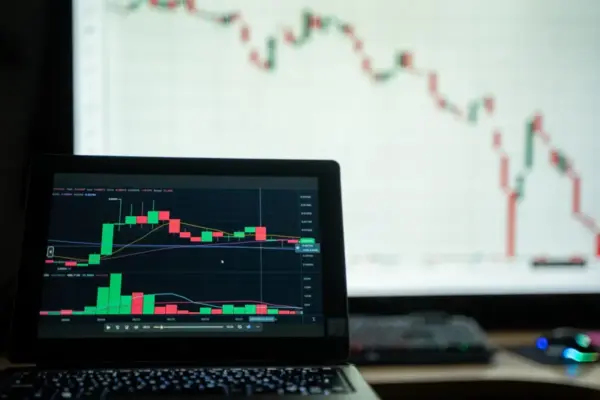
Wall Street wasted virtually no time celebrating the unexpected outcome, responding with sharp and immediate gains across the three major U.S. stock market indices. The S&P 500 climbed 1.7%, the Nasdaq advanced 1.8%, and the Dow Jones Industrial Average surged by a remarkable 3%. U.S. Treasury bonds similarly appreciated in value, with yields—which move inversely to bond prices—sliding by as much as 1.2% over the course of the trading session.
Further south, in Argentina, economic analysts find themselves sharply divided over how this shifting Washington power dynamic could ultimately impact local markets. While President Javier Milei’s administration maintains a close and vocal political alignment with Donald Trump, the U.S. president’s broader trade and macroeconomic policies have consistently generated a degree of international uncertainty that has frequently spilled over into Argentina’s fragile financial ecosystem.
Why did markets celebrate Trump’s defeat?
In its post-election breakdown of the results, the research division at brokerage firm Puente identified two primary catalysts driving the aggressive market rally. The first was the prevailing market prospect of slower growth in U.S. government spending, a development that typically eases inflationary pressures and calms bond markets. The second catalyst was the widespread expectation that, finding itself checked by an opposition-controlled Congress, the Trump administration would likely be forced to maintain a disciplined, hard line on trade and geopolitical maneuvering to actively counter domestic inflationary risks.
Aldo Abram, executive director of the right-leaning Libertad y Progreso Foundation think tank, offered a similarly pragmatic view of the investor response. "I’m not surprised that markets reacted positively to Trump’s poor election performance," Abram noted. "His impact on U.S. and global economic growth has been very negative."
Abram emphasized that heightened global uncertainty inherently translates into diminished capital flows, reduced financing for international demand, and ultimately slower economic growth worldwide. This dynamic disproportionately punishes emerging market nations that foreign investors perceive as carrying higher risk. "When global risk increases, investors pull their money out of riskier markets," he explained, underlining the vulnerability of developing economies to shifts in Washington’s political and fiscal climate.
Questions over how Argentina will be affected
Reflecting on the domestic economic timeline, Abram pointed out that between Argentina’s October 2025 midterm elections and the unexpected outbreak of armed conflict in the Middle East, foreign investment had been steadily flowing into Argentina, accompanied by tangible domestic economic growth. However, he argued that surging international oil prices subsequently drove up global economic risk parameters. These pressures pushed international inflation indicators higher and prompted the U.S. Federal Reserve to maintain elevated interest rates, delivering yet another compounding external shock to Argentina’s stabilization efforts.
"Frankly, the Trump administration’s policies have been negative for Argentina because they have sustained international uncertainty and made it harder for the country to secure financing," Abram stated.
Even so, he was quick to acknowledge the vital importance of the substantial $20 billion financial rescue package extended to Buenos Aires by U.S. Treasury Secretary Scott Bessent late last year. According to Abram, that crucial intervention successfully "stopped the pre-election run on the peso" at a time of extreme market anxiety.
That exact lifeline remains the focal point of the greatest uncertainty among local investors today: whether another safety net or U.S. bailout will realistically be available next year, just ahead of the high-stakes presidential election in which Milei will mount his campaign for reelection.
This anxiety is compounded by broader macroeconomic trends within the country. It is worth recalling that Argentina experienced a historic, record-setting dollarization of investment portfolios throughout 2025, with official estimates from the Central Bank of Argentina placing the total figure at approximately $35 billion as domestic actors sought shelter from local currency volatility.
Offering a different perspective, Jorge Ángel Harker, an international markets analyst at brokerage firm Adcap Grupo Financiero, argued that while the Republican legislative defeat undeniably introduces a new layer of political uncertainty, prevailing market concerns regarding future bilateral support might be "overblown."
"The Trump administration used the Exchange Stabilization Fund, whose deployment did not require congressional approval," Harker explained. "Therefore, the question is less about an immediate legislative constraint and more about the political willingness to repeat that support if needed."
Despite these nuanced analytical assessments, Argentine assets came under immediate and renewed downward pressure following the Washington vote. The Merval, Argentina’s benchmark stock market index, tumbled 4.2% in dollar terms. At the same time, the country risk index continued its upward march, climbing to 852 basis points—marking its highest reading in twelve months and signaling mounting investor caution.
As the political dust settles in the United States, analysts suggest that local factors will ultimately dictate the path forward for the South American nation. "The election result in Washington is a secondary driver compared with domestic factors," Puente’s research report concluded, noting that the market remains focused primarily on internal economic activity, the government’s legislative agenda, and escalating electoral risk ahead of the upcoming 2027 presidential contest.