









When Pablo Casas woke up in his Buenos Aires home on Tuesday, November 3, he expected a routine workday supporting the regional IT infrastructure of a major financial conglomerate. Instead, he soon discovered that his professional life had been abruptly upended: he had been suspended from his job for a month without prior warning, clear justification, or formal explanation from management.
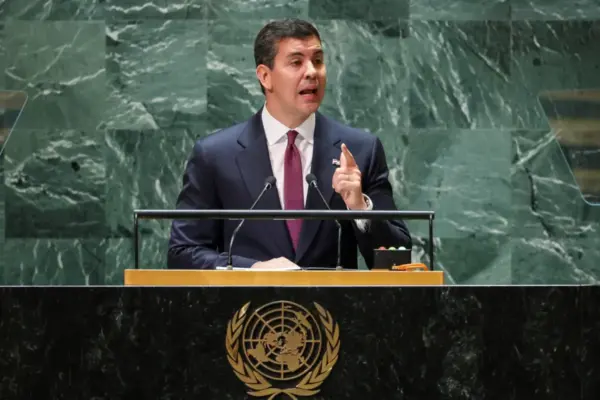
For just over two years, Casas had worked in the Observability department at IT systems company ITTI. The firm provided essential technical support and operational backing to the Grupo Vázquez holding company, with its primary client being Ueno Bank. In recent days, the Paraguayan-origin financial institution has rapidly transformed into the central figure of a severe financial crisis in Paraguay. The escalating turmoil has led to a sudden freeze on customer savings and triggered high-stakes impeachment proceedings against Paraguayan President Santiago Peña, sending shockwaves across the border and paralyzing operations for hundreds of technology professionals abroad.
Casas is just one of approximately 1,000 workers based in Argentina who were responsible for providing specialized IT and engineering services to the conglomerate. These employees formed the backbone of ITTI’s largest operating division. However, the crisis is not localized solely to Buenos Aires; the company also maintains workforce presences in Brazil, Colombia, Chile, Mexico, Peru, Uruguay, Bolivia, and Paraguay itself. Employees across these various jurisdictions now find themselves facing a strikingly similar predicament, trapped in professional limbo as the corporate structure implodes.
Reflecting on the suddenness of the disruption, Casas recounted the confusion of that Tuesday morning. "Early in the morning, they shut down all of the bank’s operations without saying anything, without any communication from management, and without explaining why," Casas told the Herald.
The only initial communication provided to anxious staff members came via an automated email from the Human Resources department, which dryly stated that "all communication channels were available" for employees to reach out with concerns. However, that vague directive did little to reassure a workforce facing sudden job insecurity. "We don’t really know much either," was the frustrating response Casas ultimately received when he managed to contact HR representatives.
Leandro Vildoza, another Buenos Aires-based employee who was also handed a one-month suspension, shared a similar account. He noted that he first learned of the severe problems facing the holding company a day earlier, on Monday, through independent news reports emerging from Paraguay.
That same day, all scheduled corporate meetings were abruptly canceled across the board. Simultaneously, all digital communication channels utilized daily by employees—including internal messaging platforms like Slack and corporate Gmail accounts—were entirely silenced. Furthermore, physical access to the corporate offices was strictly prohibited, locking workers out of their workspaces. "It was like a day when they declare a mandatory public holiday," Vildoza remarked, describing the eerie and sudden cessation of daily business.
It was not until Thursday morning that affected workers were finally and formally notified of their suspensions. The official notice came from Kaitel SRL, a local company subcontracted by ITTI to handle its operational logistics and human resources management within Argentina.
"As a consequence of the resolution and intervention proceedings involving Ueno Bank, ordered by the Central Bank of Paraguay and publicly announced on November 3, 2026, an extraordinary situation has arisen that severely affects the availability of the financial resources necessary for the Company’s normal operations," the formal email stated.
The message added context to the sweeping administrative freeze: "In particular, the operational and financial restrictions resulting from this measure have affected the Company’s usual financing mechanisms, leading to the temporary suspension of its activities."
The administrative fallout extended well beyond active employees on standard schedules. Casas pointed out that the corporate decision also caught workers who were currently on scheduled vacations off guard, as well as colleagues on medical leave, whose authorized absences were abruptly interrupted or overridden by the blanket suspension directives.
Vildoza, however, challenged the legitimacy of the corporate action, pointing out that the notification "has no legal backing." He argued that under labor regulations, a company cannot arbitrarily suspend employees without substantive justification and without formally serving notice through certified legal documentation.
Compounding the anxiety over the suspensions is an immediate financial crisis: the company has yet to pay their October salaries. Traditionally, these wages were disbursed through a split-payment model, deposited partly in Argentine pesos and partly in U.S. dollars. With October’s compensation missing, workers are facing severe financial strain as living costs in Buenos Aires continue to rise.
Both employees told the Herald that they are actively considering taking collective legal action over the unpaid wages—an effort they hope to coordinate closely with affected ITTI workers in other Latin American countries. They also plan to challenge the arbitrary and abrupt manner in which their suspensions were handled by management.
"The idea is precisely to begin that process next week," Vildoza said, outlining their immediate next steps. He added that one of their most pressing concerns centers on the fate of their healthcare benefits. "The email says they are supposedly going to maintain health coverage, but we have no idea whether that’s actually true," he added, highlighting the pervasive distrust now existing between the workforce and the remnants of company management.
Warning Signs and an Attractive Promise
Reflecting on the months leading up to the collapse, Casas revealed that warning signs had begun accumulating as early as July, coinciding with the period of the FIFA World Cup. During that time, employees were abruptly asked by management to cut operational expenses and tighten corporate budgets. That initial austerity measure was swiftly followed by a round of layoffs that affected approximately 200 employees in Argentina, alongside an undetermined number of workers in the Paraguayan division.
As the internal cuts deepened, critical reports began surfacing in the Paraguayan press, openly questioning the financial holding company’s solvency and heavily criticizing the Central Bank of Paraguay for perceived inaction regarding the mounting risks.
"That prompted Miguel Vázquez—the founder of Ueno Bank—to speak out several times, saying that all of it was just rumors, that the company was completely solvent and that everything was running quite smoothly," Casas recalled.
According to Casas, the holding company’s top executives attempted to calm internal anxieties by communicating with staff through scheduled video calls. However, these interactions offered little room for genuine dialogue or accountability. "We obviously had no say, except for perhaps asking a question through Google, which they might answer," he noted.
Vildoza added that desperate suspended employees had also tried unsuccessfully to contact ITTI’s upper-level administrative personnel in Argentina, including the Head of People, Pilar Camacho, and the Senior Manager of Payroll, Roxana Corrales, seeking clarity on their professional futures.
"They resigned, and they were two of the people who knew about this situation and who, at least, managed to negotiate their departure from the company," Vildoza said, expressing frustration that frontline workers were left entirely in the dark.
He stressed that the technical teams had no prior knowledge of "everything that was being planned behind the scenes" by corporate leadership.
Recalling the optimism that initially drew top-tier talent to the firm, Vildoza said, "Everyone on the team that had been built over the past two years believed in the ambitious project that was underway."
According to his account, Ueno Bank had pitched an expansive vision to "bring technology to Paraguay," aiming to develop local counterparts to popular regional platforms. In essence, the goal was "to develop in Paraguay what we have here in Argentina: a PedidosYa, a Rappi or an Uber, but under different names."
"Everyone who worked at ITTI came from major companies, and we thought the project was spectacular. We never imagined this would happen," he said regretfully, lamenting how a promising technological venture had unraveled into institutional and financial chaos.
Could the Crisis Have a Financial Impact on Argentina?
The sudden collapse has severely rattled Paraguay’s macroeconomic stability over recent days. The nation’s sovereign risk index experienced a sharp upward spike, rising by 25 basis points from 119 to 144 points—representing a significant 21% increase in perceived country risk.
This financial shock was immediately mirrored in the rapid depreciation of Paraguay’s national currency, the guaraní. Since October 28, the exchange rate for the U.S. dollar has climbed by 12%. The downward pressure intensified midweek, with the dollar gaining an additional 5.4% in a single day of trading.
Despite the intensity of the turmoil across the border, macroeconomic analysts consulted by the Herald expressed confidence that the financial volatility will not spill over into Argentina’s domestic banking sector, unlike previous regional shocks such as the market reactions following the unexpected victory of Inácio Lula da Silva in Brazil’s presidential runoff election in late October.
Pablo Repetto, Head of Research at the Argentine brokerage firm Aurum Valores, explained to the Herald that "what happened in Paraguay has a very specific, country-specific component" that fundamentally differentiates it from the economic structure of Argentina.
"There is no such pronounced concentration of deposits in a handful of activities within a single institution," Repetto explained, contrasting the Paraguayan situation with Argentina’s banking landscape. He added that Argentina operates under a more decentralized regulatory and financial framework: "It seems to me that it is a much less concentrated system."
Economist Gustavo Ber echoed this assessment, offering reassurance regarding the resilience of Argentina’s domestic financial institutions. "I don’t think it will spill over into Argentina, since local banks have solid financial indicators," Ber told the Herald, framing the ITTI and Ueno Bank crisis as an isolated, albeit devastating, corporate and regional event rather than a systemic threat to neighboring markets.