












Texans are celebrating a historic political milestone following the recent gubernatorial election results: the election of Gina Hinojosa, who has officially secured her place in the history books as the state’s very first Latina governor. The victory marks a monumental shift in the political landscape of the Lone Star State, capturing the attention of voters, political analysts, and communities across the nation.
Born on December 8, 1973, in McAllen, Texas, Hinojosa grew up deeply rooted in a proud Mexican-American family in the Rio Grande Valley. Politics, advocacy, and public service were woven into the fabric of her upbringing. Her father, Gilberto Hinojosa, established a prominent footprint in regional and state politics by once serving as the chair of the Texas Democratic Party, while her mother, Crisanta Guerra Lozano, dedicated her professional life to championing justice as a legal aid attorney. Surrounded by a household that valued civic duty and the rule of law, Hinojosa pursued higher education with a clear focus on advocacy. She graduated from the University of Texas at Austin in 1996 before heading to the nation’s capital to earn her law degree from George Washington University in 1999.
Before launching her career as an elected official, Hinojosa spent years working in the trenches of the legal profession as a civil rights and union lawyer. In this capacity, she fought tirelessly for everyday Texas families and workers, navigating complex legal battles to protect labor rights and ensure fair treatment for vulnerable populations. Her transition from the courtroom to the legislative arena felt like a natural progression of her lifelong commitment to advocacy. In 2016, she won election to the Texas House of Representatives, representing constituents in Austin. During her nearly decade-long tenure in the state legislature, Hinojosa built a reputation as a steadfast champion for public education, accessible healthcare, and civil rights for marginalized communities, consistently using her platform to voice the concerns of working-class Texans.
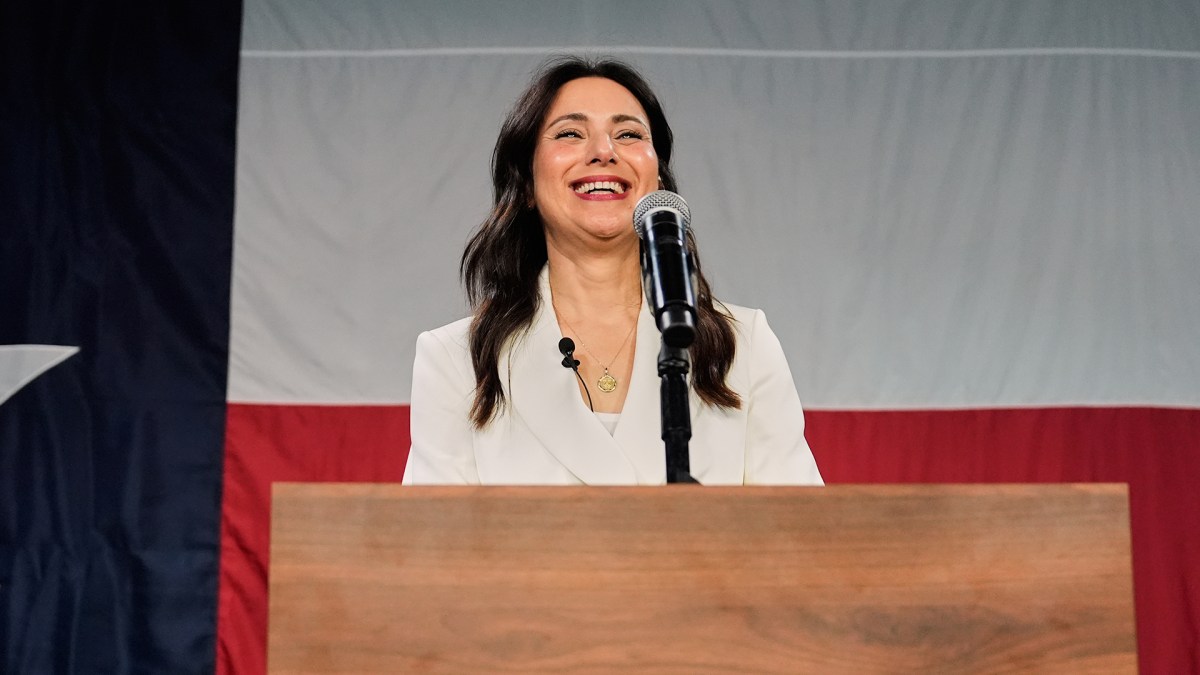
The momentum of her legislative career culminated when she announced her ambitious campaign for Texas governor in 2025. Running on a platform centered on economic relief and the protection of fundamental freedoms, Hinojosa vowed to lower the rising cost of living for everyday families and vigorously defend the civil rights of all state citizens against overreach. Her message resonated deeply with a diverse electorate weary of economic pressures and political polarization.
Now, with her historic victory, Hinojosa is set to break glass ceilings twice over. Her triumph marks a dual milestone that has eluded Texas politics for generations: she is not only the first-ever governor of Latine descent in the state’s rich and complex history, but she is also the first Democrat to win the Texas governorship since Ann Richards accomplished the feat in 1990. Her victory shatters a political drought that has lasted for over three decades, fundamentally altering the trajectory of state politics and signaling a potential realignment in how statewide campaigns are contested in Texas.
Central to her campaign and personal identity is a powerful cultural touchstone that bridges her family’s roots with her political message. "¡No te dejes!"—a phrase that translates roughly to "don’t let them walk all over you" or "don’t back down"—served as both a family inheritance and a defining campaign slogan. Hinojosa has frequently shared that the phrase originated with her grandmother, who would use it as a form of old-school tough love during the summers Hinojosa spent at her grandparents’ home in Mission, Texas. Over time, the phrase evolved in her mind to mean "know your worth and defend it," a sentiment that she carried from her childhood kitchen tables directly onto the state campaign trail as she squared off against incumbent political forces, including her prominent opponent, Greg Abbott.
For millions of Texans, the election of the state’s first gobernadora Latina represents far more than a routine change in political leadership; it signifies the dawning of a new chapter in the history of the Lone Star State—one where representation more closely mirrors the vibrant, multicultural fabric of its population. As Gina Hinojosa prepares to take the oath of office and assume the immense responsibilities of the governorship, she carries with her the hopes of a changing electorate and the enduring lessons of resilience passed down through generations in the Rio Grande Valley.