



Brazilian President Luiz Inácio “Lula” da Silva has secured a historic fourth term in office, winning a fiercely contested presidential runoff with 51.8% of the vote. Official figures confirmed by Brazil’s electoral authorities cement a remarkable political comeback for the veteran leftist leader, who will govern the country from 2027 to 2030.
The leader of the Workers’ Party (PT) finished 3.5 percentage points ahead of his challenger, far-right Senator Flávio Bolsonaro of the Liberal Party (PL). Bolsonaro, the eldest son of former Brazilian President Jair Bolsonaro and the winner of the first round of voting, finished with 48.2% of the ballots. The final margin between the two candidates stood at approximately 4.3 million votes, capping off one of the most polarizing and closely watched electoral cycles in modern South American history.
The final outcome defied expectations after the initial general election results placed Da Silva in the runner-up position with 45% of the vote, trailing Bolsonaro, who secured 47%. Political analysts noted that this electoral cycle marks an unprecedented milestone in Brazilian democracy: it is the first time in the nation’s history that a presidential candidate who finished in second place during the general election has successfully reversed the deficit to win the subsequent runoff.
Furthermore, the victory ensures that Lula, who will turn 81 before taking the oath of office for this new mandate, becomes the first person in Brazilian history to serve four presidential terms. His political trajectory includes his initial back-to-back mandates from 2003 to 2011, his return to power for the 2023–2026 cycle, and now his upcoming term, which will begin in January 2027.
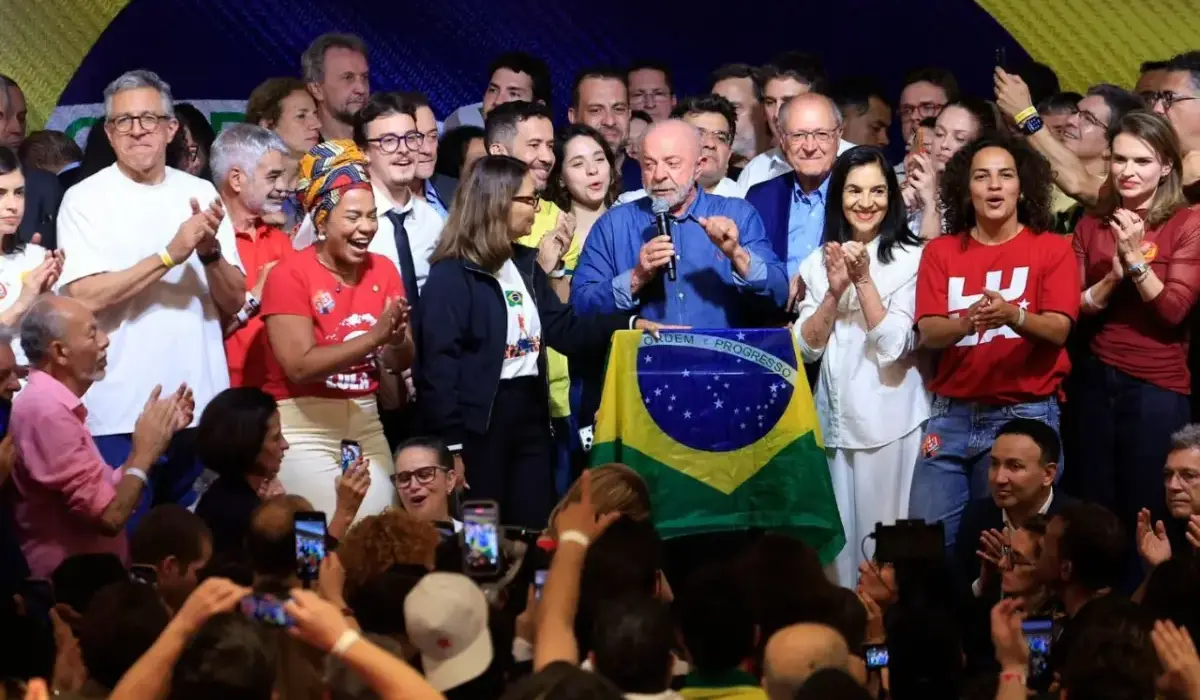
Addressing jubilant supporters at the PT headquarters on Sunday night, the newly reelected president struck a note of gratitude and national unity. “I want to thank the people for the generosity they’ve had towards me for so long,” Da Silva said. “And in this runoff, I want to thank the generosity of the Brazilian youth who defended democracy.”
He also emphasized the critical role played by individual voters in determining the outcome, noting that his campaign successfully convinced citizens that casting their ballots was essential for safeguarding the nation’s democratic institutions.
However, Da Silva did not shy away from addressing the friction points of the campaign, particularly the influence of foreign digital conglomerates. “In this election, we had to beat external intromission via digital platforms. We will have to regulate those platforms,” Lula said, pointing to a controversial decision by Meta—the parent company of Facebook, Instagram, and WhatsApp—to temporarily block his campaign advertisements during the heat of the race. Reasserting Brazil’s sovereignty on the international stage, he added, “This country will not accept being anyone’s backyard.”
Looking ahead to the challenges of governance, Da Silva emphasized a transition from partisan competitor to national leader. “Now that we’ve won the election, we no longer have rivals. Now, I have to govern for the 215 million Brazilians,” he stated.
Reelected Vice President Geraldo Alckmin echoed these sentiments, expressing profound gratitude to the electorate, particularly younger generations who mobilized in large numbers. “The future begins today, and it’s called youth,” Alckmin declared during the victory celebrations. Alckmin also voiced his utmost respect for the president, framing his leadership as vital to the nation’s political stability: “He saved Brazilian democracy for the second time,” Alckmin said, alluding to Lula’s pivotal defeat of Jair Bolsonaro in the 2022 elections.
The tense atmosphere on election night gave way to relief and celebration as the vote count progressed. Early returns initially indicated a slight lead for Flávio Bolsonaro. However, as the evening wore on and more than 50% of the ballots were tallied, the momentum shifted definitively in favor of the incumbent. By 9:10 p.m. local time, with the counting process nearing completion, the statistical gap became insurmountable. Thousands of Lula supporters subsequently flooded the streets of Brazil’s major metropolitan areas, waving red flags and celebrating long into the night.
The outcome represents a significant ripple against the broader regional tide. In recent years, right-wing and far-right political figures have dominated presidential elections across much of the Southern Cone, making Lula’s victory a notable exception to the prevailing political wind in South America.
Brazil 2026 Elections and Campaign Dynamics
The path to the final vote count was fraught with logistical hurdles and legal interventions. Voting was officially scheduled to close at 5:00 p.m. on Sunday, but the Brazilian Federal Supreme Court extended the deadline until 7:00 p.m. The extension was granted in response to an urgent petition filed by the PT, which cited severe public transportation failures in several densely populated states, including São Paulo, that allegedly prevented normal voter access. Concurrently, the rival PL also requested an extension due to heavy rainfall and severe flooding affecting the country’s northeast.
Despite the judicial ruling, logistical complications persisted. Several polling stations that had already closed their doors by 5:00 p.m. were unable to reopen. The electoral court, which had begun releasing preliminary figures, was forced to temporarily halt the counting process to accommodate the extended voting window and ensure all eligible citizens could cast their ballots.
The electoral landscape was deeply shaped by the shadows of recent political history. Da Silva, who has governed the country since returning to office in January 2023, faced an unprecedented political blockade earlier in his career. He was barred from running in the 2018 presidential election due to legal convictions stemming from Lava Jato (Operation Car Wash), Brazil’s sprawling corruption investigation. Lula spent 580 days in jail following his 2019 imprisonment before the Supreme Court ultimately annulled his convictions, clearing the way for his political resurrection in 2022.
On the opposing side, Flávio Bolsonaro’s candidacy carried the mantle of his father, former President Jair Bolsonaro, who governed from 2019 to 2022. The elder Bolsonaro is currently serving a 27-year sentence under house arrest after being convicted of plotting a coup d’état and conspiring to assassinate Da Silva in the tumultuous aftermath of the 2022 election.
During the campaign, Da Silva centered his platform on defending and expanding social programs initiated during his previous administrations aimed at eradicating poverty, combating child malnutrition, and reducing unemployment. Simultaneously, recognizing the shifting concerns of the electorate, Lula made deliberate overtures to centrist and conservative voters by addressing issues of security and public safety—traditional strongholds of the Bolsonaro political brand.
Among his key policy proposals, Lula pledged to establish a dedicated Ministry of Public Safety to enhance institutional coordination between the federal government, state administrations, and municipal authorities in the ongoing battle against organized crime and heavily armed militias.
Despite his executive victory, political analysts speaking to the press have warned that the president-elect will face severe legislative hurdles. The PT commands only a minority of seats in the National Congress, whereas the PL and its conservative allies command a substantial legislative presence and control several influential state governorships. Experts suggest that advancing key components of his domestic agenda will require delicate negotiation to avoid legislative paralysis and potential governance difficulties.
Lula and Milei
Foreign policy is also expected to pose significant challenges, particularly regarding Brazil’s strained relationship with neighboring Argentina. Da Silva has maintained an exceptionally poor diplomatic rapport with Argentine President Javier Milei, whose ideological alignment with the Brazilian right and vocal campaigning for Flávio Bolsonaro inflamed bilateral tensions.
Political analysts warn that relations between Brasilia and Buenos Aires could deteriorate further during Lula’s upcoming term. The two leaders have frequently traded sharp public criticisms, with Milei launching direct verbal attacks against the Brazilian president.
The diplomatic friction peaked in August when the Brazilian government formally downgraded its diplomatic relations with Argentina to the level of chargé d’affaires. The move meant the two neighboring nations no longer maintain accredited ambassadors in each other’s capitals. The diplomatic rupture followed a speech by Milei in São Paulo during the launch of Flávio Bolsonaro’s campaign, in which the Argentine leader publicly branded Lula a “thief,” a “former convict,” and a “totalitarian.”
Although Milei had previously employed similar rhetoric from across the border, utilizing such language on Brazilian soil crossed a diplomatic threshold, prompting a swift and severe rebuke from Brasilia.
The diplomatic chill carries substantial economic weight. Brazil remains Argentina’s primary trading partner, anchored by two centuries of diplomatic ties and highly integrated economies, particularly within the automotive and heavy industrial manufacturing sectors. As Lula prepares for his historic fourth term, managing these complex regional friction points while navigating a divided domestic congress will stand among the defining tests of his presidency.