







Updated on Friday, November 6 at 12:05 p.m.
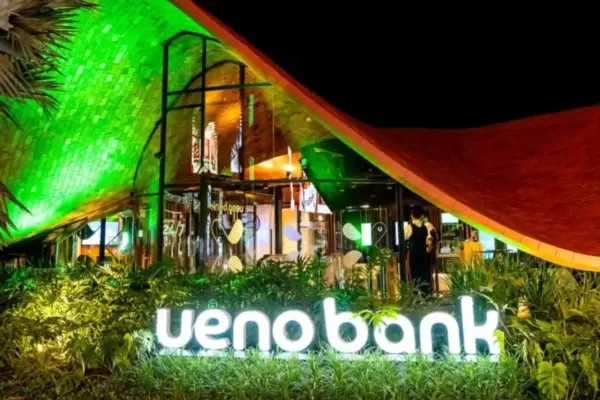
ASUNCION — The Paraguayan Senate has firmly rejected a request from President Santiago Peña for a 72-hour extension to prepare and submit his defense in the ongoing impeachment proceedings launched by the country’s Congress. The political crisis was catalyzed by a severe financial disruption triggered by the Central Bank’s abrupt decision to suspend Ueno Bank’s operations, a move that left approximately half of the nation’s population temporarily unable to access their funds.
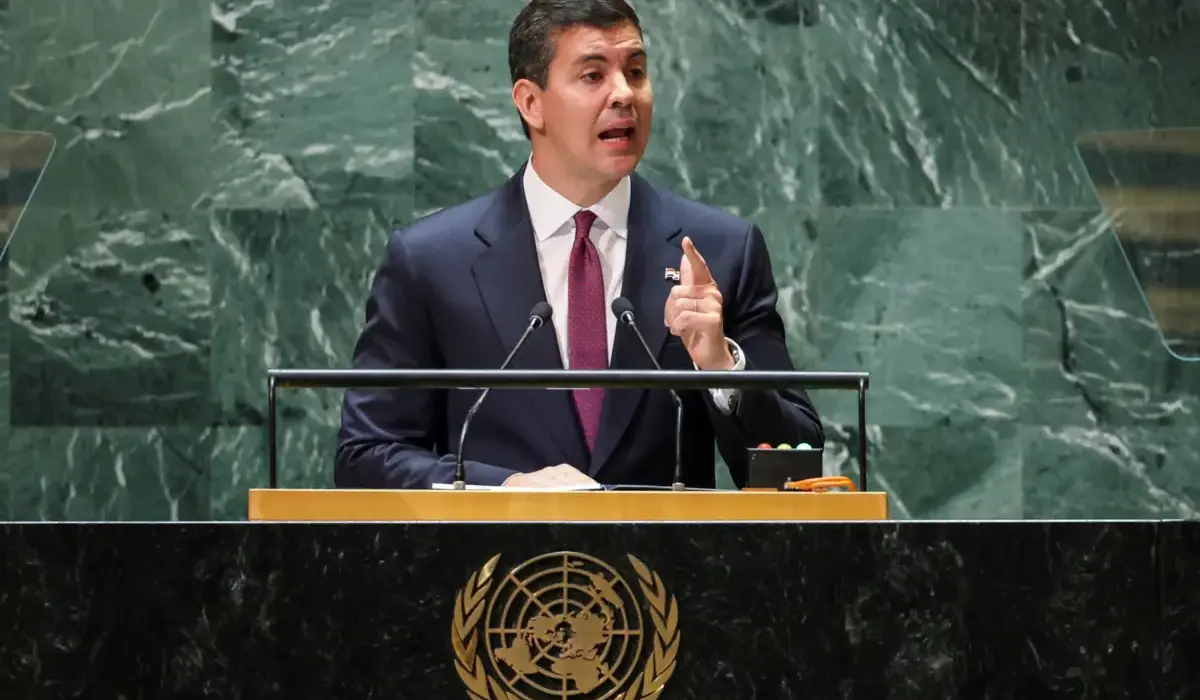
President Peña, whose prior resignation attempt was swiftly blocked by Congress, had been officially summoned to appear before the full Senate on Friday morning to defend himself against a raft of grave allegations and present supporting evidence. However, citing a severe lack of adequate preparation time, the president formally requested additional hours to review the voluminous legal documents and retain legal counsel.
During a hastily convened session at noon on Friday, senators voted down the president’s request for a delay. Instead, the legislative body summoned him to appear on the chamber’s floor at 12:10 p.m., setting a strict and uncompromising deadline of 12:30 p.m. for his arrival.
The confrontation highlights an escalating constitutional standoff in Asunción. Peña had forcefully argued that the timeline imposed by lawmakers violated fundamental principles of justice. According to the president, he received formal notification of the proceedings at 10:15 p.m. on Thursday evening. The notification arrived accompanied by a 15-page indictment and a staggering 300-page annex of supporting documentation.
“They expect me to respond in less than 12 hours. That is not due process,” Peña stated in a sharply worded post published on the social media platform X.
In his formal request for an extension submitted to the Senate leadership, the embattled president elaborated on his legal stance, emphasizing that any administrative or political process carrying the potential for severe sanctions must strictly adhere to the guarantees of due process. This, he argued, inherently includes being afforded sufficient time to choose a trusted attorney and properly exercise the fundamental right to a defense.
“Undoubtedly, a period of less than 12 hours is insufficient for a process to meet the standards of the rule of law,” Peña maintained in his public communications.
The political crisis reached a boiling point earlier in the week following the sudden suspension of Ueno Bank’s operations on Monday. The closure was ordered in response to severe solvency problems within the institution, touching off a broader financial panic. As pressure mounted and the Lower House began actively debating whether to initiate impeachment proceedings, Peña submitted his resignation from the presidency on Thursday.
Despite his departure bid, lawmakers voted decisively to move forward with the impeachment process. Because legislators refused to accept his resignation, Peña technically remains in office, thrusting the responsibility onto the Senate to conduct a formal political trial and determine whether he should be definitively removed from power.
Opposition lawmakers defended their refusal to accept the resignation by pointing to constitutional mechanisms. Had his resignation been accepted, Peña would have automatically become a senator for life—a status granted under Paraguayan law to all democratically elected former presidents. That transition would have immediately endowed him with robust parliamentary immunity from criminal prosecution. However, by keeping him in the crosshairs of an impeachment trial, lawmakers ensured that if he is found guilty, he could face criminal investigation and potential imprisonment, as impeached presidents do not retain parliamentary immunity.
On Thursday night, the Senate formally constituted itself as the judicial tribunal responsible for trying the president. While the political battle lines hardened, the Paraguayan government formally confirmed that Peña remained in the capital city of Asunción, moving to quell unverified media reports suggesting he might have attempted to flee the country.
Peña himself signaled a willingness to face his accusers directly, despite the compressed timeline. “I am going to speak my truth before all citizens, even if it makes many political figures uncomfortable. I will never shirk my commitment to the people, especially in difficult times,” Peña wrote in his Friday morning statement on X.
The accusations against Peña
The charges assembled against President Peña form a complex web of alleged financial conflicts, regulatory manipulation, and systemic risk. The right-wing leader, who assumed the presidency in 2023, is accused of maintaining improper ties to Ueno Bank. Public records indicate that Peña previously held shares in a corporate group that controlled the bank, though he officially divested those shares in 2025.
Further compounding the conflict-of-interest allegations, critics point to his appointment of Carlos Carvallo—a former Ueno executive—to lead the Central Bank of Paraguay. As the financial scandal exploded on Tuesday, Peña publicly requested Carvallo’s resignation. Lawmakers have also scrutinized the actions of the president’s inner circle, noting that Peña’s brother, Francisco, previously held shares in a separate company linked to the financial institution before selling them in March.
The comprehensive indictment approved by the legislature outlines several distinct categories of wrongdoing. The primary charges include a direct conflict of interest stemming from his historical ties to Ueno Bank, as well as the alleged “co-optation of the state” through the strategic appointment of Carvallo to head the financial regulatory agency.
Furthermore, the president faces serious accusations of manipulating regulatory frameworks and misappropriating public funds. Lawmakers allege that his administration improperly channeled public funds and pensioners’ money—specifically from the Social Security Institute (IPS)—into Ueno Bank to shore up its precarious financial standing.
Additional allegations assert that Peña bears direct responsibility for Ueno issuing exceptionally large loans that exceeded legal lending limits to companies affiliated with the bank. Investigators and congressional critics claim that the Central Bank of Paraguay actively covered up these regulatory breaches.
The scrutiny extends deeply into the president’s personal finances. The impeachment dossier accuses Peña of undue financial gain and suspected illicit enrichment, focusing specifically on two substantial loans he secured from Ueno Bank to finance the construction of a residence he publicly declared was worth $900,000. Congressional critics argue that the scale of this investment is fundamentally incompatible with his officially registered income and public sector earnings.
Finally, the charges warn that the fallout from the Ueno Bank crisis has done profound damage to the nation’s economic architecture. Lawmakers argue that the scandal is directly responsible for “undermining confidence in the national financial system and exposing it to systemic risk.” This represents a particularly sensitive blow for Paraguay, which has worked diligently in recent years to attract foreign investment by cultivating an international reputation for macroeconomic stability.