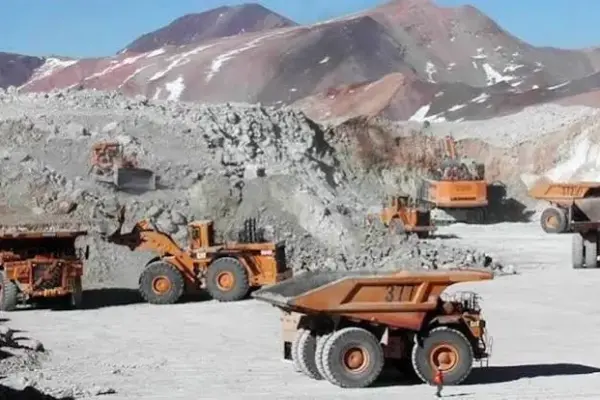











BUENOS AIRES — Argentina’s Ministry of Economy has officially confirmed that it will host a second major business matchmaking event under the Large Investment Incentive Regime (RIGI). Following an inaugural gathering tailored to the mining industry last week, the upcoming summit will shift its primary focus squarely toward the hydrocarbons sector, seeking to accelerate development, forge local supply chains, and bolster the country’s surging energy exports.
The upcoming announcement was made public by Economy Minister Luis Caputo via social media, signaling the administration’s continued push to fast-track large-scale capital inflows into strategic export-oriented industries. The first matchmaking event took place in the city of Rosario, Santa Fe, where domestic and international companies tied to mining investments under the RIGI framework were given a direct platform to meet with more than 2,500 prospective local suppliers.
Building on that momentum, the new hydrocarbons-focused event is scheduled to take place on Wednesday, December 2, in the Province of Buenos Aires. President Javier Milei is expected to attend in person, marking yet another official show of executive backing for energy investments. Alongside mining and agriculture, energy stands as one of the primary pillars driving Argentina’s robust export performance.
Driven largely by the strong performance of these three powerhouse sectors, Argentina’s trade surplus has reached historic, record-breaking levels over recent months. According to macroeconomic projections released by the Economic Commission for Latin America and the Caribbean (ECLAC), the nation’s total exports are on track to comfortably exceed the $100 billion threshold by 2026.
However, this export boom exists in stark contrast with the domestic landscape, unfolding against a highly challenging economic backdrop for the vast majority of local supplier companies. Many of these small and medium-sized enterprises previously relied heavily on regular purchase orders from the domestic manufacturing and construction industries. Today, those two sectors find themselves among the hardest hit by President Milei’s aggressive fiscal austerity program, creating a bifurcated economy where export-oriented mega-projects thrive while traditional domestic industries struggle.
The RIGI program remains the libertarian government’s premier policy instrument for revitalizing the national economy. With 27 approved projects totaling an estimated $76 billion in cumulative investments, the framework is designed to break historical economic bottlenecks by boosting capital formation, generating foreign currency, and ultimately spurring trickle-down growth across the broader domestic market. Yet, as the administration champions these macro-level victories, policymakers must navigate a domestic economy showing distinct signs of fatigue as the year 2026 draws to a close.
Economic Stagnation Toward the End of 2026
The structural disconnect between booming extractive industries and depressed domestic sectors has begun to weigh heavily on aggregate economic output. Between November 2023—the month immediately preceding President Milei’s inauguration—and August 2026, the latest month for which comprehensive official statistics are available, official figures illustrate a deep contraction across foundational domestic industries. Manufacturing activity fell by more than 7% over this nearly three-year span, while construction activity experienced a catastrophic plunge of 24%.
The compounding crises affecting both manufacturing and construction serve as primary catalysts for why Argentina’s broader economy began to lose its footing during the second quarter of 2026. During that period, Gross Domestic Product (GDP) contracted by 0.6% on a seasonally adjusted basis, halting the fragile post-election recovery phase.
This economic downturn accelerated so sharply during the third quarter that, even with official September data still pending publication, macroeconomic analysts widely expect Argentina to have entered a technical recession, commonly defined as two consecutive quarters of negative economic growth.
Private-sector estimates compiled by prominent consulting firms for the month of September offer little cause for immediate optimism. Although these private indices point toward a marginal improvement in output when compared directly to the sluggish months of July and August, the measured month-over-month gains remain exceptionally modest.
For instance, the economic consulting firm LCG recorded a seasonally adjusted monthly increase of just 0.7% for September. This finding was closely mirrored by Equilibra, which published an identical growth estimate, while Orlando Ferreres & Asociados projected a nearly flat economic gain of just 0.1% for the same month.
Meanwhile, the earliest sectoral indicators for October released thus far have failed to paint a unified or encouraging picture of a broader economic turnaround. Performance varies wildly from one industry to the next, underscoring the uneven nature of the current economic cycle.
Automotive production offered a brief glimmer of positive movement, rising 3.9% on a seasonally adjusted month-over-month basis in October, according to data compiled by consulting firm Outlier. However, looking at the wider annual trajectory, automotive output remained down significantly, plunging 14.4% compared to the same month in the previous year.
In contrast, other key sectors continued to register sharp declines. Domestic cement shipments destined for the local market—widely monitored by analysts as a reliable real-time proxy for overall construction activity—suffered another steep drop in October.
According to Outlier’s tracking, cement shipments fell 9.6% year over year and contracted an additional 6.7% compared directly to September levels, reinforcing concerns that the construction slump has yet to find a definitive floor.