










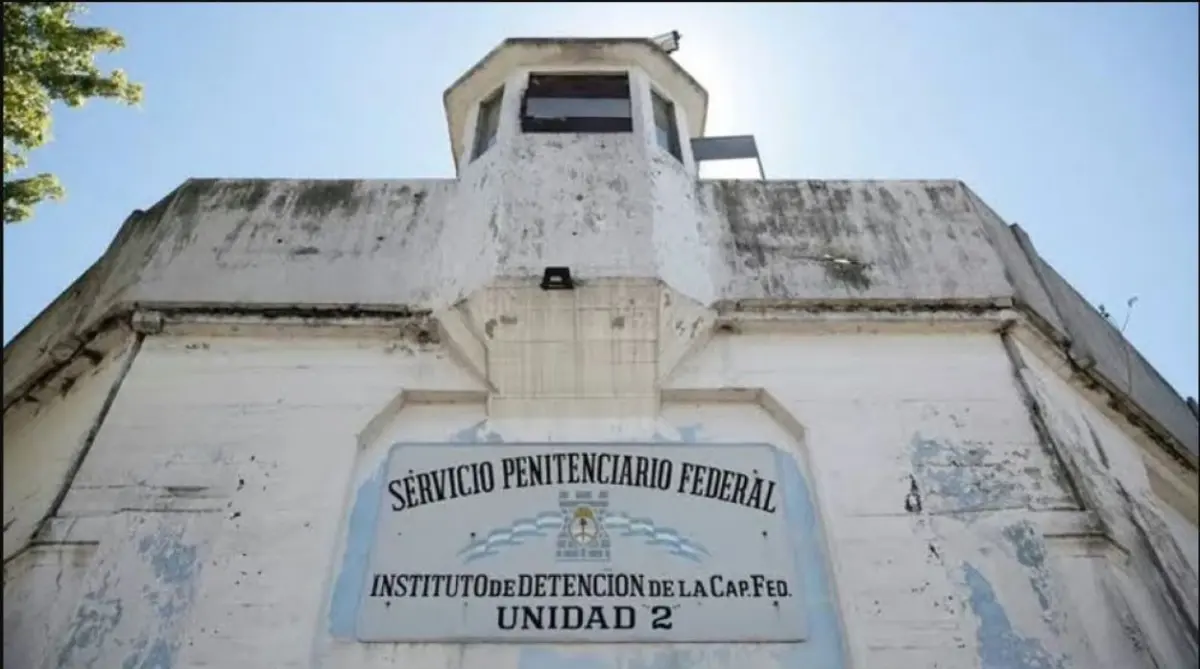
Pope Leo XIV’s upcoming four-day itinerary in Argentina is set to blend traditional papal engagements with a poignant, high-profile symbolic gesture. Alongside meetings with political authorities, youth organizations, and institutions dedicated to pastoral work, as well as leading public masses in major cities, the pontiff will carry out the Vatican’s long-standing tradition of visiting incarcerated individuals. However, the location chosen for this year’s encounter carries deep historical and emotional weight: the Cárcel de Devoto (Devoto Prison), located in the Villa Devoto neighborhood, which stands as the last remaining correctional facility operating within Buenos Aires City.
Visiting prisons to meet face-to-face with those behind bars has been a staple of the modern papacy since Pope John XXIII became the first pontiff to do so in 1958. While numerous popes upheld the practice over the decades, it evolved into a defining hallmark of the tenure of Pope Francis. The Argentine-born pontiff, originally known as Jorge Mario Bergoglio, made it a deliberate point to visit correctional facilities whenever possible. His visits routinely captured global headlines, most notably when he chose to humble himself by washing the feet of inmates—an emotional gesture modeled after the biblical passage in the Gospel where Jesus washes the feet of his apostles.
In the little over a year since his selection to the papacy, Pope Leo XIV has actively chosen to continue this compassionate practice, bringing comfort and visibility to marginalized populations. Yet, his visit to Devoto Prison on November 10 will serve a dual purpose, functioning not only as a pastoral encounter with a selected group of the remaining 74 inmates, but also as the final closing act for a century-old institution.
Officially designated as Unidad Penal Nº 2, Devoto Prison is currently in the final stages of a permanent shutdown after functioning for nearly a century. Having first opened its heavy iron gates on May 2, 1927, the facility’s closure is the culmination of a decades-long demand made by local neighborhood residents who long advocated for its removal from the urban landscape. The winding process of emptying the facility began in earnest in early October, with authorities steadily transferring inmates to a more modern correctional facility located in Marcos Paz, in the wider Buenos Aires Province.
The encounter between Pope Leo XIV and the remaining inmates will take place just one day before the facility closes its doors for good on November 11. This final chapter brings a definitive end to a dark and complex history—one that spans rapid urbanization, political persecution, military dictatorship, and the deadliest prison massacre in the modern history of Argentina.
When government authorities began searching for a suitable location to build a new correctional facility in the early decades of the 20th century, Buenos Aires was grappling with a rapidly growing population that inevitably brought rising crime rates. Following several failed attempts to secure land in the neighborhoods of Parque Patricios and Recoleta, officials ultimately settled on Villa Devoto. At the time, this area in southwest Buenos Aires City was largely rural, characterized by expansive farms and situated comfortably far away from the densely populated urban core.
When the Cárcel de Devoto officially opened its doors on May 2, 1927, its original mandate was modest. It was designed strictly to house individuals charged with minor offenses, petty crimes, or municipal contraventions. However, this foundational purpose shifted dramatically after the first few decades of its operation, triggered primarily by the ousting of President Juan Domingo Perón in a military coup in 1955.

As political persecution against Peronists and their supporters intensified across the country, Devoto underwent a profound operational change in 1957. The facility began housing inmates who had been convicted of much more serious, violent crimes. This shift not only introduced a higher level of risk and perceived danger for the surrounding residential neighborhood, but it also opened the floodgates to severe overpopulation—a chronic systemic problem that would only continue to worsen with each passing decade.
Over the years, the prison inevitably became a stage for some of the most turbulent episodes of Argentina’s violent political climate. During the tumultuous political shifts of the 1970s, newly elected President Héctor Cámpora stepped into office in 1973 promising that all political prisoners would eventually be freed, though he initially failed to establish a concrete timeline or date for their release.
Frustrated by the ongoing uncertainty and fueled by political fervor, thousands of Peronist activists and sympathizers marched on the Devoto Prison on May 25, 1973, forcing its heavy gates open. This historic mobilization, which came to be widely known as the “Devotazo,” resulted in the mass liberation of both political prisoners and common criminals, underscoring the deep fractures within the nation’s justice and security systems at the time.
The darkest chapters of the prison’s history, however, are inextricably linked to the military dictatorship that ruled Argentina from 1976 to 1983. During this brutal period of state-sponsored terror, Devoto was utilized as a clandestine detention center alongside its standard penal functions. According to estimates compiled by the human rights organization Comisión Nacional de la Memoria, roughly 1,200 political prisoners were systematically imprisoned and tortured within its walls, with women making up the majority of those detained in this sector. Testimonies from survivors who endured the facility have detailed how they were kept isolated in a specific pavilion where all the windows were permanently sealed shut to cut them off from the outside world. In formal recognition of this grim legacy, the prison was officially registered as a dedicated memory site in October 2012.
Compounding its troubled legacy, Devoto was also the site of the worst massacre in Argentine prison history on March 14, 1978. Commonly referred to as the “Masacre en el Pabellón Séptimo” (Massacre in the Seventh Pavilion), the tragedy began following a minor argument between a prison guard and an inmate. The dispute escalated rapidly, triggering a fierce and disproportionate crackdown by security forces.
In addition to the inmates who lost their lives directly as a result of the violent repression, the confrontation sparked a devastating fire that claimed the lives of many more prisoners. The death toll mounted largely because prison authorities deliberately shut off the internal water supply and stubbornly refused to allow local firemen to enter the facility to combat the flames. Decades later, accountability finally caught up with some of the perpetrators; in 2025, two former prison guards were handed heavy 25-year prison sentences for their respective roles in the massacre.
As Pope Leo XIV walks through the halls of Devoto Prison on November 10, his presence will offer a moment of spiritual reflection inside a structure deeply scarred by political trauma and human suffering. When the facility is permanently closed the following day, it will mark the definitive end of an institution that has cast a long shadow over Buenos Aires for nearly a century.