










While mainstream summer travelers crowded into destinations like Zakynthos, Crete, Naxos, and Ikaria this past season, others looked toward Sifnos—one of the Cyclades’ most celebrated food destinations that has managed to stay relatively under the international radar. Greece’s culinary culture cannot be grasped fully on any single island; across the Aegean, distinct growing conditions and cooking traditions have produced individual cuisines entirely their own. Sifnos just happens to have a particularly delicious reputation.
The trip landed in the middle of August, marking peak tourist season in the Mediterranean, but the island never felt cramped. Now that summer has come to a close, the crowds have thinned and temperatures are more forgiving, yet peak-season produce is still finding its way into dishes across the island, making it an even better time to experience Sifnos.

Getting there means starting in Athens, where ferries come in and out of the port of Piraeus from all across the Aegean and Ionian seas. The 2.5 to 3-hour trip from Athens to Sifnos is a thrill—worthy of a few Dramamine tablets if you are prone to seasickness—with incredible views of the islands you pass along the way. The Aegean really is a different shade of blue; it is tempting to gaze into it from the deck the whole way.
For travelers prioritizing a genuine feel for a place, Sifnos proves to be a perfect fit. Rather than beach clubs with lounge chairs or manicured resort strips, the island rewards those willing to discover rocky coves hiding strips of sand, olive groves, and local cheesemakers. While fine dining with a pricey tasting menu has its place, it only works if it is thoughtfully rooted in its surroundings, though many prefer to idle away an afternoon fumbling through a practically nonexistent Greek vocabulary at a local taverna over taramasalata and charcoal-grilled prawns.

Day 1
Getting to Piraeus with an hour or so to spare before your ferry boards allows you to slip into Yorgos Souvlaki to provision. This is a special shop, really nothing more than a grill behind a counter perched on the corner of a side street that happens to be one of the last places serving bifteki-style souvlaki in pita the old-school way: without tzatziki. Around 1970, the tangy yogurt sauce, along with the addition of fries, became a ubiquitous accompaniment to the street snack. Here, the grilled beef patties and the pillowy pita warmed by their juices come with nothing more than a bit of fresh tomato, slivered onions, and a scattering of parsley.
After a few hours at sea, travelers dock at the 28-square-mile destination and make their way to the little village of Kastro. Lodging is limited to a handful of Airbnbs and a hotel or two, but staying here means you can park the car and forget about it, exploring this special corner of the island—once Sifnos’s ancient capital—entirely on foot. A visit to Loggia Wine Bar, built directly into the side of a cliff with amphitheater-style seating carved into it, offers a chance to settle into the island over potatoes roasted on charcoal and paired with tarama aioli, or panzanella tossed not with hunks of bread but crumbled Sifnian anise cookies. This can be paired with an unfiltered red made from old-vine Mouchtaro grapes grown at high altitude in the Geraneia Mountains from the extensive bottle list.

Day 2
Waking to the sounds of crashing waves and the chitter of coastal falcons leads naturally up into the tiny streets of Kastro to Diporto Shop, a beloved cafe that feels more like walking into a family member’s kitchen. Grabbing a table in the shade for a freddo cappuccino—Greece’s answer to an iced latte with cold foam—brings you into the daily rhythm of the village. The yogurt and fruit bowl, crowned with heaps of sunflower seeds, dates, sliced apricots, and banana, provides ample sustenance for a hike down to the Church of the Seven Martyrs afterwards.
Heading north to the village of Cheronissos brings you between rocky hills where goats roam and graze, offering a patch of sand or smooth rock to set up for the day. When hunger strikes, Ammoudia sits just a few steps away as the quintessential beachside taverna in a tiny fishing village, featuring wooden tables and chairs planted directly into the sand close to the water’s edge.

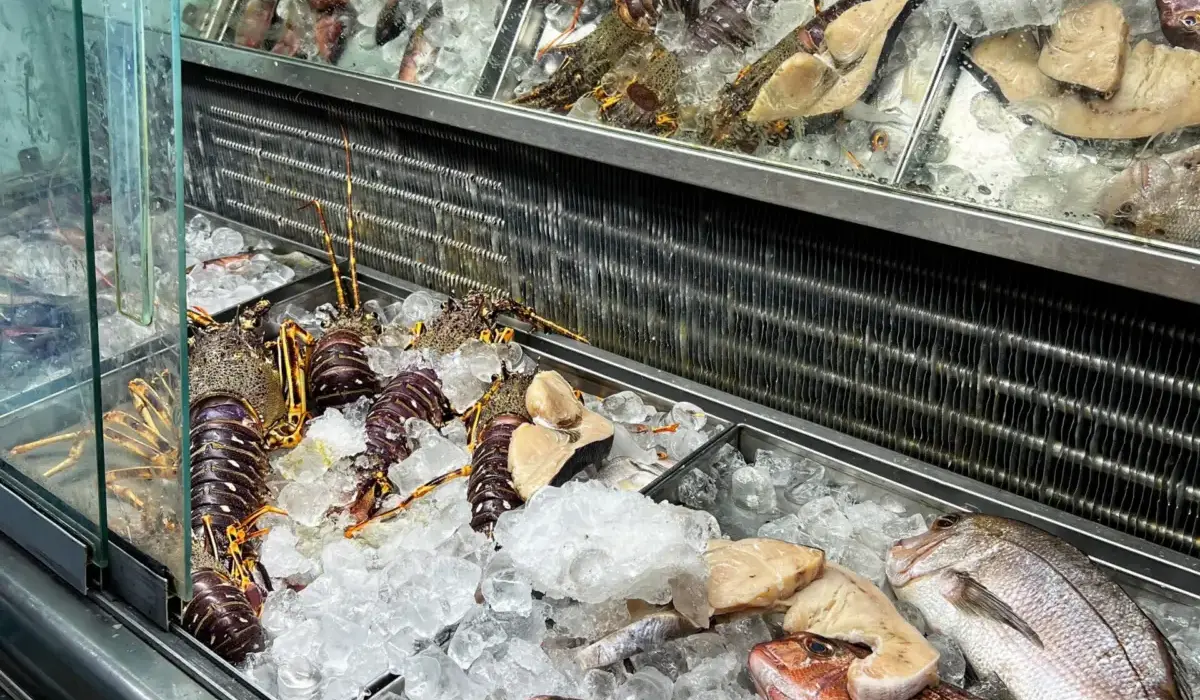
The menu features revithada, a soul-soothing Sifnian specialty of stewed chickpeas in olive oil with onion and herbs. Families traditionally make revithada on Saturday before bringing their prepared pot to a communal oven where it cooks through the night ahead of the Sunday meal, though at Ammoudia it is available any day of the week. To order seafood, diners walk up to the case with their server to select their preference, which is weighed and prepared over charcoal with lemon, olive oil, and nothing else, resulting in a freshly grilled Sifnian lobster or sea bream.
A visit to Sifnos is incomplete without dinner at Cantina. Chef Giorgos Samoilis is a local legend on the island and throughout Greece, yet maintains an approachable philosophy centered on a zero-waste approach and menus deeply connected to a local network of farmers and fishermen. The restaurant by the sea offers an experience free of pretension despite the meticulous craft involved. Dishes include poached monkfish fillet in a delicate fig leaf sauce, okra grilled over charcoal topped with pumpkin seeds and smoked red pepper, and mizithra ice cream drizzled with local honey and scattered with a brown butter crumble made from yesterday’s bread.

Day 3
Sifnos is synonymous with pottery, but the island also has deep traditions around almond sweets. The family-owned Theodorou Pastry Shop in Artemonas offers almond confections like kourabiedes, delicate cookies made with almond flour and dusted in confectioner’s sugar, still made by hand as they have been for three generations. Continuing south, past ceramics studios and toward the little cove near the base of the island known as Faros, brings travelers past the first beach to the more secluded, calmer Vlicho Beach, where the shadows cast by wispy salt cedar trees and the cove’s perpetual breeze create ideal conditions for a midday rest.
For the midday meal, Pelicanos—the second restaurant from chef Giorgos Samoilis—offers a beach bar vibe. Pelicanos is known for its crab and bottarga cacio e pepe with thick, chewy, bucatini-like noodles, alongside fresh crudo and aguachile specials featuring local amberjack served in glugs of local olive oil with fresh herbs and aromatics. Spending the afternoon on the beach can be paired with a rocky hike up to the sweeping views surrounding Panagia Chrysopigi, a monastery dating back to the 1600s.

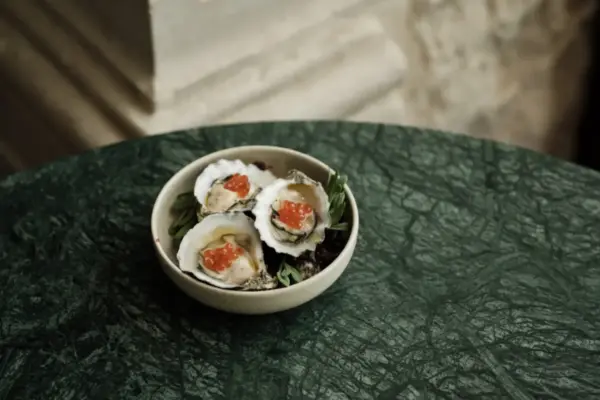
The day finishes on the south side of the island in Platis Gialos, a buzzier seaside town with plenty of shops and bars to explore before dinner at Omega3. Seafood lovers gravitating toward raw or cured preparations find exceptional offerings, such as sea urchin served in pickled tomato water and ceviche featuring local sea bream, shrimp, or amberjack dotted with vibrant cilantro pesto.
While future itineraries leave room for spots like Say Cheers!—the bar in a van at the hotel Oniropagida perched atop one of the highest points on the island—as well as Tsikali on the west coast and the Kavos Sunrise Cuban rum bar, Sifnos ultimately leaves travelers with a profound appreciation for a destination where nearly every meal is enjoyed with the sea right in front of them.