





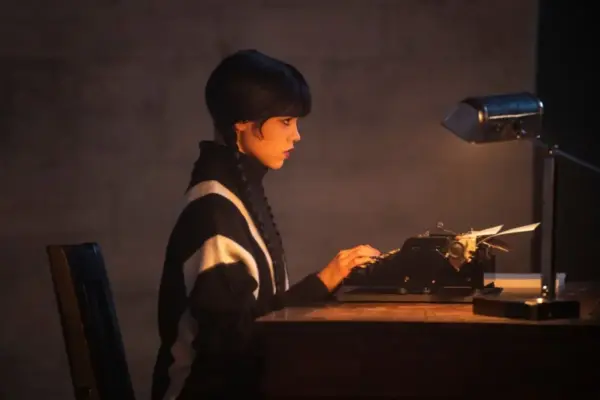

We have all heard the trope before: the suggestion that the most volatile, intense, and unhinged girlfriends tend to be Latina. Versions of this cultural caricature appear everywhere across modern media—in films, viral memes, TikTok jokes, and even mainstream reality television, such as the latest season of Love Island USA. Now, social media users are reviving the tired stereotype once again following the release of Curry Barker’s new horror film, Obsession. Audiences quickly took to online platforms after learning that actress Inde Navarrette, who portrays the character Nikki Freeman in the movie, is of Mexican descent.
Across TikTok, Instagram, and X, viewers rushed to post jokes claiming that the film is simply another cinematic example of the "crazy Latina girlfriend" trope. However, this knee-jerk reaction says far more about our culture’s deep-seated obsession with that specific caricature than it does about Barker’s actual movie. In reality, Obsession is not a story about a "crazy woman" at all. Yet, millions of internet users were so eager to project that pre-existing narrative onto the film that they ended up exposing just how deeply ingrained and normalized the stereotype remains in contemporary popular culture.
The enduring trope of the "crazy Latina girlfriend" has never genuinely been about humor or harmless exaggeration. Instead, it sits squarely at the intersection of systemic sexism, racism, and cultural fetishization. It reduces Latina women to flattened caricatures who are supposedly inherently more emotional, pathologically jealous, hyper-sexualized, and ultimately more unstable than anyone else. The sheer velocity with which social media users immediately interpreted Obsession through this narrow lens serves as undeniable proof that popular culture still rewards and reinforces these tired assumptions.
Part of the reason this toxic stereotype has managed to survive for decades is that even Latine communities continue to perpetuate and lean into it. Beyond treating it as a standard punchline, popular culture frequently romanticizes the trope as something desirable or passionate. For instance, when Latin music icons Romeo Santos and Prince Royce released their collaborative album Better Late Than Never, their track "Lokita Por Mí" instantly went viral across digital platforms. Latino men flooded social media joking that they had all dated a "lokita," while Latina women posted videos relating to the experience of being labeled the "crazy Latina girlfriend."
When it comes to Curry Barker’s Obsession, anyone whose exposure to the film is limited to the official trailer and brief social media clips likely has no idea what the story is actually about. Unfortunately, it is precisely those individuals—people who either haven’t watched the full movie or clearly weren’t paying close enough attention—who have taken to social media to create memes about Nikki Freeman’s character. They casually joke that she perfectly represents the stereotype of the emotionally unstable Latina partner, completely missing the narrative right in front of them.
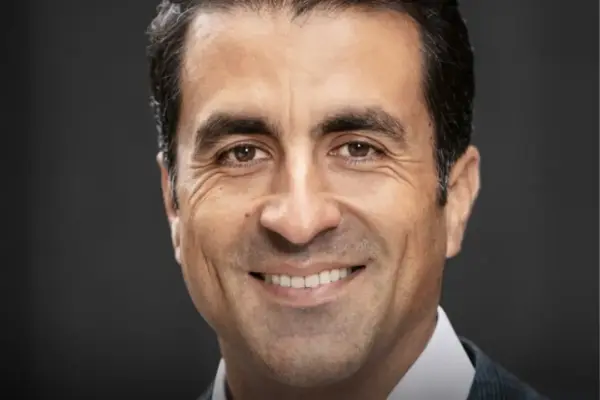
The cold truth of the film is that Nikki is not the villain in Obsession. Baron Bailey—better known by his nickname, the Bear—is the true antagonist of the story.
The psychological horror film is ultimately about a man whose desire to be loved becomes so completely all-consuming that he strips a woman of her fundamental autonomy simply to fulfill his own self-serving fantasy. Nikki’s increasingly erratic and desperate behavior throughout the narrative is not evidence that she is inherently "crazy" or unstable from the start. Rather, it is the horrifying, psychological consequence of having her entire identity, freedom, and agency systematically taken away from her by a man who refuses to let her go.

Perhaps the film’s clearest and most chilling moment comes when Nikki finally realizes the full extent of what has happened to her and begs for the absolute nightmare to end. Even in that moment of crisis, Bear’s primary concern is not restoring her freedom or acknowledging her pain, but rather preserving the romantic fantasy he constructed in his own head. When she expresses just how trapped and suffocated she feels under his control, he responds with chilling calm, asking, "What’s so bad about being with me?" In that precise moment, Obsession reveals itself not as a story about a woman losing control of her faculties, but as a sobering narrative about a man whose obsession with being chosen matters infinitely more than a woman’s basic humanity.
Yet, despite the clarity of the film’s message, many viewers walked away from the screen continuing to reduce Nikki to the exact same trope that has unfairly followed Latina women for generations. Ironically, those audience members ended up replicating the very kind of dehumanization that the horror film is actively warning against.
This phenomenon highlights what makes the stereotype so insidious. It is not merely an outdated cultural joke; it is genuinely and deeply harmful. The trope effectively functions as a fantasy for outsiders. Men often fantasize about Latina women through the lens of being exciting, spicy, loud, and unpredictable. While that might sound flattering or complimentary on the surface to some, it reduces complex human beings to a fleeting experience, completely stripping them of their multifaceted humanity.
Furthermore, this cultural conditioning punishes Latina women whenever they attempt to establish healthy boundaries or express legitimate human emotions. How many times have we witnessed a Latina woman express justified anger after being mistreated, disrespected, or discovering a partner’s infidelity, only to be instantly labeled as "crazy"? This label conveniently shifts responsibility away from the man’s poor behavior and places the burden entirely on the woman’s reaction. In turn, it pressures many Latina women to suppress their vital needs and emotions in order to avoid being perceived by society as unstable.
Despite the obvious harms, social media algorithms continue to keep this trope alive and well through endless streams of memes, TikTok reels, and casual jokes. Finding fleeting humor in familiar cultural dynamics or shared community experiences is entirely understandable, but relying on self-deprecating humor that further reinforces stereotypes which actively harm Latinas crosses a line. When these tropes are perpetuated enough times, people begin to treat them as absolute fact. It grants individuals cultural permission to make lazy, rapid assumptions about Latina women, even when those assumptions are entirely detached from reality.
Ironically, that is precisely what happened with the public discourse surrounding Obsession. Countless viewers reduced Nikki to a flat caricature rather than recognizing her as a fully realized person enduring a terrifying ordeal. Perhaps the most unsettling part of it all is that the "crazy Latina girlfriend" trope has survived for so long precisely because it provides a socially acceptable, frictionless way to dismiss women, fetishize Latina identity, and explain away our shared humanity. What many people saw when they looked at Obsession was not the movie itself, but decades of cultural conditioning that have taught society to view Latina women through an exceptionally narrow lens.
Society remains far more comfortable laughing at the comforting fiction of the "crazy Latina girlfriend" than pausing to question why we default to believing she exists in the first place.