




As a Black Dominican American woman—someone who is frequently perceived as “racially mixed” or “racially ambiguous”—I have spent a significant portion of my adult life defending the validity of my Blackness. At the same time, I have routinely faced sharp criticism within my own circles for consistently speaking out against anti-Haitian rhetoric and nationalist prejudice. This complex intersection of identity, heritage, and socio-political expectation is something millions of Afro-Latines navigate daily, yet it remains intensely misunderstood by the broader public, educational institutions, and even our own communities.
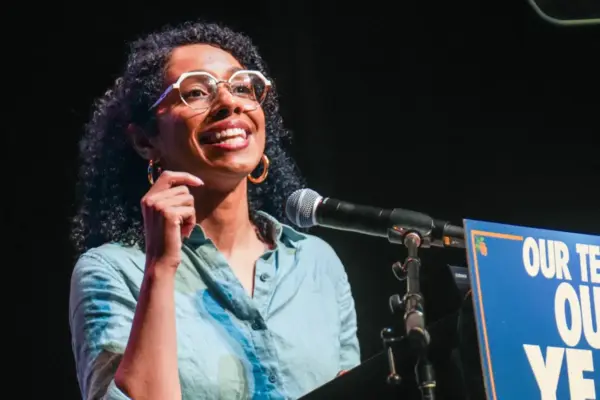
The friction surrounding these conversations came to a head earlier this year when I published an article examining the political ascension of now-Congresswoman Darializa Avilés Chevalier. Following the publication, I received a wave of critical commentary from individuals accusing her of not being “Dominican enough.” Detractors took direct issue with her public support for diplomatic and cultural solidarity between the Dominican Republic and Haiti. Some critics even pointed to her French-derived last name, weaponizing it as erroneous “evidence” that she must secretly be of Haitian descent.
This localized backlash quickly transcended a single political figure, sparking sprawling, passionate conversations across digital spaces and community forums regarding the persistent confusion between race, ethnicity, and Latinidad. Crucially, it laid bare the enduring role that rigid strands of Dominican nationalism continue to play in fueling these profound misunderstandings.
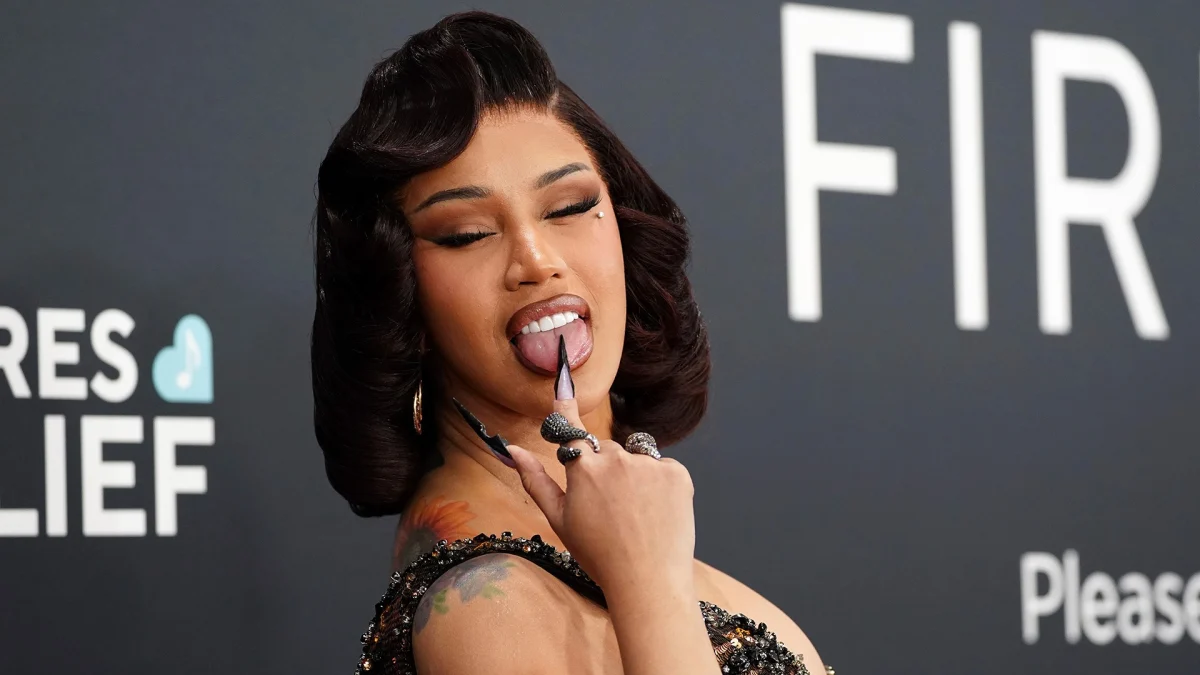
As I reflected on the fallout from those discussions, I realized that one of the most high-profile public figures consistently engaging with and dismantling these exact misconceptions is Grammy Award-winning superstar Cardi B. For years, the rapper and media personality has repeatedly leveraged her massive global platform to clarify the fundamental differences between race, ethnicity, and nationality—distinctions that traditional schooling, mainstream media, and insular communities so frequently fail to teach.
Cardi has consistently used her visibility to explain that Blackness and Latinidad are not mutually exclusive, all while courageously challenging anti-Haitian rhetoric. As someone who has spent years navigating these exact identity mazes, seeing a Dominican woman with Cardi’s level of global visibility articulate what I, and countless others, have long felt in our bones has been profoundly validating.
The roots of her public advocacy on these matters run deep. In 2019, following a wave of online scrutiny questioning whether she could authentically claim to be Black, Cardi took to Instagram Live to deliver an impromptu, highly educational masterclass on the nuances of identity.
“A lot of people don’t know the difference between nationality, race, ethnicity, and that’s not nobody’s fault,” she told her millions of followers during the broadcast. “That’s actually the school’s fault because schools don’t be teaching this sh— to people.”
During the broadcast, she laid out her specific lineage, explaining that her father is Dominican and her mother is Trinidadian, while emphasizing that being Dominican functions as a nationality and an ethnicity rather than a distinct biological race. She firmly identified as Black due to her undeniable African ancestry and physical features, pushing back against the widespread, highly pervasive misconception that being Latine somehow precludes someone from being Black. Furthermore, she challenged the deeply ingrained colorist assumption that possessing a lighter complexion or mixed features automatically strips someone of their Black identity.
This is a conversation I have personally endured countless times. Like the family histories of many Dominicans, my own ancestry reflects centuries of colonial history, forced displacement, and complex racial mixing. My caramel complexion, hazel eyes, looser curl pattern, and visibly mixed-race features have frequently invited interrogation and policing from people eager to put me in a neat racial box. But being multiracial does not negate my Blackness. Blackness is an intrinsic part of my racial identity—not something separate from it, and certainly not something up for public debate.
Cardi captured this sentiment succinctly during her 2019 broadcast, noting the sheer frustration of being misunderstood by a public obsessed with racial binaries. “People just don’t be understanding sh—,” she expressed. “It’s like, ‘Cardi’s Latin, she’s not Black.’ And it’s like, bro, my features don’t come from white people… I have Afro features.”
During that same unfiltered session, she also checked assumptions regarding pan-Latine homogeneity, pushing back against commentators insisting she should automatically represent Mexican culture simply because she speaks Spanish and falls under the broad umbrella of being Latina. “I’m not Mexican at all. I’m West Indian, and I’m Dominican. I speak Spanish because I’m Dominican.”
Her point was simple yet revolutionary for mainstream discourse: Latines are not a monolith. Our cultures, histories, and lived experiences vary wildly across national borders.
A year later, in the turbulent wake of the May 2020 murder of George Floyd and the subsequent global reckoning over racial justice, Cardi once again found herself on the front lines of public education—this time directing her focus toward anti-Haitian prejudice. She shared an image on social media featuring protesters holding Dominican and Haitian flags side by side, accompanied by the caption: “Unity is what I stand for, and it’s what I’m about.”
Rather than being received as a message of peace, the post drew immediate ire from hardline Dominican nationalists, who accused her of advocating for the controversial political unification of the two neighboring nations that share the island of Hispaniola.
Refusing to back down or allow her message to be intentionally distorted, Cardi addressed the controversy in a lengthy, passionate Instagram Live conducted primarily in Spanish.
“Yo puse esa foto porque es un símbolo de paz,” she explained, making it clear that the image was meant to evoke harmony. She followed up with the assertion, “Yo me sé mi historia,” signaling that while she understands the deeply complicated, often painful historical relations between Haiti and the Dominican Republic, acknowledging that history should never be used as a moral license to dehumanize Haitians in the modern era.
“Hay que tratar a los haitianos bien, como gente también,” she urged her viewers, reminding them that basic human dignity is non-negotiable. She also drew a sharp parallel to the immigrant experience in the United States, pointing out that in American society, Dominicans and Haitians are frequently racialized and marginalized in strikingly similar ways. Whether targeted because of foreign accents, undocumented or immigrant status, or outright anti-Blackness, both communities encounter systemic discrimination. Her argument was never that the two sovereign nations are identical, but rather that shared histories and shared experiences of racism should naturally foster cross-cultural empathy rather than entrenched division.
The pattern of defending her heritage continued into 2021 when critics once again attempted to gatekeep her identity, questioning whether she could genuinely claim to be Afro-Latina. True to form, she responded by publishing archival photographs of her Dominican father, Trinidadian mother, grandparents, and extended family members, calmly noting that she has never hidden or modified the reality of her Caribbean roots.
More recently, during a 2025 interview with CBS News, Cardi once again stepped into her identity as an Afro-Latina while discussing the rich Dominican musical influences woven throughout her artistic projects. Years removed from her initial digital debates, her stance has remained remarkably steadfast and consistent.
It is this unwavering consistency that resonates so deeply with me and countless others within the diaspora. For years, Cardi B has essentially been performing the vital cultural education work that formal educational institutions and media outlets have neglected—reminding the public that race, ethnicity, and nationality are entirely separate categories; that Blackness and Dominican identity are not contradictory paradoxes; and that standing firmly against anti-Haitian discrimination does not make someone any less Dominican. If anything, standing against prejudice is the ultimate affirmation of our shared humanity. I share her deeply held belief that our common African ancestry and immigrant struggles should serve as an open door to build solidarity—not only with our Haitian neighbors, but across the entire global African diaspora.
Ultimately, this is precisely why discussions like the one sparked by Darializa Avilés Chevalier matter so immensely. They force our communities to confront the inherited myths surrounding race, skin color, colorism, and Latinidad. For far too long, these vital discussions have been dismissed as inherently divisive when, in reality, they represent a profound opportunity for collective cultural growth and healing.
Public figures like Cardi B have spent years reminding us that being proudly Latine and proudly Black are harmonious, non-competing truths. They remind us that for Dominicans, rejecting anti-Haitian rhetoric is not a betrayal of our culture—it is an affirmation of our shared humanity. My hope is that the upcoming generation of Dominicans and other Afro-Latines will not have to expend the same exhausting emotional labor defending the reality of their Blackness or explaining basic sociological definitions of race, ethnicity, and nationality. Instead, they will step forward equipped with the language, the historical context, and the visible representation needed to know with absolute certainty that they have belonged all along.