










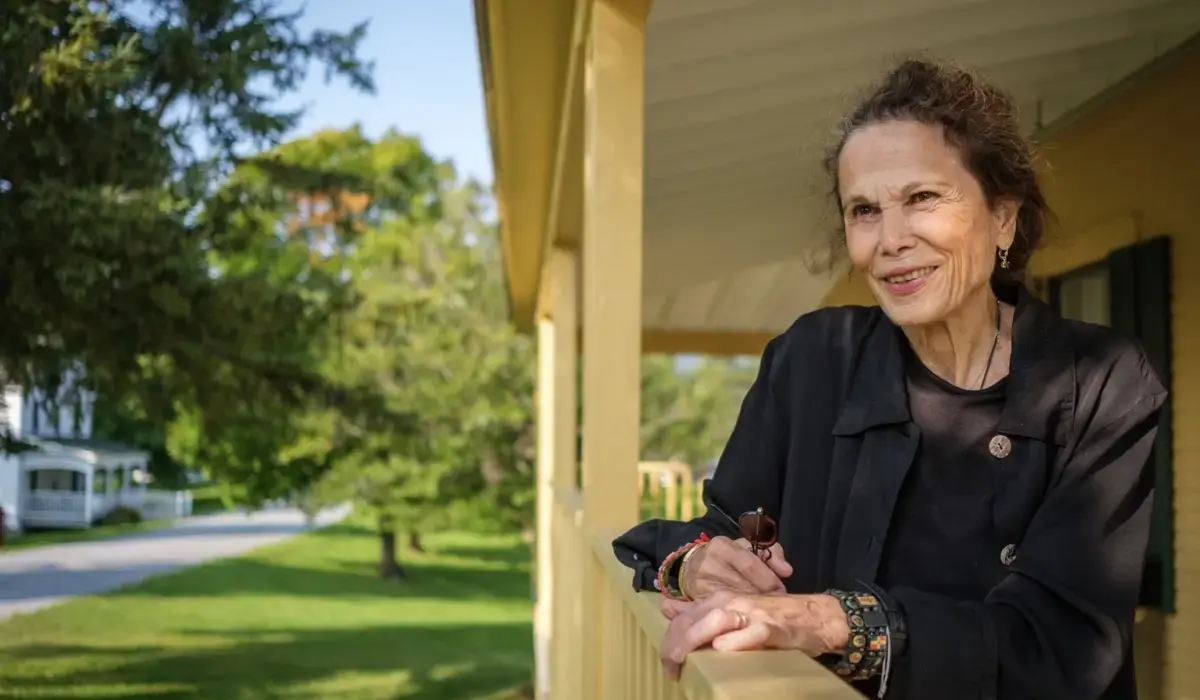
For more than four decades, acclaimed Dominican-American writer Julia Alvarez has been shaping the landscape of American literature. With a career spanning groundbreaking novels, evocative poetry, and essential historical fiction, Alvarez has spent a lifetime giving voice to experiences that were once entirely missing from bookshelves across the United States. Now, at 76 years old, the literary pioneer is once again turning her gaze toward a new frontier, reflecting on the realities of aging, the weight of memory, and the enduring power of verse in her most vulnerable work to date: a new poetry collection titled Visitations.
Alvarez first entered the literary consciousness with the 1984 publication of her poetry collection, Homecoming. That initial step into the publishing world was soon followed by her groundbreaking 1991 debut novel, How the García Girls Lost Their Accents. The novel resonated deeply with readers, making countless Dominican Americans feel genuinely seen, represented, and acknowledged in mainstream literature for the very first time. She further cemented her historic place in the literary canon with In the Time of the Butterflies, a powerful work of historical fiction that chronicled the courageous lives of the four Mirabal sisters who fought against the brutal dictatorship of Rafael Trujillo in the Dominican Republic.
As one of the earliest Dominican writers to achieve widespread national recognition in the United States, Alvarez ultimately became a defining voice for the Dominican diaspora. Her trailblazing success helped pave the way for an entire new generation of celebrated and acclaimed authors who followed in her footsteps, including contemporary literary luminaries like Angie Cruz, Elizabeth Acevedo, and Cleyvis Natera. For many readers within the Dominican community and beyond, Alvarez achieved something revolutionary simply by placing Dominican stories and perspectives at the very center of American literature.
Following the release of her latest poetry collection, Visitations, Alvarez has been taking time to reflect deeply on her long and illustrious career, her evolving legacy, the distinct realities of growing older, and the ways in which these profound life phases have shaped her newest writing. The resulting collection offers readers an intimate look into the mind of a master storyteller who continues to push herself creatively after decades in the public eye.
Reflecting on her enduring relationship with poetry, Alvarez explains that the genre has always served as her artistic anchor, even amid the demands of writing full-length novels. For four decades, she notes, the commercial publishing industry largely craved novels, and she diligently worked to deliver them. Yet, tucked between those larger projects and sometimes right in the middle of them, she would always find her way back to poetry, which she considers her true foundation.
Describing poetry to HipLatina as her first love, Alvarez continues to view the medium as the absolute purest form of expression available to writers. For her, continuously returning to verse is a way of constantly reminding herself of the highest potential of language.
Alvarez acknowledges that the poems compiled within Visitations stem from different eras of her life. Some pieces were written many years ago when she was a much younger woman navigating the early stages of her career and identity, while others were crafted much more recently. Woven throughout the collection is a prominent, unifying theme: the complex, multifaceted experience of getting older in a society that often overlooks the later stages of life.
Reflecting on her current place in the world, Alvarez points out that she has encountered various forms of prejudice throughout her life, from the initial hurdles of facing racism and ethnic prejudice to the broader societal repulsion directed at immigrants, outsiders, and anyone deemed "the other." Having navigated all of those marginalizing "isms" that attempt to erase people, she now finds herself confronting a different kind of societal dismissal. She is now experiencing the "ism" of ageism.
In our culture, Alvarez observes, older individuals are rarely portrayed as the dynamic main characters of their own stories. Instead, when older people do appear in narratives, they are typically relegated to the background, functioning merely as dispensers of advice or cast as the stereotypical archetype standing in the protagonist’s way.
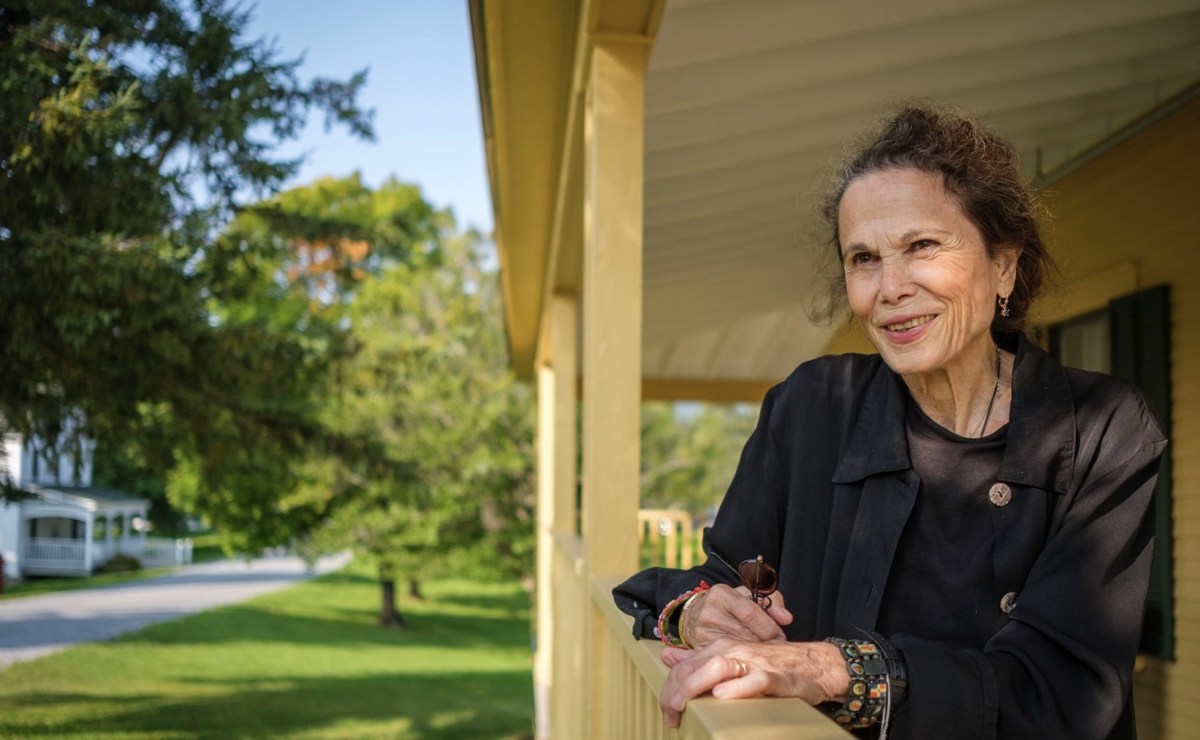
Alvarez shares that a major part of the inspiration behind Visitations came from trying to deeply understand and articulate the specific stage of life she is currently experiencing at 76. She notes that if individuals are fortunate enough to live a long life, aging is a universal landscape that awaits us all, making it a terrain well worth exploring through art and literature. She questions aloud what the true stories of this specific chapter of life are, pondering what it means to exist much closer to the conclusion of things rather than the high-energy crescendo and excitement of youth. She also reflects on the poignant reality of what it means to be so close to the dead we have lost—to reach a point in life where the number of departed loved ones outnumbers those who are still alive—and what that profound demographic shift within one’s own heart actually means.
These heavy, contemplative themes emerge powerfully in poems such as "The Red Bathrobe." In this piece, Alvarez explores the nuanced, sometimes humbling experience of looking over one’s shoulder as a new wave of individuals—imbued with greater youth, physical power, or societal beauty—enters the room and shifts the dynamic.
The poem opens with the lines reflecting on a quiet evening conversation about identity, about who they have become now that they have put away their lab coats and lecture notes, taken down the framed picture of Sisyphus rolling his stone uphill, and handed back the professional degrees that once broadcast their expertise. It speaks to the transition of turning in the keys to the van with the company logo and returning to being ordinary individuals whose shoulders other people look over at parties while eagerly checking to see what person of greater beauty, youth, self-importance, and power is arriving next.
Alvarez adds that this specific kind of invisibility is vital to acknowledge, to name directly, and to write stories about, noting her feeling that there is simply not a significant amount of literature dedicated to exploring that particular phenomenon.
Despite her monumental role in paving the way for an entire generation of Dominican writers—an impact recently recognized and honored at the Dominican Writers Summit 2026—Alvarez admits that she actively tries not to dwell on her own legacy. She explains that if she were to spend time thinking about her legacy, she would likely lose her focus entirely. When an author is actively writing, she notes, they must remain entirely in the service of the story and the characters inhabiting it. She emphasizes that she cannot afford to look outward at her audience or worry about how anyone, whether positively or negatively, might react to her choices. An author must remain strictly true to the narrative. Decisions regarding what to release or how to revise can come later, but certainly not in the creative moment itself.
Nevertheless, when she does take a rare moment to look back at her journey, Alvarez is always drawn right back to the original spark that motivated her to pick up a pen in the first place: a glaring absence of stories that genuinely reflected her own lived experience.
When she first began writing, she recalls, there was a noticeable, frustrating gap on the library shelf. She simply could not see herself or her community represented in the books available at the time. While immigrant stories were certainly circulating, they were almost exclusively written by men, and many of those came from Mexican-American perspectives. Although society sometimes attempted to lump diverse groups under the exact same broad umbrella, she recognized that they did not share the same kind of family structures, historical backgrounds, or ways of looking at the world. She felt a profound personal need to understand what was happening to herself and her sisters, turning to storytelling not because she possessed all the answers, but precisely because she was carrying so many questions.
Looking back, Alvarez also recognizes what an extraordinary privilege it has been to build a sustained, meaningful career as a Dominican-American writer—and to still be actively doing the work she loves at 76 years old.
Reflecting on her journey with a profound sense of peace and appreciation, Alvarez shares that she harbors immense gratitude, marveling at how fortunate a person must be to be able to pursue their true passion in this world and actually get paid to do it.