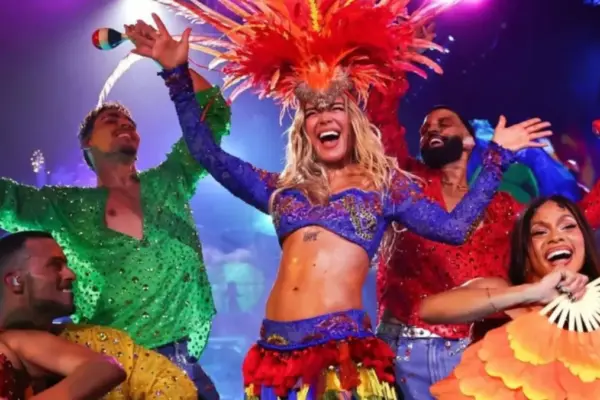










Colombian superstar Karol G has found herself at the center of a heated cultural debate following the announcement of the 2026 Latin Grammy nominations on September 16. Nominated for Best Regional Mexican Song for her track “Ese Hombre Es Malo,” a standout single from her critically acclaimed album Tropicoqueta, the multi-platinum artist quickly became the target of sharp criticism from a vocal segment of fans and commentators. The core of the grievance centered on how a non-Mexican artist could secure a coveted spot in a category deeply intertwined with Mexican national identity and cultural heritage.
The backlash ignited across social media platforms like X and TikTok within hours of the nominations being unveiled. Users questioned the legitimacy of Karol G’s presence in the category, contrasting her career trajectory with artists who have dedicated their entire lives and professional endeavors exclusively to the regional Mexican genre. Critics specifically pointed to the absence of prominent Mexican artists, such as Yuridia, who had recently commanded massive attention by performing two consecutive sold-out concerts at Mexico’s Estadio GNP yet was left off the nomination list.
The online discourse intensified as fans debated the boundaries of traditional musical genres in an increasingly globalized industry. However, amid the rising tide of complaints, Yuridia herself stepped into the conversation to temper the outrage. On September 18, the renowned Mexican singer took to Instagram to address the controversy directly, writing that she dislikes such manufactured conflicts and urging the public to leave Karol G alone. Yuridia’s intervention brought a momentary pause to the social media firestorm, highlighting a disconnect between the public’s emotional attachment to musical categories and the technical realities of how the Latin Grammy Awards are adjudicated.
Understanding the Latin Grammy Nomination Process
The controversy surrounding Karol G’s nomination largely stems from a widespread misunderstanding of the eligibility rules enforced by the Latin Recording Academy. Contrary to popular belief among critics, the academy’s current guidelines do not condition eligibility on the nationality or place of birth of the performer. Instead, the primary requirements for tracks submitted to the regional Mexican categories dictate that the song must contain at least sixty percent of its lyrics in Spanish and conform to the recognized musical structure and instrumentation of the regional Mexican genre.
Furthermore, nominations in songwriting and composition categories recognize the creators behind the music. In this case, the nomination for Best Regional Mexican Song technically belongs to the collective team of songwriters responsible for crafting “Ese Hombre Es Malo”: Édgar Barrera, Andrés Jael Correa Ríos, and Carolina Giraldo Navarro, which is Karol G’s legal birth name. By securing the nomination, the Colombian powerhouse finds herself competing in a fiercely contested category alongside heavyweight acts such as Intocable, Grupo Frontera—who pulled in two nominations—Xavi, and Edén Muñoz alongside Cristian Castro.
This structural reality clarifies that the Latin Grammys evaluate works based on composition, linguistic parameters, and stylistic adherence rather than the passport of the artist who interprets the track. Despite this clarification, the debate laid bare deep-seated sensitivities regarding cultural representation and the preservation of traditional sounds within mainstream award shows.
What Karol G Actually Said About Her Connection to Mexico
Addressing her profound artistic affinity for Mexican music, Karol G opened up during an interview with MTV Latinoamérica conducted ahead of her scheduled performances in Mexico as part of her expansive Tropitour. The global superstar explained that her relationship with Mexican culture is not a recent commercial pivot, but rather a lifelong connection that began during her childhood through the medium of telenovelas.

She described those early hours spent watching dramatic Mexican television series as her primary entry point into discovering traditional Mexican music. Through this exposure, she developed a deep appreciation for the themes of heartbreak, romance, and unbridled emotional intensity that she felt were intrinsic to Mexican storytelling and identity. Karol G noted that popular music and traditional mariachi sounds allow her to articulate her own emotional experiences with the exact same passion she grew up absorbing.
Her studio album Tropicoqueta, released in June 2025, served as her deliberate platform to honor Latin American culture in its comprehensive breadth. She expressed that creating such a tribute would have felt incomplete and inauthentic without incorporating a genre and a culture that had profoundly influenced her artistic development and with which she identified so deeply.
Karol G was notably direct about the motivations behind the project, emphasizing that her engagement with Mexican music is far from a calculated strategic move designed to capture a new demographic of listeners. Instead, she framed it as a genuine reflection of her formative years and artistic evolution. She noted that leaving Mexican music out of Tropicoqueta would have amounted to a dishonest omission, given how central those sounds have been to her personal growth. Having built her global reputation predominantly in the urban and reggaeton spheres, the Colombian singer made a conscious artistic choice to step away temporarily from urban beats and explore musical territories closer to her emotional roots, with Mexican traditions serving as a non-negotiable pillar of that exploration.
The Double Standard the Debate Exposed
Beyond the technical rules and the personal motivations of the artist, the intense debate surrounding Karol G’s nomination exposed a glaring double standard within the broader landscape of Latin music consumption and criticism. Observers pointed out the selective nature of the outrage by examining historical precedents in other genre categories within the Latin Grammy ecosystem.
For instance, the legendary Mexican cumbia group Los Ángeles Azules earned nominations in the Best Cumbia/Vallenato Album category in 2021, 2023, and 2024. That specific category is historically rooted in and associated with the traditional musical heritages of Colombia and Venezuela. Yet, those nominations passed without generating any comparable wave of public complaints, protests, or institutional resistance from the Colombian music community or its fan base. The stark contrast between the silence surrounding Mexican artists crossing into traditional South American categories and the fierce backlash directed at a Colombian artist crossing into regional Mexican music reveals a selective gatekeeping mentality that warrants honest examination.
The regional Mexican genre has long transcended geographical borders, boasting a massive global audience and exerting widespread influence across international markets. The underlying premise that only native-born Mexican artists can authentically engage with, interpret, or contribute to the genre is a form of cultural gatekeeping unsupported by the inclusive history of popular music. Karol G’s lifelong exposure to Mexican telenovelas, mariachi music, and cultural frameworks provided her with a foundational sensibility that shaped her as a performer long before she ever recorded a regional track. Her recent nomination is a reflection of a body of work evaluated by established academy standards that prioritize musical execution over national origin. While the discourse surrounding genre purity and cultural representation remains a valid and ongoing conversation within the Latin music community, applying these standards consistently across all nationalities remains essential for an equitable industry.