











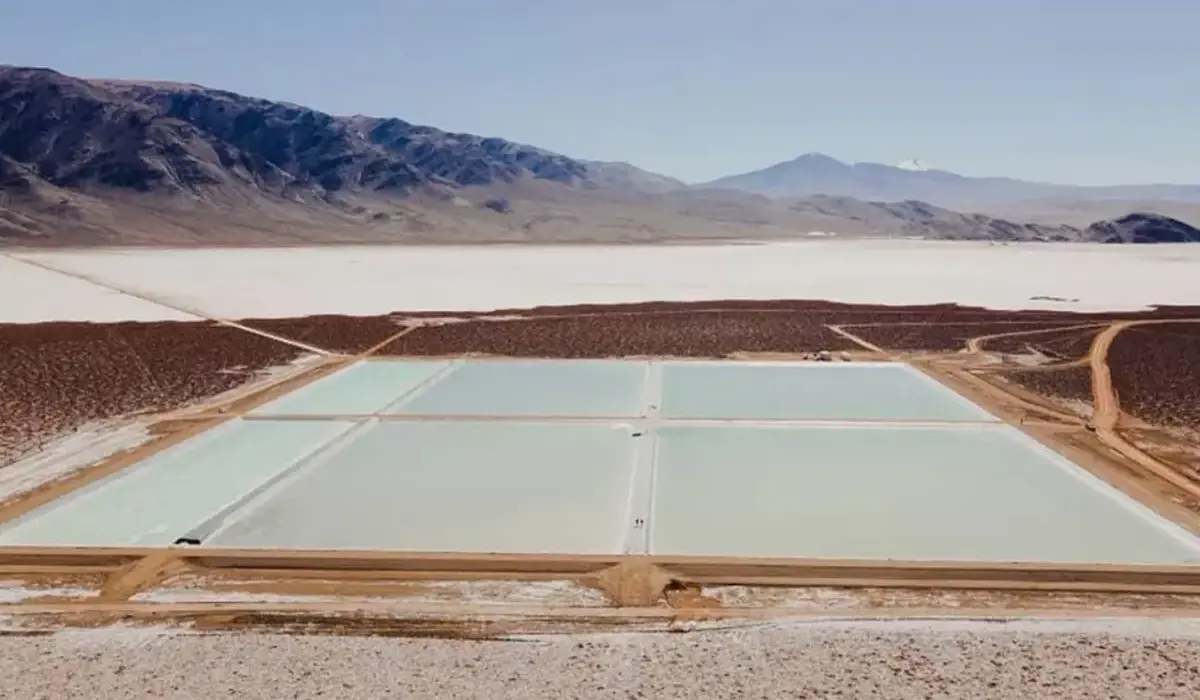
Argentina’s mining sector is experiencing a powerful resurgence, propelled by a historic boom in exports, expanding global demand for critical energy transition minerals, and the growing appeal of ambitious new projects. As the country looks to capitalize on vast reserves of lithium, copper, and precious metals like gold, policymakers and legal experts alike are analyzing how a combination of domestic reforms, geopolitical shifts, and cross-border cooperation could permanently transform the nation’s resource landscape.
According to data released by the national statistics institute INDEC, Argentina recorded its highest-ever mining exports in 2025, reaching a staggering US$8.1 billion. This milestone represented a notable 19.2% increase compared to the US$6.8 billion generated the previous year.
The momentum has carried forcefully into the current year. Metal mining and lithium sectors combined to generate US$6 billion in exports during the first half of the year, marking an extraordinary 69.7% surge over the same period in 2025.
Alongside surging trade figures, foreign and domestic capital investment is climbing steadily. Under the government’s flagship Large Investment Incentive Regime (RIGI)—designed to attract heavy capital commitments by offering long-term stability and tax benefits—half of the 24 newly approved projects are concentrated in the mining sector. An additional six mining proposals remain under active review by regulatory authorities.
This rising trajectory coincides with a significant diplomatic development in late August, when Argentina, Bolivia, Chile, and Peru signed a joint declaration. The regional pact is designed to attract further mining investment while strengthening institutional and logistical cooperation on critical minerals across the Andes and the Southern Cone.

To better understand the implications of this multi-nation accord, the regulatory hurdles facing cross-border developments, and the evolving sentiment of foreign financiers, the Herald sat down with Francisco Balduzzi, co-chair of Womble Bond Dickinson’s Mining Practice Group. Balduzzi leads a specialized legal team providing strategic and regulatory counsel to international companies navigating the complex landscape of mineral extraction.
Analyzing the Significance of the Four-Nation Mineral Declaration
When asked about the most consequential element of the joint declaration signed by Argentina, Bolivia, Chile, and Peru in August, Balduzzi characterized the accord less as a binding regulatory treaty and more as a high-level strategic declaration of intent. He noted that the document does not commit the four governments to a single, unified mining policy, but rather signals a mutual commitment to predictability and operational efficiency.
Despite its non-binding nature, Balduzzi emphasized that the declaration carries substantial weight on the global stage. It represents a unified public platform shared by two of the world’s largest copper producers—Chile and Peru—alongside the three nations that collectively harbor the globe’s largest lithium reserves: Bolivia, Argentina, and Chile, frequently referred to as the Lithium Triangle.
The declaration establishes four core areas of shared intent: promoting responsible mining practices across all participating jurisdictions, reinforcing existing supply chains, fostering geological cooperation through joint research, and establishing technical working groups to harmonize regulatory frameworks. Balduzzi pointed out that robust supply chains already link certain territories, particularly between Argentina and Chile under pre-existing bilateral agreements. Ultimately, the joint statement serves as a clear signal to international markets that the region is open for business and moving toward greater administrative cohesion.
Synergies, Border Projects, and the Role of Established Producers
While Chile and Peru boast mature, highly developed mining industries, Argentina and Bolivia are actively seeking to scale up their extraction capabilities. Addressing why established mining powers like Chile and Peru would champion such an agreement, Balduzzi explained that commercial and geographical synergies naturally bind the nations together.
In the Lithium Triangle, particularly along the rugged Andean border shared by Chile and Argentina, numerous mineral deposits straddle international frontiers. In practice, raw extraction often occurs on the Argentine side of the mountains, while processing, refining, or transportation infrastructure heavily relies on Chilean networks.

Balduzzi highlighted these geographic realities as prime drivers for regulatory alignment. When a single mineral deposit crosses a national border, mining companies face the inefficiencies of applying for permits through two entirely separate legal systems operating on different timelines. Although the recent declaration does not explicitly mandate streamlined permitting, Balduzzi anticipates that future technical working groups will work toward standardizing procedures to make cross-border ventures practically viable.
Furthermore, integrating these markets allows service providers rooted in mature jurisdictions like Peru and Chile to expand their operations more easily into Argentina and Bolivia, where specialized industrial supply chains are still developing. However, Balduzzi cautioned that a joint declaration alone will not automatically unlock capital inflows. Long-term investments in extractive industries ultimately require sustained macroeconomic stability and clear, reliable signals from national governments.
Overcoming Investor Hesitation in Argentina
Despite the excitement surrounding recent export records and the RIGI framework, Argentina continues to face skepticism from certain segments of the international investor community. Decades of economic volatility, recurring political shifts, and historical policy interventions have left deep scars.
Reflecting on the historical context, Balduzzi noted that while Argentina established an attractive legal framework for foreign investment back in the 1990s, the subsequent two decades were marred by policy reversals, including asset expropriations and strict controls on transferring dividends abroad. Aside from a brief period of economic liberalization during the administration of former President Mauricio Macri, foreign companies frequently found themselves burned by shifting rules.
Consequently, international investors currently fall into two distinct camps. The first group comprises those who suffered financial losses under past administrations and remain deeply distrustful. According to Balduzzi, these investors have adopted a strict wait-and-see approach, often stating they will not consider returning until the current administration secures political continuity, most notably through presidential reelection. For this cautious cohort, Argentina’s history of policy volatility outweighs its geological wealth.
Conversely, a second group of investors is actively engaging with the market, galvanized in part by a novel geopolitical moment. Increased diplomatic and economic engagement from the United States aimed at securing critical mineral supply chains in Latin America has provided a powerful vote of confidence. Recent financial mechanisms, such as currency swap announcements backed by Washington, have accelerated legal and corporate inquiries, proving that external validation can significantly influence risk perceptions.

Balancing Geological Potential with Long-Term Stability
As global demand for energy transition minerals accelerates, the dynamics governing different commodities are shifting. While the lithium market experienced a dramatic price boom followed by a stabilization phase, copper has faced structural supply deficits driven by the rapid expansion of renewable energy infrastructure and electrification technologies.
With Chile and Peru established as copper powerhouses, Argentina possesses vast, largely untapped geological potential to become a major player in the global copper market. Yet, Balduzzi underscored that geology alone is never enough to secure investment. Even if regulatory frameworks are perfected, international mining capital ultimately flows toward jurisdictions that offer the most favorable combination of rich mineral deposits, legal certainty, and operational security.
Rebuilding trust on an international scale, Balduzzi concluded, requires far more than passing favorable legislation. It demands consistent enforcement and adherence to the rules of the game over extended periods. While the broader perception of Argentina as a legally volatile nation will take years to heal, the country’s mining sector has already initiated that journey. As successful projects break ground and binational frameworks take shape, Argentina moves closer to realizing its ambition of establishing itself alongside its Andean neighbors as a premier global mining destination.