







By Anna Ortega
September 16, 2026 – 14:11
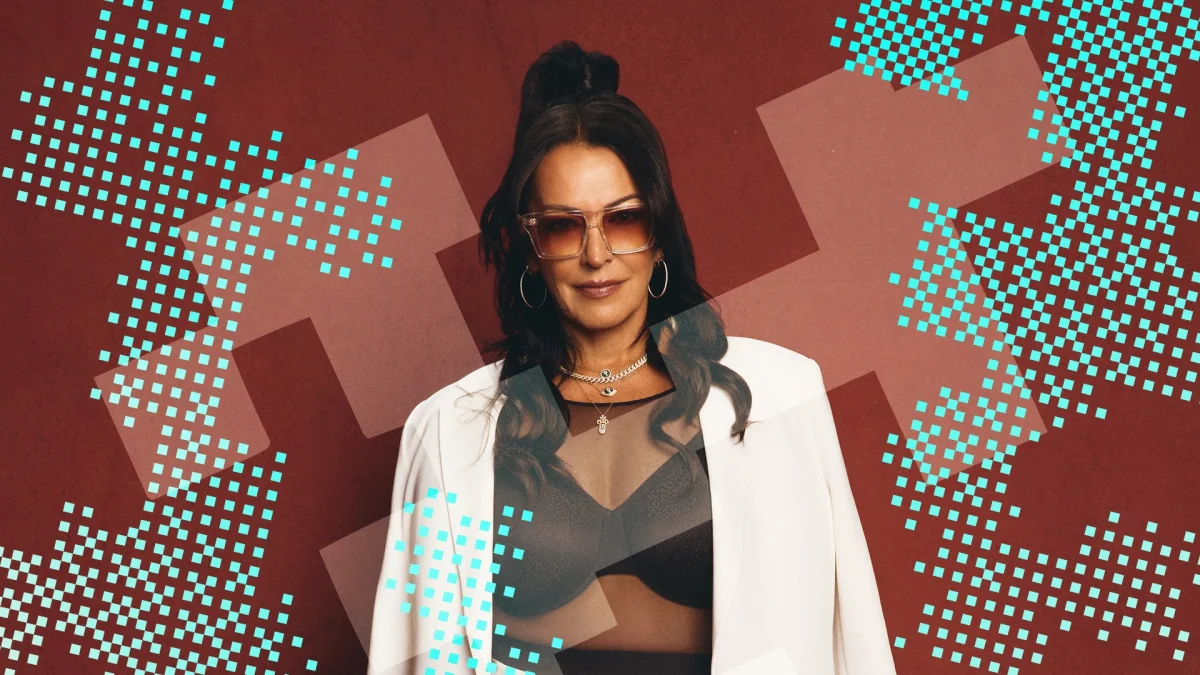
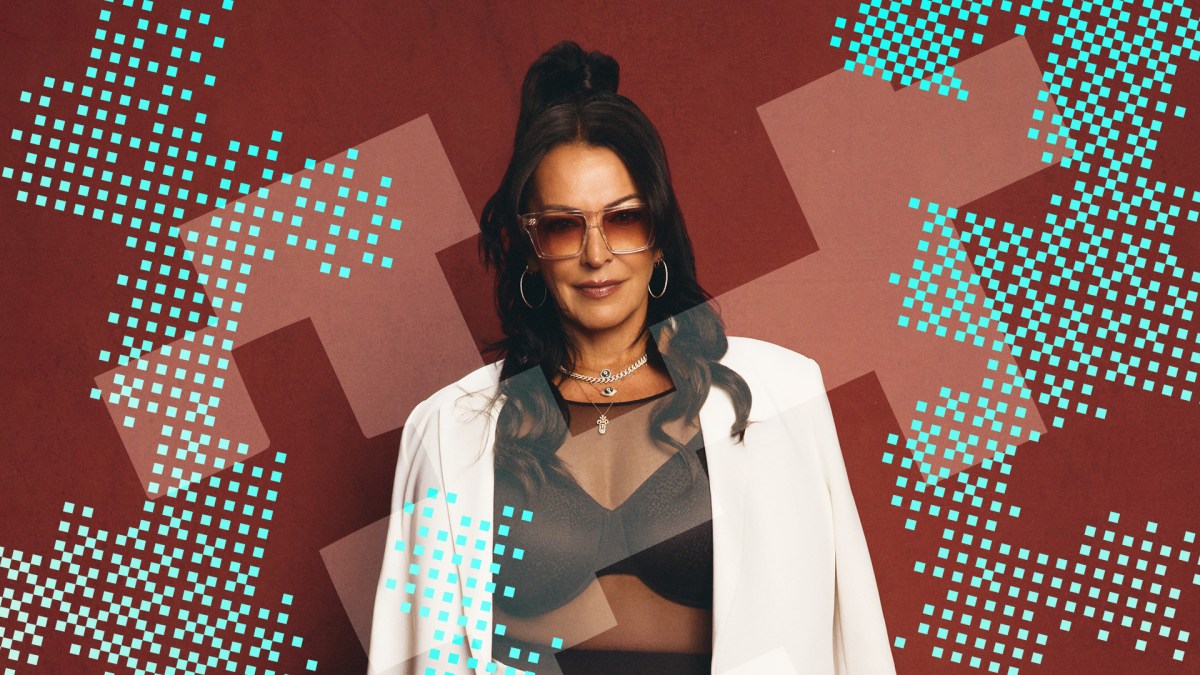
Have you ever applied your makeup with a Beautyblender? If so, you can directly thank Mexican-American makeup artist and visionary founder Rea Ann Silva for creating the ubiquitous, egg-shaped pink sponge that forever changed the way the world applies foundation, concealer, and other cosmetic products.
Born in Los Angeles in 1961, Silva grew up embedded in a hardworking Latine family, navigating the complexities and economic realities of a working-class upbringing. Her determination and creative drive eventually led her to break barriers as the very first person in her immediate family to attend college. During the 1980s, she pursued her passion for aesthetics and design by earning a degree from L.A.’s prestigious Fashion Institute of Design and Merchandising. What began as a foundational education in fashion and visual composition soon translated into a dynamic and lasting career within the professional cosmetics sector.
Silva’s entry into the professional beauty world initially started at a local department store cosmetics counter. There, she honed her interpersonal skills, developed a deep understanding of diverse skin tones and product formulations, and learned the nuances of commercial beauty retail. Eager for a broader creative canvas, she eventually shifted her focus entirely to the fast-paced entertainment industry, building a formidable reputation as a professional makeup artist working across television and film sets throughout the greater Los Angeles area.
During this vibrant era of 1990s entertainment, Silva’s talent placed her at the center of the cultural zeitgeist. She worked extensively on high-profile music video sets for an array of legendary musical artists, including Brandy, Dr. Dre, Eve, Rod Stewart, and Tupac Shakur. In addition to her work in the music industry, she brought her artistic expertise to the big screen, contributing to notable feature films such as Friday and Set It Off. Her ability to enhance natural beauty under demanding production lighting caught the attention of television producers, eventually leading to prominent roles as the lead makeup artist for popular, culture-defining television shows like Moesha and Girlfriends.
It was on the set of Girlfriends that everything truly clicked for the ambitious makeup artist, setting the stage for a groundbreaking industry innovation. At the time, traditional airbrush makeup was considered the gold standard for television and film production, prized for its smooth and even finish. However, airbrushing presented significant drawbacks on a daily production schedule; it was notoriously time-consuming to apply and touch up, and it frequently deteriorated into a heavy, cakey texture by the end of a long day under hot studio lights.
The logistical and technical challenges intensified exponentially because Girlfriends was slated as the very first television series to be shot and broadcast in high definition. This technological leap meant that every single imperfection, texture shift, and brushstroke would be magnified on home televisions, leaving no room for error. Silva recognized instantly that traditional application tools were inadequate for the demands of high-definition broadcasting. She needed a method that offered absolute precision, seamlessly melting product into the skin without leaving streaks or heavy layers.
Driven by necessity and creative ingenuity, Silva began experimenting with various types of foam directly on the studio set. She meticulously cut the material into different geometric shapes and contours to see what would perform best under high-definition cameras. Through trial and error, she ultimately landed on the iconic, edge-less, egg-shaped sponge, discovering that its unique curves and porous texture delivered unparalleled accuracy, blending capability, and a flawless, skin-like finish.
The finished product was an immediate and overwhelming hit on set. Actors, crew members, and fellow professional makeup artists were so impressed by the seamless results that they began taking the improvised sponges straight from her kit. It was during these moments of high demand among industry insiders that Silva realized her clever creation held massive commercial potential far beyond the television studio.
By 2008, Silva took the entrepreneurial leap, transforming her professional backstage trick into a consumer brand, and officially brought the Beautyblender to the retail market. As consumer demand surged and word-of-mouth praise spread among beauty enthusiasts and professional MUAs alike, major beauty retailers took notice. Sephora began carrying the innovative sponge in 2012, introducing the unique tool to a broader mainstream audience. Ulta followed suit in 2018, cementing the product’s status as a permanent fixture in modern beauty culture, and the rest is beauty history.
The cultural and economic impact of Silva’s invention has since been formally recognized at the highest levels. In 2021, the Smithsonian’s National Museum of American History honored Silva by naming her one of America’s most successful women entrepreneurs, securing her legacy in the historical fabric of the United States. Today, despite the countless cosmetic tools and synthetic brushes that enter the market each year, the Beautyblender remains enduringly popular, celebrated globally by professionals and everyday consumers alike for its unmatched efficiency, quality, and reliability.
Reflecting on her journey and the cultural roots that shaped her artistic vision, Silva attributes much of her creative versatility to her heritage. “Being Latina showed me everything from minimalist to maximalist,” Silva shared in a press release celebrating her background and career. “I think our culture really gives permission to do either or. You have such a wide range of beauty… We’re colorful people.”
This feature is proudly presented as part of the ongoing 2026 Latina Heritage Month series, Latina Maxxing.